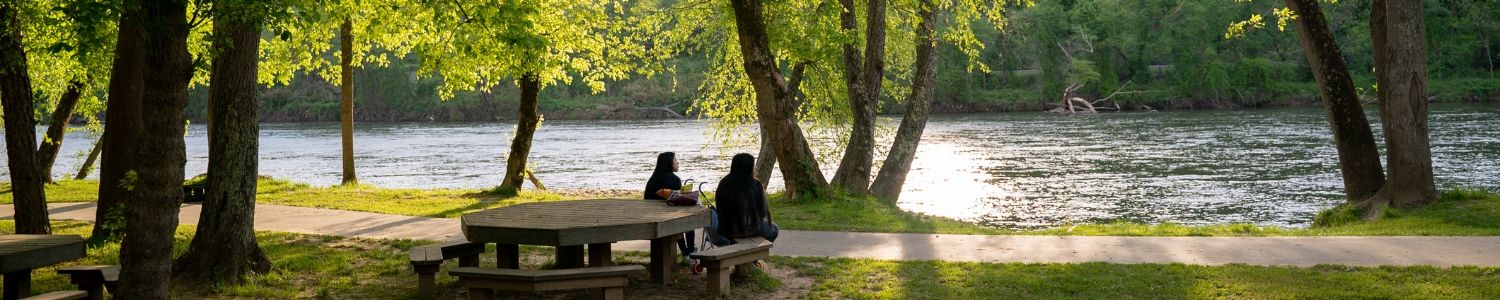
Asheville River Park

Complete Our Supporter Survey

You have a voice and we want to hear it!

Here at CTNC, we are always looking to make sure we are serving communities across North Carolina in the best, most effective ways possible. And who knows more about your community than you?

In less than 15 minutes, help CTNC understand why you care about conserving land in North Carolina and what you want to see from us in the coming year.

It’s simple. 

We aren’t asking tough questions — we just want to know about your connection to CTNC, your conservation passions, and your goals for the future of our work.  With your help, we will have enough information to prepare for our future projects.

Do you want more to see more work involving:

  • How to seed diversity, equity and inclusion through conservation?
  • Service projects through AmeriCorps and Conservation Internships?
  • The beautiful Blue Ridge Parkway and land acquisition?

Tell us!

We’re looking forward to learning how we can best serve you and your community through our conservation work in 2020 and for generations to come!


Take the survey here.

CTNC partners to help shape Princeville’s resilient future

N.C. State’s Coastal Dynamics Design Lab Prepares a “Floodprint” in cooperation with the Town of Princeville. 

When CTNC shares resources, funding and expertise to help communities, we can create tangible change across the state. That’s exactly why we have partnered to co-create a vision for a resilient future for the citizens of Princeville, N.C.

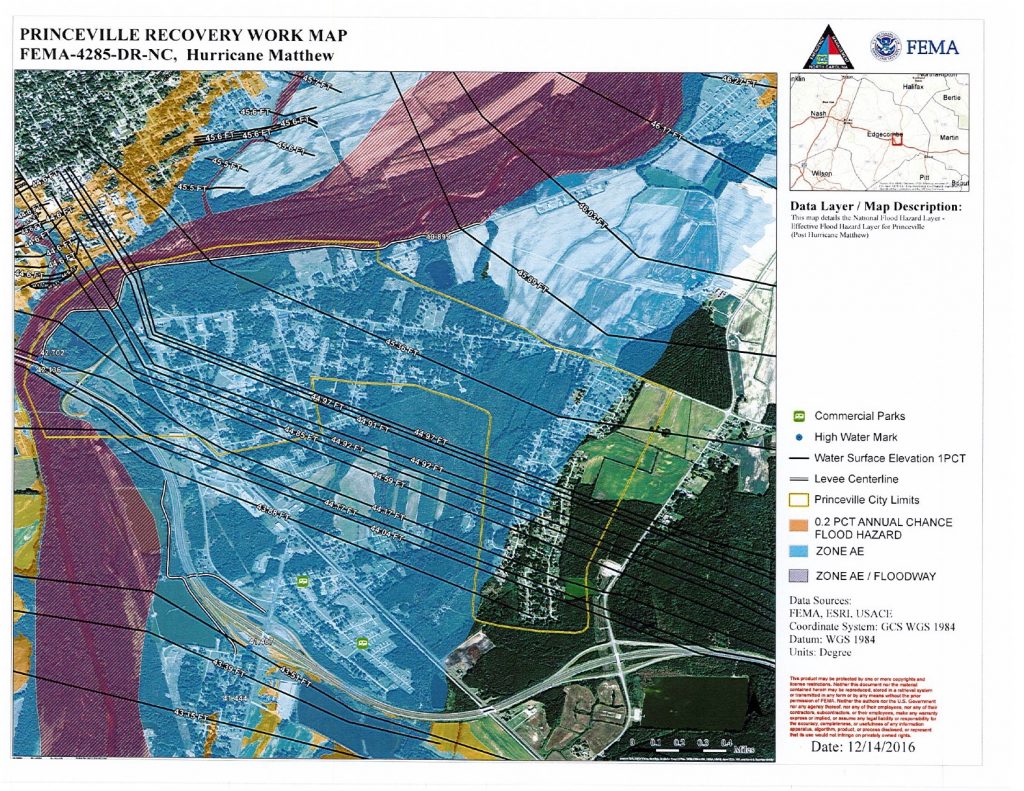
Princeville, which is nestled just southeast of a bend in the Tar River, has been devastated by flooding for 100 years. A number of efforts over the years have outlined options for the town, but few have been community-driven and come through with committed resources.  That is where CTNC and our partners within the Common Ground collaborative come in. We found that researchers at North Carolina State University had earned the trust of the community through some community processes after Hurricane Matthew hit the town in 2016. They also had a model approach to planning that fit our vision and the town’s needs.

So CTNC and our partners garnered funding to support N.C. State’s Coastal Dynamics Design Lab in preparing a “Floodprint” in cooperation with the Town of Princeville. A Floodprint is a robust guide to strategic resilience planning – designed to achieve four goals: 1. to mitigate the impacts of flooding in Princeville, 2. to allow the public to access community assets, 3. to engage the local community, 4. and to create “excellent” design in the town. It is as much a process as a product.

This map details the flooding problem that devastates Princeville every year

Resilience planning is about being mindful of potential flood risk where areas have been historically impacted. When city and community planners develop strategies to assess and mitigate flood risk, they can develop a road-map to rebuild in a way that minimizes the damage to homes and other structures when flooding inevitably occurs again. 

A story of resilience for people, place, and culture. The challenges posed by the frequency and strength of hurricanes impacting communities across Eastern North Carolina are daunting for years after the water recedes. Due to its location in the crook of the Tar River, these flood events have left Princeville’s homes, schools, churches, and the Town Hall completely devastated. Princeville has been rebuilding for years, welcoming its people back home.  In January 2020, after a three-year hiatus, a newly renovated and flood-proofed Princeville Elementary School reopened to its approximately 200 students.

According to the N.C. State scientists leading the project, Andy Fox, Travis Klondike, and Madalyn Baldwin, the Floodprint project is “focused on design and programming strategies for celebrating and building community capacity around cultural and heritage-based tourism.” 

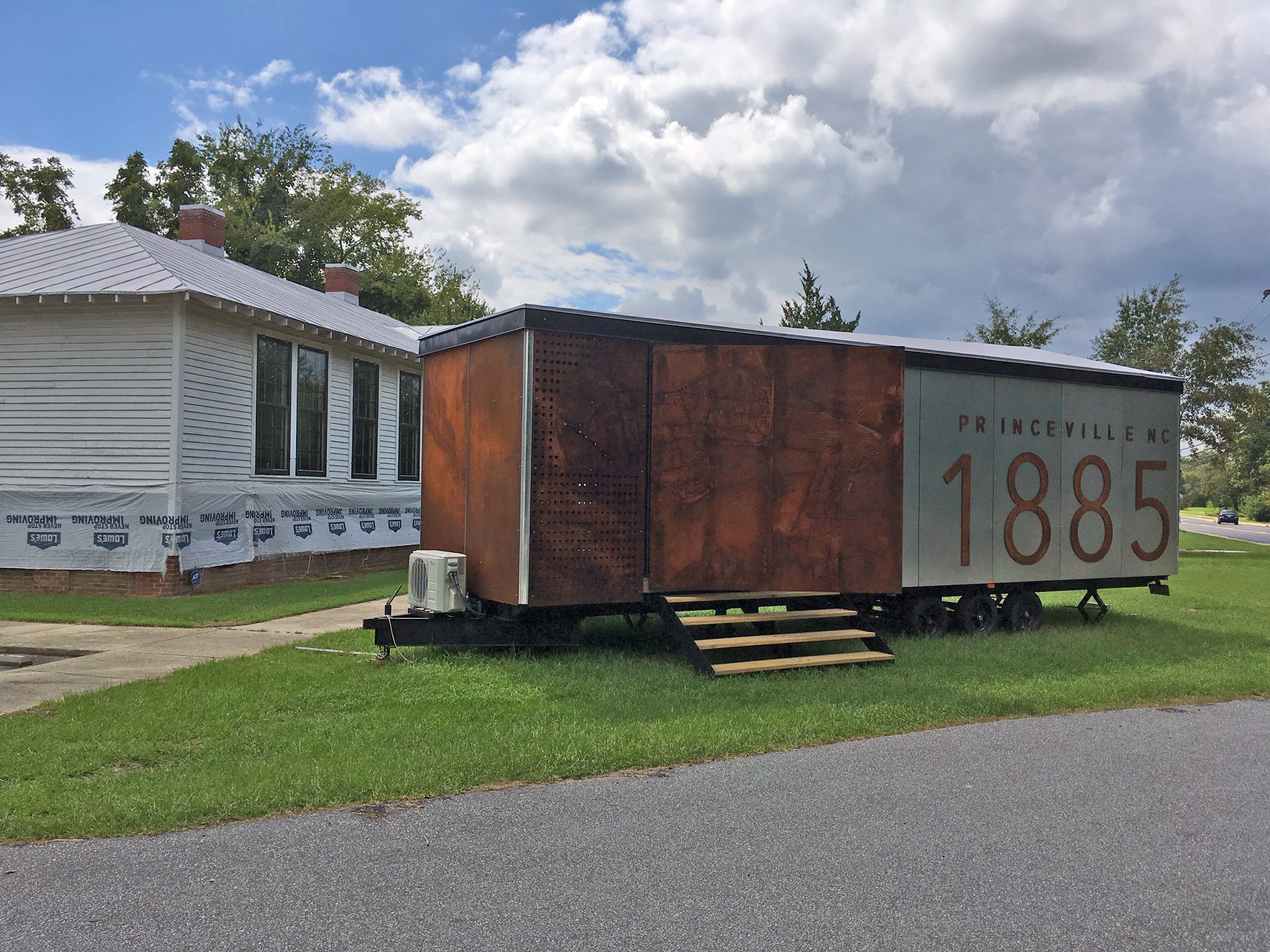
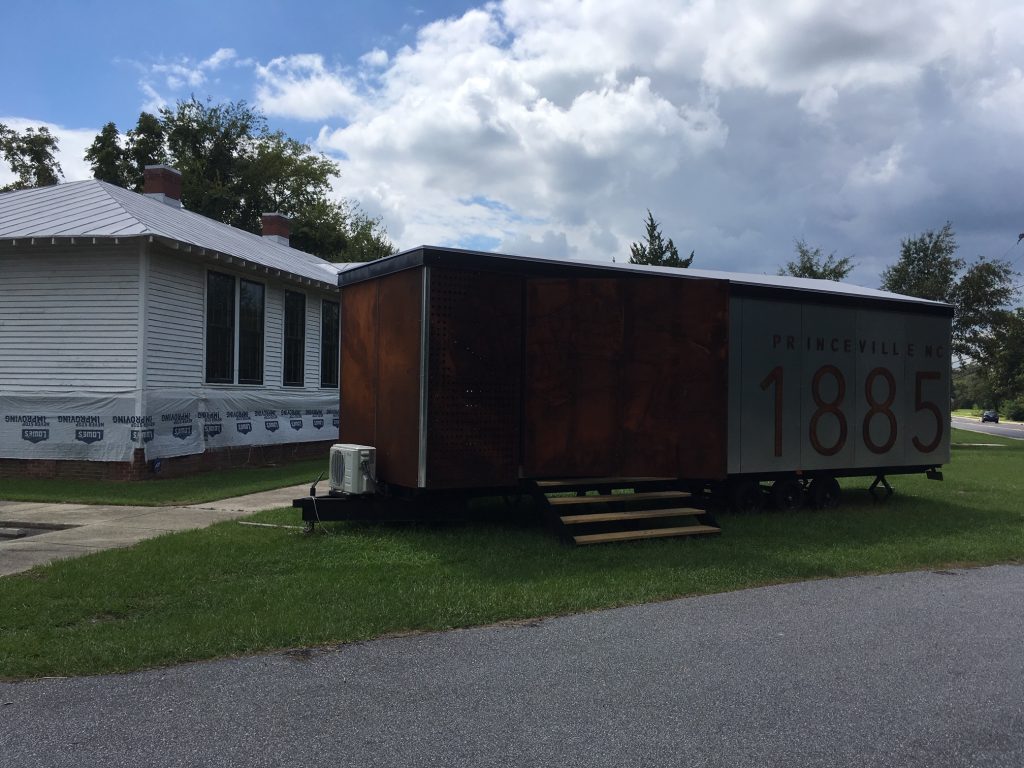
Cultural and heritage-based tourism is right. Princeville is filled with places that educate us all about its rich history and culture. From Freedom Hill, where formerly enslaved people first heard of their legal release from bondage, to a cemetery and numerous schools, those who’ve called Princeville home over the years treasure that material legacy.  Previous work by N.C. State students resulted in the construction of a mobile museum to share and protect the town’s historical legacy.

‘All great achievements require time.’

Maya Angelou

Princeville Town Manager Dr. Glenda Lawrence-Knight draws on this quote when referring to the budding relationship with CTNC. “Partnering with Chris Canfield and his team has been very uplifting. Despite it being challenging, it is understood that recovery is a process. A process that requires patience, time, energy and efforts toward great achievements.”

Dr. Knight added, “CTNC continues to mutually share with the Town in the recovery process of auspicious outcomes. Out of many, the most critical contribution is the immediate benefits of the floodprint plan that will grant the Town an opportunity to build a firm foundation with specific recovery guidance, address and tackle challenges during the research phase, promote collaboration, increase buy in into a shared vision for the future, ignite revitalization and most importantly, generate citizenship morale with recovery resilience. So, to this partnership derives greater hope, a clearer vision, resources, and results.“

The Floodprint process is underway and expected to be finished in the fall of 2021. As it has already done, the project will continue to press forward with the approval, input and collaboration of community stakeholders and leaders.

“Princeville, for much of its history, has been so concerned about survival that historic preservation has been almost impossible,” said the Town of Princeville in an online statement. “Maybe the recent spotlight on Princeville will encourage the public (and potential funders) that the town is worth preserving.” 

Those words already seem to be ringing true. In January 2020, the town got word of $40 million in federal funding to improve levees around the town.  That work won’t solve all the threats faced by the town but it will likely encourage further investment to protect its history and future.

As an organization, CTNC’s board, staff, and partners are committed to standing alongside our Princeville friends as we work collaboratively to achieve lasting community resilience. Climate resilience is part of our lifeblood, as is community enhancement and the betterment of all people, especially those who have been traditionally excluded from the benefits conservation provides. We’re inspired and honored to continue this journey at the banks of the Tar River. 


The Floodprint effort is made possible with generous funding by Z. Smith Reynolds Foundation and Duke Energy Foundation in partnership with The Conservation Fund and CTNC. If you are inspired by our community resilience work and want to make an investment in this future, please consider making a gift.

Eat your veggies!

Conservation Corps North Carolina members assist a community garden; help build unity in Durham.

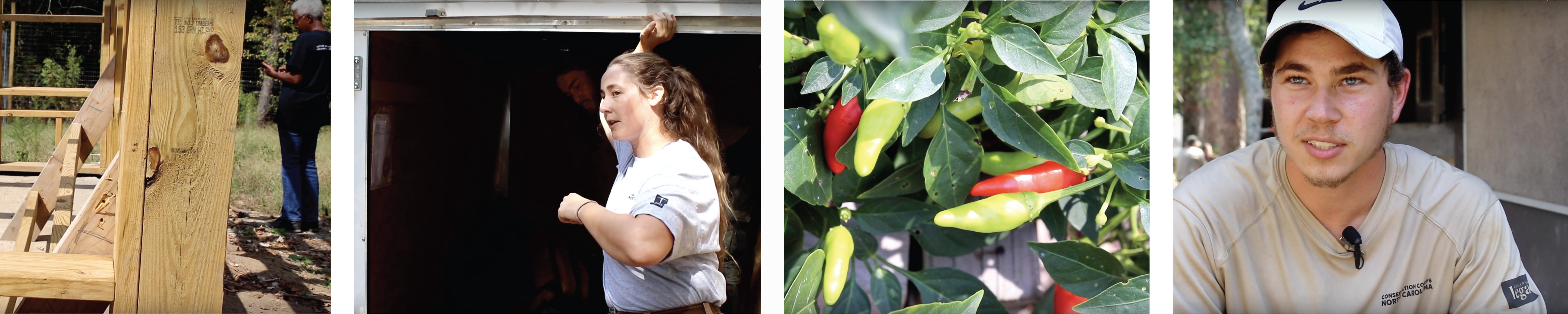
Typically, teams working with Conservation Corps North Carolina spend a lot of time building and improving hiking trails and outdoor recreation spaces in rustic locales. But this assignment was community-based as the crew worked to benefit an urban farm in the heart of Durham. Durham’s Urban Community AgriNomics program (UCAN) partnered with Conservation Corps North Carolina (CCNC) to take on an unconventional project: giving the growing space a little extra ❤️.

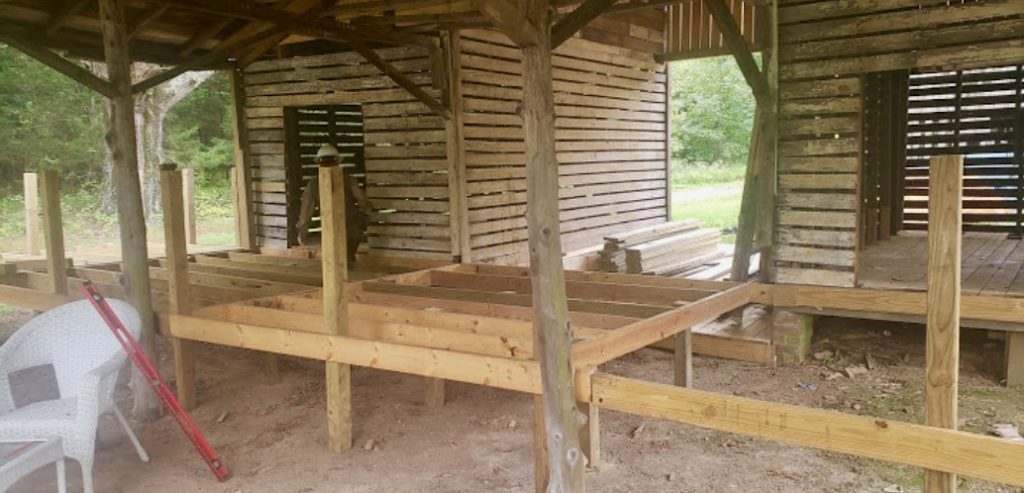
The CCNC crew spent over 1,255 combined hours working at the UCAN farm. They helped build a new chicken coop to replace a dilapidated one. ?They also repaired an “intergenerational sharing deck” to be used as a community gathering space, complete with a wheelchair ramp, safety railing and properly secured posts for structural integrity.

A work in progress: construction of UCAN’s intergenerational sharing deck, which will foster community and conversation among Durham residents who visit the farm.

“I wanted some land in Northern Durham where I could bring community together and help people,” UCAN founder Delphine Sellars said. “Because I know that a lot of the kids, for example, are being bussed from inner city Durham. And they bring their drama and their traumas.” 

The team worked safely, efficiently and with dedication to enhance a space that would engage the surrounding community, build relationships and enable UCAN to better support Durham residents – because when people gather around fresh food and good conversation, there’s nothing they can’t accomplish. ???

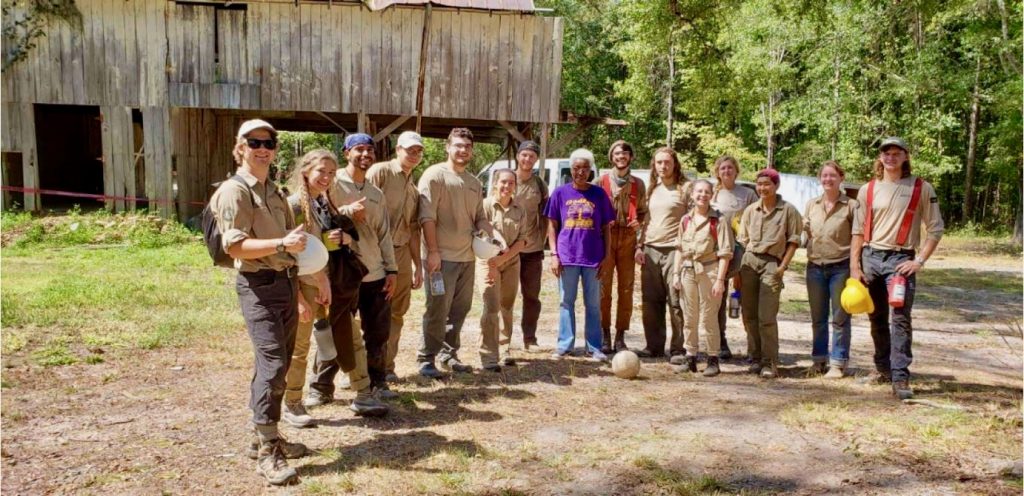
Happy gardening! The CCNC crew stands with UCAN founder Delphine Sellars (middle) on the Catawba Trail Farm site.

Conservation Trust for North Carolina is proud to support strong, resilient communities through Conservation Corps North Carolina work. Because, when our lands and communities are experiencing threats, we need conservation solutions powered by people. And if we’re searching for rejuvenation in our communities, there’s not much fresh air, good food and a little exercise can’t accomplish.

If you’d like to see the team in action and learn how their work with CCNC has enhanced their personal and professional community, check out this video.

And, as always, we’d love to see you join our own community and keep you updated! Consider signing up for our email list to receive future updates about our work.

A Story of Community Resilience

This article originally appeared in Saving Land Magazine.

During the summer, staff of the accredited Conservation Trust for North Carolina visited the small town of Princeville that has been repeatedly devastated by floodwaters. In 1999, Hurricane Floyd caused the Tar River to rise and the town was submerged. In 2016, Hurricane Matthew brought heavy flooding again. Princeville has yet to recover from either catastrophe.

This story is similar to the plight of many towns in North Carolina and across the country. Princeville is unique, though, in being the oldest town incorporated by African Americans in the nation. They were given few options for land on which to settle after emancipation. Since 1885, the people of Princeville have weathered many storms, and not just meteorological ones. Their resilience is deep, yet its limits are strained.

The town lies at the intersection of three issues that have been growing in urgency for CTNC: climate, community and equity.

Every piece of land we hope to protect is being affected by a more volatile climate. Not just hurricanes, as in Princeville, but also droughts, fires, infestations and other extremes. We have already incorporated climate resilience models into our planning. We must go further. Land conservation can help  with the rising climate crisis by storing carbon to reduce long-term effects and by providing increased natural resilience to inevitable changes.

We are inspired by the many land trusts who already make innovative connections between community needs and conservation. We commit ourselves to leading with questions before answers, and to working alongside neighbors often given no voice in decisions affecting them. The process of building trust will take years of work and lots of humility.

Humility also requires us to admit the limitations of conservation. Our system of land ownership and use has too often excluded and disregarded entire communities of people. Again, Princeville is symbolic. Our work must honor the stories of black, indigenous and other people of color who have felt the loss of access to productive land for living, farming and for preserving their heritage. Land is at the core of racial and other inequities. We must ensure that we don’t worsen those realities and ultimately help change the system for the better.

Our staff and board embrace this new strategic vision. It builds on CTNC’s history of bringing together uncommon alliances. Our goal is to conserve land in ways that inspire and enable people to build resilient, just communities. Led by our values, we will continuously learn, share, admit and care.

Many of our plans are new and yet to be verified. So we’ve entered our experiment mindful that it will often be more about how  we work than what  we do.

History dictated that Princeville be in the floodplain of a river. We can’t change history. But, using the power of community and conservation together, we can change the future.

Chris Canfield is the Executive Director of the Conservation Trust for North Carolina. Jamilla Hawkins is Chair of CTNC’s Board of Directors.

AmeriCorps Members have a unique opportunity to serve the public and engage with natural spaces around North Carolina.

Building Community, One Board at a Time

Conservation Corps North Carolina serves the public through a trail restoration project with Ellerbe Creek Watershed Association

Hammer? Check. Nails? Check. A hardworking crew? Conservation Corps has that, too. 

This July, a team of six Conservation Corps crew members and two team leaders worked with the Ellerbe Creek Watershed Association (ECWA) to complete a much-needed trail reroute project. They performed maintenance on an existing trail boardwalk – and built an entirely new one! ?  – in the 17-Acre Wood Nature Preserve in Durham. 

“Right now, we are in a generation that, for the first time in human civilization, is a really indoor generation. I love the way [the Conservation Corps program] puts people into nature, into the outdoors, and makes them aware of nature in a way that they feel like they’re contributing to the public…”

–Jan Pender, program manager for Conservation Corps N.C.

Together, the group assembled and installed new signs and replaced old signage at two nature preserves: ECWA’s Beaver Creek Nature Preserve and Glennstone Nature Preserve. ?

Can you guess how many service hours the team contributed to ECWA during the project? 

627 hours! One person would have had to labor more than 26 days around the clock to make that happen. But team work … makes the dream work. ?

The team at UNC-TV produced a phenomenal spot on this hardworking crew. Take a look!

During their “hitch” – that’s what AmeriCorps crews call their service outings, which last around nine days– the Conservation Corps North Carolina crew members learned a lot about themselves and each other.

CTNC was proud to fund the project through a grant with the Duke Energy Foundation. ?⚡️ Trails of public lands statewide wouldn’t be nearly as enjoyable without the dedication of these hardworking Conservation Corps service teams and the nonprofit organizations with which they partner. 

Jan Pender, Program Manager for Conservation Corps North Carolina, says that the Conservation Corps program is “important for our state’s future.”

“We have a rapidly growing population of young people, and of diverse young people,”  she says. “We want to serve all those people and get them connected to our state’s great public assets and help people understand the importance of stewarding them and preserving them.”

CTNC is beyond proud of our AmeriCorps members past and present.

Welcome, AmeriCorps Members! ???

CTNC is thrilled to introduce the AmeriCorps cohort for 2019!

From the mountains to the coast, these selfless young people are educating others and protecting the environment for generations to come. We’re wishing this cohort of environmental stewards a fantastic service term!

Hannah Barg hails from the great lakes region of Illinois and earned her degree in Environmental Science from Goshen College in 2016. While in college, Hannah traveled to Kenya, Cambodia, and England and also participated in the Sustainability Leadership Semester at Merry Lea Environmental Learning Center. After graduating, Hannah worked as an environmental stewardship teaching fellow at Conserve School in Northern Wisconsin, a semester program designed for high school juniors. While there, she gained invaluable experience as a formal and non-formal educator, and developed a passion for environmental justice and advocacy. Coming from the land of many lakes, Hannah hopes to expand her public education and outreach skills as the Stormwater Education Specialist at Triangle J Council of Governments this service year. After AmeriCorps, Hannah has big plans to finally adopt a dog and pursue a career as an education and outreach coordinator at a non-profit. 

Nicole Cook serves with the Balsam Mountain Trust in Sylva as their Environmental Outreach Coordinator. She is focused on delivering environmental education programs to Title I elementary schools in the area. Before joining CTNC AmeriCorps, she graduated from UNC Asheville with a B.S. in Environmental Studies. Nicole grew up in Woodstock, GA, and spent her summers volunteering at a sea turtle rescue and rehabilitation center where she developed a passion for environmental education and conservation. During college she was able to study abroad in Panama and South Africa and take hands-on field courses during which she developed a strong interest in ecology and wildlife biology. In her down-time Nicole enjoys hiking, canoeing, reading, and hanging out with her dog. Nicole is excited to share her love of nature, ecology, and conservation with the community in western North Carolina.

Emma Corbitt is the Community Outreach and Stewardship Coordinator for the Bald Head Island Conservancy (BHIC) in Wilmington. Prior to joining CTNC AmeriCorps, Emma attended Virginia Tech and completed a B.S. in Environmental Science. At Virginia Tech she organized outreach activities with local schools through her club, The Environmental Student Organization. This service term she is representing the BHIC at community events and conducting environmental education programs throughout Brunswick County as well as organizing volunteers. When she isn’t sharing her love of the environment with others through environmental education, Emma can be found running, sailing, or reading a book on the beach in her free time. She is excited to make a positive impact in the community during her service term and looks forward to all that the year will bring!

Audrey Dunn serves with Cape Fear River Watch in Wilmington as an Environmental Educator. She is originally from Little Rock, Arkansas. She holds a B.A. in Anthropology from Tufts University in Boston and an M.Sc. in Forest and Nature Conservation from Wageningen University in the Netherlands. Before joining AmeriCorps, she worked as a research assistant studying the behavior of wild lemurs in Madagascar and orangutans in Indonesia. Most recently she was studying the breeding habitat of meadow birds in northeast Poland. Finally she wanted to come home to the US and decided on coastal North Carolina as her destination! Her aim as an environmental educator and volunteer coordinator at CFRW is to increase the number of students who receive an education about environmental stewardship, expand CFRW’s reach up the river by creating educational programming at Lock and Dam 1, and extend the length of waterways cared for by organizing watershed cleanups. In her spare time, she enjoys cycling, practicing yoga, swimming, and reading. 

Dymond Generette is serving at Triangle Land Conservancy as the Walnut Hill Community Engagement Coordinator. Her main position duties include planning and developing innovative events, recruiting and managing volunteers for workdays, and developing new partnerships within Wake County. She recently graduated from NC State with her B.S. in Environmental Science with a minor in Wildlife Sciences. She credits her deep appreciation for nature to her service trip to Costa Rica where she hiked in the Tapanti National Park with scenic views of the rainforest and the unique wildlife. Her hobbies include exploring downtown Raleigh-Durham, thrift shopping, and baking. 

Abby Gostling is serving with Keep Durham Beautiful (KDB) as an Environmental Outreach and Volunteer Coordinator.  She graduated from UNC-Chapel Hill with a degree in Economics and Global Studies, and was led to CTNC AmeriCorps by a passion for public service and a love for anything and everything outdoors. At KDB she is working to promote environmental stewardship in Durham by educating and coordinating volunteers in litter prevention, waste reduction, and community greening/beautification. After AmeriCorps she hopes to pursue a Master’s in Public Administration and work in local government. Outside of the office she can be found cooking, baking, or hiking with friends and family.

Brianna Haferman is serving as the Piedmont Legacy Trails Coordinator for the Piedmont Land Conservancy and Piedmont Triad Regional Council. Brianna is growing the regional initiative through the creation of rural partnerships, branding and storytelling projects, and organizing the annual Piedmont Legacy Trails Summit. In 2018 Brianna received her Master’s Degree in Social Work and interned at the North Carolina Botanical Garden. While serving in Horticultural Therapy Programs she discovered her love for connecting people to the joy and relief that comes from time spent outdoors. When not serving she can be found on the same trails she is working to promote, either strolling or biking. She also loves gardening, baking, thrifting, and camping.  She plans to continue protecting, cultivating, and enjoying beautiful natural spaces throughout her lifetime.

Emma Jablonski is serving as an Environmental Outreach and Volunteer Coordinator with Keep Durham Beautiful. She is assisting the non-profit in creating beneficial partnerships, organizing significant events, and getting volunteers motivated and excited to make their community greener and cleaner! She is a recent Master of Public Administration graduate from Appalachian State University with concentrations in Non-Profit Management and Environmental Policy. As a student there, she completed several projects on recycling behavior change, worked as a farm apprentice, and conducted marine research with Florida’s Fish and Wildlife Commission and Nature Coast Biological Station. She also has a BA in Spanish Language and Literature from the University of Mississippi. She enjoys biking, plogging, and quality time with family and friends. Once her service is over, she looks forward to continuing to make an impact in the field of environmental education and sustainability. 

Kelsey Kirwan is from Durham and graduated from Appalachian State University in Fall of 2017. She is serving at the Coastal Land Trust in Wilmington as the Environmental Education and Volunteer Coordinator. Since graduating, she has been exploring her career opportunities along with different landscapes. She worked three part-time jobs after graduating, all with a focus on outdoor/environmental education: Chapel Hill Parks and Rec, Piedmont Wildlife Center, and Frog Hollow Outdoors. Not ready to settle in Durham and looking for a change in scenery, she pursued an internship this past year in Arizona with the National Park Service at Chiricahua National Monument. She is looking forward to the opportunities that AmeriCorps has to offer and getting to know the Wilmington area.

Ashley Kreitz is serving in Hickory as Catawba Science Center’s first AmeriCorps member, where she is recruiting and coordinating volunteers, as well as updating the Environmental Education classes and exhibits to incorporate a conservation message. Prior to becoming an AmeriCorps member, she earned her B.S. in Earth & Environmental Science and has been teaching environmental education at Haw River State Park and Camp Thunderbird. After taking some time off to thru hike the Appalachian Trail, she’s excited to begin working with the community again, educating adults and children about sustainability and conservation.

Stephen Peters is serving at the Piedmont Triad Regional Council (PTRC) in Kernersville as an environmental educator with the Stormwater SMART program. Stephen grew up on the Outer Banks of North Carolina in Kill Devil Hills. Living only 200 ft from the ocean he developed a love of the outdoors and the beauty of nature. Stephen attended Wake Forest University where he earned a B.A. in Biology and minor in Environmental Studies. During his time at WFU Stephen spent most of his time in Army ROTC and earned a commission as a Second Lieutenant in the Army Reserves upon graduation from WFU. Stephen will assist in coordinating the Stormwater SMART program by providing environmental education on topics like water quality, pollution, and stormwater runoff. He will also help in facilitating community outreach events in the Piedmont Triad region. He is excited to help educate the next generation of environmental stewards!

Ivori Schley is serving as the Environmental Stewardship and Outreach Associate at the Highlands Cashiers Land Trust (HCLT) in Highlands. She is teaching after-school programs and educating the community about HCLT, maintaining trails, and managing/recruiting volunteers for workdays. Ivori is also actively controlling invasive species around Highlands and Cashiers by treating hemlocks affected by the hemlock wooly adelgid (HWA). Before AmeriCorps, Ivori utilized her B.S. degree in Urban and Community Horticulture to perform agricultural research across America and East Africa. She also worked diligently to ameliorate food apartheid issues for underserved youth in her community. Ivori hopes to strengthen her educational skills by completing the North Carolina Environmental Education certificate. CTNC AmeriCorps has granted Ivori the opportunity to gain exposure to natural settings while working for a land trust!  After AmeriCorps, Ivori intends to continue non-profit work, improve food security across the world, and share her love for nature to all. 

Elicia Senff is serving at Triangle Land Conservancy (TLC) as the AmeriCorps Community Engagement and Education Coordinator. She is focused on creating educational programming for TLC’s partners and surrounding communities as well as increasing the number of citizen science opportunities. Previously, she earned a B.A in Geography from UNC Wilmington where she also worked as a Trip Lead for the Department of Campus Recreation. Leading these trips inspired her passion for environmental education and outdoor recreation. She was not only able to inspire an appreciation of the environment in others, but also saw the personal growth people experienced while in nature. After graduating, Elicia returned to Raleigh to pursue a G.I.S graduate certificate from NC State University. When not working, she can be found hiking, dancing, or snuggling with her pup.  

Tamarya Sims is serving at Durham Public Schools Hub Farm for the next 10 months as an Educator and Program Assistant. Before AmeriCorps, Tamarya was working for the American Conservation Experience at Great Smoky Mountains National Park as an educator. She loves and is interested in gardening/farming, food justice, education, plant medicine, horticulture/agriculture, plant/bird identification, and photography. After AmeriCorps, Tamarya hopes to create her dream job by combining outdoor experiential learning, environmental/agricultural education, and food justice advocacy.  

Ashlee Stradford graduated from UNC Asheville and is a former AmeriCorps Summer VISTA member. This service term, she is at Sarah P. Duke Gardens in Durham serving as a Community Educator. At the gardens she hopes to increase outreach in local schools and build onto the garden curriculum. She plans to continue her career in environmental education by attending graduate school and becoming a teacher.

Katie Sullivan serves at UNCW MarineQuest as a Coastal Citizen Science Ambassador. In this role Katie meets with community members and trains individuals to become Storm Surge Protectors. Storm Surge Protectors collect long-term data that will help determine the ecological condition of coastal wetlands in North Carolina. The project promotes an understanding of coastal wetlands through community engagement and direct assessment of wetland health throughout the year. By providing an opportunity for members to perform fieldwork, the project highlights the connections between a healthy ecosystem, storm resiliency, and community. Katie is thrilled to be studying the ocean that first inspired her love of marine science and learning from her new community. In addition to leading workshops and monitoring the field sites, Katie will also be organizing the data to allow for incorporation in larger research projects and curriculum development. In her free time, Katie can be found surfing, scuba diving, or eating too many tacos. 


Laura Thompson is serving with The Conservation Fund at Good Hope Farm in Cary, North Carolina. She is responsible for community outreach and the development of projects promoting sustainable agriculture at her host site. Additionally, Laura organizes volunteers and expands educational programs to help connect the community with local agriculture and food! Before joining AmeriCorps, Laura was finishing her bachelor’s degree in Nutrition and Dietetics from Appalachian State University. Laura has always been interested in community nutrition and supporting local food systems, and she is excited to be part of the AmeriCorps team and have the opportunity to turn her passion into her future career! 

To learn more about CTNC’s commitment to the AmeriCorps program, click here!

Conserving Whole Communities

CTNC partners with local leaders and nonprofits to create positive change in Princeville 

In 1885, a group of formerly enslaved African-Americans claimed a portion of land in Edgecombe County as their own. It was a somewhat swampy space next to the Tar River that had been largely ignored by their white neighbors. They were a people largely unwelcomed in the county seat of Tarboro, which lay just across the water. The area, now called Princeville, N.C. after a respected freed slave named Turner Prince, became the first town in the U.S. to be incorporated by African Americans. 

The space that African Americans called “Freedom Hill, little more than 1.5 square miles in size, has rightfully obtained a monumental place in the African American cultural memory. But this largely overlooked parcel has experienced two 100-year floods in the last 17 years. The strength of hurricanes Floyd (in 1999) and Matthew (in 2016) caused the Tar River to overflow into Princeville homes, business and community centers. 

The damage caused, and community members displaced, serve as a reminder of racism and inequality that permeates the heritage of North Carolina land and stretches back to the town’s founding more than 130 years ago.

Where Climate, Community and Equity Intersect

Community Development Initiative Tyran Hill discusses how organizations can find common ground to address communities’ needs.

Our work focuses on conserving land that will help communities adapt to a changing climate, seeding equity and inclusion throughout conservation, and working alongside communities to identify where conservation can meet their greatest needs. Each of our guiding priorities intersects within the town of Princeville. 

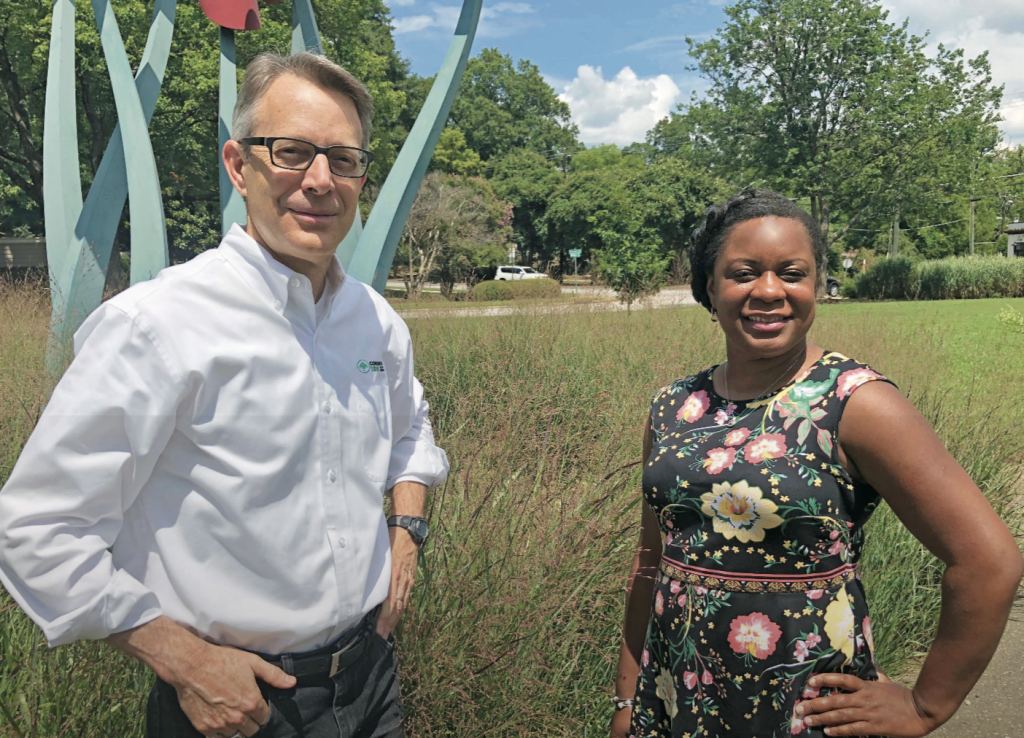
Chris Canfield, left, and Jamilla Hawkins, right

“We commit ourselves to leading with questions before answers, and to working alongside neighbors often given no voice in decisions affecting them.”

— Jamilla Hawkins, Vice Chair of CTNC’s Board of Directors and Chris Canfield, Executive Director of CTNC//

Through the Common Ground collaborative, Conservation Trust will partner with the NC Community Development Initiative and The Conservation Fund to work alongside the Town of Princeville and its people to plan for and eventually deliver smart land conservation.  These efforts must be paired with larger community-driven initiatives aimed at bringing true restoration and resilience to the community. 

By conserving land along this stretch of the Tar River, we can restore some of the natural floodplain of the region. That can help absorb water during flood events that might otherwise inundate homes and businesses.  

We must deliver land conservation in ways that honor the past of Princeville while strengthening its future. We will continually advocate for land access and inclusion and grow our understanding of existing injustices within the conservation sector. And we will support work that further develops the economic, social and cultural assets of the community.

Climate change is sadly inevitable, and the effects of climate change and extreme weather events will continue to impact Princeville and its people.

But Princeville is also a place with deep resilience among the people themselves. We promise to work beside and behind our Princeville neighbors with respect, humility and a willingness to learn. Because each time the water rises in Princeville, it meets a courageous group of people that calls the land “home.” 

Partnerships and collaboration like this emerging one in Princeville can create transformative change to promote a more just and resilient future for all North Carolinians.

New Partnership Expands Conservation Corps

After successfully managing the North Carolina Youth Conservation Corps for six years, Conservation Trust for North Carolina, under a new strategic partnership with Colorado-based Conservation Legacy, will expand the program under a new name: Conservation Corps North Carolina.

Conservation Legacy is a national organization dedicated to supporting locally based conservation service programs across the country.

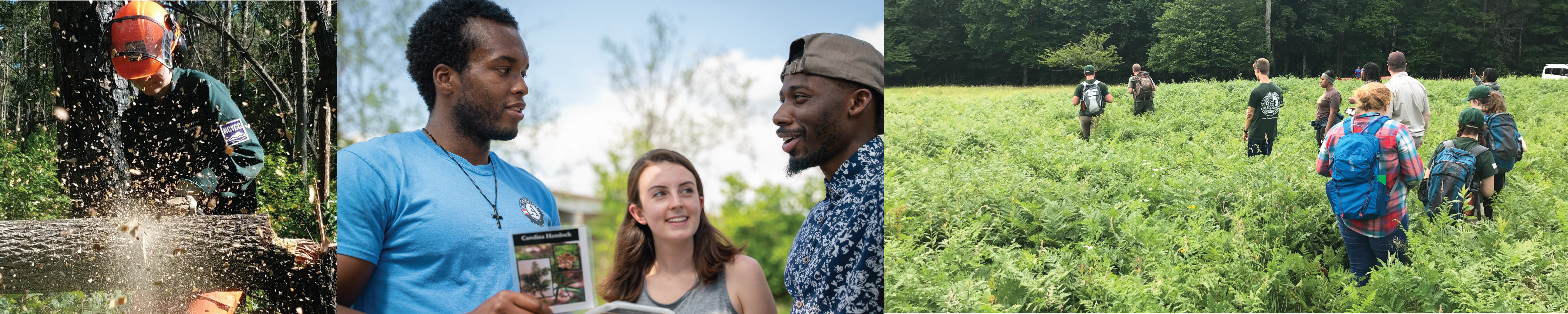
Under this new partnership, Conservation Corps North Carolina will engage motivated young adults, ages 16-27, to complete challenging and meaningful conservation service projects throughout the state. Projects include trail construction & maintenance, habitat improvement, hazard fuel reduction, and ecological restoration. The program, formerly operated in partnership with Vermont Youth Conservation Corps, will double its corps work for the Summer 2019 season.

“CTNC is committed to growing the successful conservation corps program so it can provide greater opportunities for a diversity of young people to help meet North Carolina’s critical conservation needs,” said CTNC Executive Director Chris Canfield. “With the increase in severity and frequency of storms impacting our parks and the maintenance backlog of conserved lands, Conservation Corps North Carolina is needed now more than ever. The program offers a unique opportunity for North Carolina’s young people to complete conservation service projects in their local community while developing leadership and team-building skills.”

“Conservation Legacy is proud to partner with CTNC to expand corps opportunities in North Carolina,” said Conservation Legacy CEO Susan Cimburek. “We look forward to working together to fulfill our common missions of conserving our land while fostering the next generation of leaders for our nation’s natural resources.”

Canfield added, “Conservation Legacy has demonstrated success building local corps programs to meet community needs with operations in Tennessee and Virginia. We are confident that our goals align and Conservation Corps North Carolina will prosper under Conservation Legacy’s strong leadership.”

The program will continue to offer residential crew positions where individuals camp in remote locations as well as expanded community crews where youth work in their local community while living at home. Crews will work with federal, state, and local partners as well as land trusts and private groups to complete necessary trail building and maintenance, facility improvement, and habitat restoration work, as well as chainsaw work and prescribed burning assistance.

To find open positions with Conservation Corps North Carolina, click here.

###

About Conservation Trust for North Carolina

The Conservation Trust for North Carolina protects the Blue Ridge Parkway’s natural and scenic corridor, assists land conservation, youth development, and community engagement work, and connects North Carolina families with the outdoors. Land trusts preserve land and waterways to safeguard your way of life. They work with landowners to ensure natural lands are protected for safe drinking water and clean air, fresh local foods, recreation, tourism, and healthy wildlife habitat. More information about CTNC is available at www.ctnc.org or @ct4nc.

About Conservation Legacy

Conservation Legacy provides support for local conservation service organizations under the leadership of a national organization, delivering high-quality programming in communities across the country to produce enduring impact through local action. In 2017, Conservation Legacy engaged over 2,000 youth, young adults, and veterans in conservation, restoration, and community development projects and contributed 1.1 million hours of service to public lands. 

Conservation Legacy programs—Arizona Conservation Corps, Conservation Corps New Mexico, Great Appalachian Valley Conservation Corps, Southeast Conservation Corps, Southwest Conservation Corps, Stewards Individual Placement Program and Preserve America Youth Summit—engage participants on diverse conservation and community service projects that provide opportunities for personal and professional development and meet the high priority needs of public land managers and community partners. Working in close collaboration with partners across the country, Conservation Legacy advances goals of increasing opportunities in conservation, stewardship, national service, and workforce development. More information about Conservation Legacy is available at conservationlegacy.org.

2019 AmeriCorps Members

Conservation Trust for North Carolina is the proud host organization for AmeriCorps, a ten-month national service program in environmental education and outreach. Through CTNC AmeriCorps, we seek to reconnect people with the outdoors and to develop future leaders in conservation. Learn more.

Anne Maxwell Ellett
Ellerbe Creek Watershed Association

Anne Maxwell Ellett is an environmental educator for Ellerbe Creek Watershed Association (ECWA). Prior to joining ECWA, she was an environmental educator for the Chesapeake Bay Foundation in Maryland after graduating UNC-Chapel Hill. During her time at UNC, Anne Maxwell studied biology and marine science and spent a semester in the Galapagos Islands studying marine ecology. At ECWA, Anne Maxwell leads Family Explorers Club, Explorers Club and assists with Nature Walks; all of which aim to get Durham residents, big and small, outside and connected with Ellerbe Creek. She is also involved with the planning and implementation of volunteer workdays, assists with outreach for various programs through social media platforms, and helps with fundraising for the education program. It was during her undergraduate career that her love for environmental science and educating the public was solidified.

Melissa Kennedy
Triangle Land Conservancy

Melissa Kennedy earned her B.S. in animal science from N.C. State University and grew up camping and hiking with her family. Her passion for the outdoors combined with her desire to share this interest with young people led her to AmeriCorps. She will serve at Triangle Land Conservancy as the AmeriCorps community outreach and education associate, doing community outreach and education in Durham, N.C. She hopes to inspire youth in her community to continue protecting the environment!

Lillie Reiter
Coastal Land Trust

Lillie Reiter serves with the Coastal Land Trust in Wilmington as an environmental education and volunteer coordinator. She is originally from Asheville and graduated from Guilford College in Greensboro. Her passion for environmental education began while she was studying abroad in the Turks and Caicos Islands teaching children about the ocean and marine biology. She has worked with a zoo, nature center, science center, land conservancy and now a land trust! As an environmental education and volunteer coordinator, her role will be to incorporate more environmental field trips into the school’s curriculum, engage the public in nature-based events, and help volunteers have fun while doing service. When she’s not out and about downtown with friends, she can be found at home, snuggled with her cat, eating ice cream and reading.

Eliza Hurst
Balsam Mountain Trust
Eliza Hurst is serving at the Balsam Mountain Trust as the education outreach coordinator. She will be focusing on bringing environmental education alive with live animal programs at local Title I elementary schools and public libraries. She received her B.S. in geology from Western Carolina University in 2018. Eliza was born and raised in Pompano Beach, Florida, where she developed a deep love for the ocean and marine life through scuba diving with her dad and brother. Those experiences shaped her love of the natural world. Eliza is excited to share her passion for the environment and conservation with the western North Carolina community.

Blair Frantz
Triangle J Council of Governments
Blair Frantz is serving at the Triangle J Council of Governments in the Water Resources Program as the stormwater education specialist. She will be promoting behavior changes through outreach and education about water quality impairment and our impact on stormwater runoff. Blair will be working to increase citizen access to and participation in environmental education activities and events. She’s originally from Montclair, New Jersey but moved to Durham this past summer. She earned a B.S. in environmental Science from Trinity College in Hartford, Connecticut. As a former intern of the Charles River Watershed Association (CRWA) and the Connecticut Council on Environmental Quality, Blair was thrilled to come on board as a CTNC AmeriCorps member for the 2018/2019 service year. Through these opportunities, she was able to share her love of the environment and clean water with others. Her professional interests lie in environmental analysis, environmental education and outreach, as well as environmental policy and regulation. Blair is enjoying settling into her new home in Durham and spends most evenings and weekends cooking or baking, reading, hiking and running.

Anna Vancina
The Conservation Fund – Good Hope Farm
This service year, Anna Vancina is positioned at host site The Conservation Fund in Chapel Hill, North Carolina as Good Hope Farm community outreach coordinator. Originally from Manhattan, Illinois, Anna was heavily involved in the 4-H program during her youth and adolescence, and from it developed her love of service. She interned this past summer with NCSU’s Center for Environmental Farming Systems and is currently finishing her Bachelor of Arts degree in environmental studies through the University of Illinois Springfield. Some of Anna’s main responsibilities at The Conservation Fund are to organize volunteers for Good Hope Farm workdays and events, develop educational programming for the farm and support various community engagement initiatives. Anna is most excited about the Good Hope Farm project because it is modeled to support small-scale farmers, encourage the growth of local foods and engage the community in urban agriculture.

Jade Woll
UNCW MarineQuest
Jade Woll serves at UNCW MarineQuest as a coastal citizen science ambassador. Jade will be creating a citizen science project focused on coastal resiliency. The purpose of this project is to increase community awareness about the protection marshes bring to coastal communities while partnering it with a citizen science project that will assess local marshes. She will be conducting various volunteer workshops ranging from marsh assessments to creating living shorelines. This position focuses on all the things she loves. Combining her passion for volunteer coordination with marine science allows her to gain invaluable experience for her future. She is extremely excited to be partnering with local community members and having the opportunity to increase community awareness about the importance of protecting our coast.

Grace McCants
Highlands-Cashiers Land Trust

Grace McCants is serving at the Highlands-Cashiers Land Trust (HCLT) located in Highlands, N.C. as their environmental stewardship and outreach associate. She will be teaching after-school programs, maintaining trails and managing/recruiting volunteers for workdays. Grace and the volunteers will be striving to control invasive species around Highlands and Cashiers, treating surviving hemlocks in the area, protecting rare species, and creating better access to the beautiful vistas the HCLT protects. Along with this, Grace will be writing lesson plans about animal habitats, survival adaptations and conservation importance in a fun and educating way for the young students in the after-school programs. Grace hopes to further her skills in environmental education by completing the North Carolina Environmental Education Certificate as well as attending GIS lectures led by Dr. Gary Wein of the Highlands-Cashiers Land Trust. CTNC AmeriCorps is allowing Grace to follow her dreams of educating children about the importance of nature and getting them as passionate about it as she is, as well as working to conserve beautiful properties throughout the mountains. When Grace is not working, you can find her backpacking along the many mountainous trails or snuggling in her cabin with her dogs.

Maya Revell
Piedmont Triad Regional Council
Maya Revell is serving as the environmental programs assistant with the Piedmont Triad Regional Council in Kernersville, N.C.  She was born and raised in Hickory, N.C. and now lives in Winston-Salem, N.C. Maya earned her B.A. in biology from Wake Forest University and worked in the WFU Office of Sustainability as a sustainability ambassador and the waste reduction intern. Her past work experience and college coursework have led her to pursue a career addressing the need for sustainability education.  While serving at the PTRC, Maya assists in coordinating the Stormwater SMART program by providing environmental education on water quality and facilitating community outreach events. She is excited that this partnership with the PTRC and CTNC AmeriCorps will allow her the opportunity to further develop herself as an educator as well as serve underserved communities in the Piedmont Triad. “I knew that serving with CTNC AmeriCorps and the PTRC would be the perfect opportunity to explore the intersections of environmental sustainability, education and social justice while inspiring the next generation of conservation leaders.”

Frances Starn
Durham Public Schools Hub Farm

Frances Starn is serving as the AmeriCorps education and outreach coordinator at the Durham Public Schools Hub Farm. An alumna of Durham Public Schools, she graduated with a degree in history and urban education policy from the University of Pennsylvania in 2015. Since then, Frances has worked for environmental education programs in Colorado’s Rocky Mountain National Park, the Monongahela National Forest in West Virginia and the Adirondack State Park in New York. At the Hub Farm, Frances will be piloting an elementary garden education program, working with community partners to increase the Hub’s visibility, and doing farm work. Frances is proud to return home to North Carolina and serve in her own community.

Claire Denny
Eno River Association
Claire Denny is serving at the Eno River Association as the AmeriCorps conservation and education coordinator. Her position requires her to participate in planning and managing stewardship volunteer workdays, perform land stewardship monitoring of properties owned by the association, organize landowner outreach meetings, be an advocate for Eno River Association at non-profit events/meetings, help out in any way she can with office work and to be a supporting hands-on environmental education mentor for underserved youth. After graduating from High Point University, she completed a year of service with AmeriCorps National Civilian Community Corps (NCCC) in the southwest region of the U.S. Through this program, her love for the environment and conservation grew. She wanted to make a difference in the area that she lived in, by way of being hands-on in nature, so she applied for the position at Eno. Not only is she able to learn new aspects/skills while working for a nonprofit conservation organization, but she gets to educate others, especially the next generation. She is a lifelong learner and wants to teach/get others interested in what she is passionate about: nature. She’s excited for the next 10 months!

Kaitlin Willis
Eastern 4-H Center
Kaitlin is serving at the Eastern 4-H Center in Columbia after enjoying her summer at N.C. Aquarium on Roanoke Island and her first introduction to the Outer Banks. She is currently developing educational programs for the center to implement in summer camps and school field trips. Kaitlin is originally from Connecticut where she taught middle school science before transitioning into outdoor education after returning from a year-long adventure in Kenya. She is now looking forward to her time as a CTNC AmeriCorps member at the 4-H Center and is focused on helping kids discover a new type of outdoor classroom while spreading an appreciation for the habitats and wildlife found here!

Emilee Winter
Bald Head Island Conservancy

Emilee Winter graduated from UNC-Wilmington with a B.S. in environmental science. She is currently serving at the Bald Head Island Conservancy as the AmeriCorps community outreach and stewardship coordinator. Her responsibilities include creating and teaching environmental lessons both on the island and in nearby schools, expanding the conservancy’s outreach efforts and managing volunteers to help with stewardship projects. Emilee joined CTNC AmeriCorps in order to address the needs of the coastal community and show people how exciting exploring nature can be. After living in North Carolina her whole life, she loves enjoying and protecting the amazing natural resources here. She also loves scuba diving, kayaking, reading and watching “The Office.”

Chase Robinson
Tar River Land Conservancy
Chase Robinson serves as the land management associate at Tar River Land Conservancy and is overseeing the completion of hiking trails for communities within Edgecombe, Franklin, Granville, Greene, Halifax, Nash, Person, Vance and Warren counties. Chase will be recruiting volunteers to help with trail building, reaching out to local government and schools, community colleges and universities. Chase joined CTNC AmeriCorps to gain valuable experience within nonprofits, learning to interact socially across the counties, to earn an environmental education/nonprofit certificate and GIS work. He believes that the service is important as conservation is important to citizens of N.C. and around our country and believes that environmental education shouldn’t only expand to youth, but to adults as well.

Rachel Jamrozy
Keep Durham Beautiful

Rachel Jamrozy is currently serving at Keep Durham Beautiful as a volunteer and community outreach coordinator. Having recently graduated from James Madison University with a bachelor’s of social work, Rachel is passionate about working with individuals and communities on issues that directly impact them. She is passionate about service and has been involved with various organizations including Camp Kesem, Operation Smile, National Alliance on Mental Illness and the Sierra Club in numerous capacities. This year she plans to demonstrate that they do not need a formal environmental background to get involved! She will be coordinating events such as litter cleanups and tree plantings to make environmental stewardship accessible to community members. In her free time, Rachel can be found playing with her cat, painting or doing yoga.

Joshua Perkins
N.C. Arboretum
Joshua Perkins is serving as the AmeriCorps community engagement educator at N.C. Arboretum. Joshua is an advocate in educating others about the characteristics and benefits of the environment and how people should cherish the environment in which they live. Joshua attained a bachelor’s degree in environmental education from Warren Wilson College located in Swannanoa, Asheville. Besides serving as a CTNC AmeriCorps member for N.C. Arboretum, Joshua has also served in AmeriCorps as an assistant teacher and counselor engaging and ensuring the well-being of youth members through core and artistic classes. He has also served in CitiSquare AmeriCorps: Food on the Move as a community server where he traveled around East Dallas and provided free nutritious meals along with engaging with youth of diverse cultures and backgrounds in summer activities. These activities focused on taking advantage of the outdoor environments while gaining an appreciation of the outdoor environments with which the children thrive in.  Personal quote: “I am constantly seeking knowledge and skills that will enable me to become a more positive and influential environmental educator within the community. I believe individuals must gain an understanding of the environment in which they live. Doing so will allow one to develop a respect for an environment that deserves respect.”

Guido Schutz
Piedmont Triad Regional Council
Guido Schutz is serving as the Piedmont Legacy trails coordinator for Piedmont Triad Regional Council and Piedmont Land Conservancy to promote the Piedmont Legacy Trails program. His duties are to organize trail data in GIS, promote Piedmont Legacy Trails through social media and other relevant channels, assist in the organization of the annual “Piedmont Legacy Trails Summit” and assess conditions and map out trails in the region. He joined CTNC AmeriCorps to make a positive impact on the environment, which is something he has strived to do for the entirety of his life. Beginning his career by doing environmental service with CTNC AmeriCorps was the perfect way for him to gain experience in the field and help him succeed in making a positive impact on the environment, wherever his career may take him.

Erin Rexin
Coastal Studies Institute

Erin Rexin is serving as the Roanoke Island Trails Lead at ECU’s Coastal Studies Institute. She’ll be focused on developing a volunteer program with the aim of creating new biking and walking paths on Roanoke island as well as producing a map showcasing this new trails network for publication. Erin is from San Diego, enjoys hanging out at the beach and has a background in wildlife conservation biology. She joined AmeriCorps because she wanted to explore new coastal communities, engage locals with nature and the outdoors, and continue developing her skills in volunteer management.

NCYCC Wraps Up 2018 Summer Season

We are nearing the end of the North Carolina Youth Conservation Corps (NCYCC) 2018 summer season and all is well on the trails and in the parks. In just a few short weeks, our corps members have accomplished so much.

We have 36 amazing young people contributing thousands of hours of work to improve, restore, and preserve North Carolina’s parks and trails. At the same time, they are receiving a rich education in job and life skills, environmental stewardship, leadership, community service and personal responsibility.

This summer has been a truly life-changing experience.

N.C. Crew 1 – State Parks AmeriCorps Chainsaw Crew

Hazard trees are dead or dying trees at risk of injuring people because of their proximity to public trails and park facilities. Hazard tree removal is a priority maintenance need of the NC State Park system because of severe storms in recent years.

This year launched a new partnership between CTNC and the N.C. Division of Parks to employ a chainsaw-certified crew to address hazardous tree removal within state parks. NC Crew 1 spent their first week doing trail work in heat indexes well over 100°, filling in “the biggest hole known to human existence” caused by flooding at Cliffs of the Neuse State Park. They followed up by completing a North Carolina State Park chainsaw certification course at Morrow Mountain State Park. The crew returned to Cliffs of the Neuse State Park to use their new chainsaw skills to remove hazard trees along the park’s hiking trails. The crew also spent weeks supporting parks staff at Jones Lake State Park and Lake Waccamaw State Park.

In addition to getting paid hourly, the crew members will receive an AmeriCorps education award at the end of their service. This education award can be used to pay higher education or training institution expenses or to repay qualified student loans. The members will also gain valuable job qualifications with the chainsaw certification they obtained. One member has plans to apply for a wildland fire fighting position after he completes his NCYCC season.

Not only has the crew visited some of our states most celebrated state parks, but they also used their free-time to eat some local barbeque, visit the North Carolina Aquarium and attend the Eno River Festival.

The Goldsboro Daily News had this to say about N.C. Crew 1.

This partnership was made possible thanks to legislation introduced by Representative Jimmy Dixon, with the support of Representative Chuck McGrady and Senator Harry Brown, during the 2017 legislative session.

N.C. Crew 2 – United States Forest Service Trail Crew

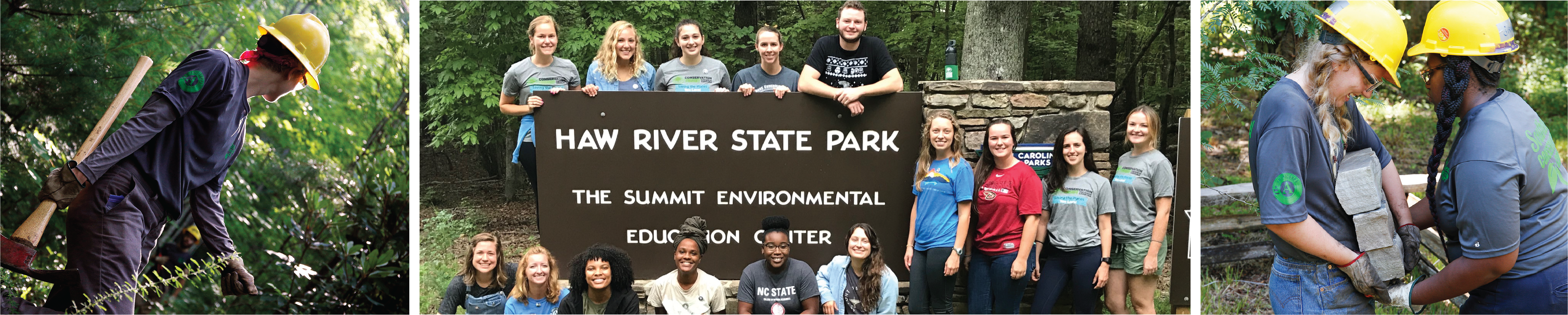
N.C. Crew 2 built a set of box steps on badly eroded trail section of the Upper Creek Falls Trail in the Pisgah National Forest. The Pisgah and Nantahala National Forests are the most visited national forests in the United States.

This NCYCC youth crew (15-18-years-old) spent the first two weeks of the summer restoring the Upper Creek Falls Trail in the Grandfather District of the Pisgah National Forest. They later moved to the Pisgah District of the Pisgah National Forest near Brevard where they are restoring a number of trails around the Pisgah Visitor Center.

The crew is seeing how high traffic and water flow erode trails. They are learning how to build re-routes, trail structures and strategically place large rocks to restore and preserve the trails. The USFS rangers are giving them a big “thumbs up” for the quantity and quality of their work. Because the members work on some of the Pisgah District’s most highly used trails, they have received plenty of thanks from hikers.

The crew has used their weekends to visit Chimney Rock State Park, Sliding Rock and the town of Brevard.

Two members of the crew are returning from last year and one of those has decided to pursue a degree in sustainable development at Appalachian State University this fall. Another crew member is using his NCYCC experience to fulfill his high school program’s internship requirement.

N.C. Crews 3.1 and 3.2 – Land Trust and Local Government Crews

N.C. Crews 3.1 and 3.2 are this year’s two three-week teen crews. Both crews’ work includes two weeks of long-leaf pine restoration, trail building and maintenance, and park and campground improvements for the Coastal Land Trust. Crew 3.1 also worked on removing invasive species and trail maintenance for Mecklenburg County Parks and Recreation in Charlotte. Crew 3.2 will do an additional week of work building a boardwalk and removing invasive species for Ellerbe Creek Watershed Association in Durham.

Charlotte’s Spectrum News interviewed N.C. Crew 3.1. Take a look here!

What’s Next…

The crews will end their NCYCC program on August 4 with a professional development event in Raleigh. Duke Energy Foundation funds a full day of workshops to help NCYCC participants prepare for the next step of their education and career journey. The day includes sessions on financial literacy, skills matching, and goal setting, interviewing, project management and gap year opportunities. It also includes a natural resources career panel of representatives from local, state, and federal agencies, a nonprofit, and a for-profit company to give participants information about natural resource jobs in each of these sectors.

The NCYCC program is supported by Conservation Trust for North Carolina, Vermont Youth Conservation Corps, N.C. State Parks, U.S. Forest Service, Mecklenburg County Park and Recreation Department, Duke Energy Foundation, N.C. Electric Membership Cooperative, Wells Fargo, Coastal Land Trust, Ellerbe Creek Watershed Association, Fred and Alice Stanback, the Eddie and Jo Allison Smith Foundation, Little Acorn Fund, the Smith Family Foundation, and the generosity of individual donors.

It is because of this generous support that these young people have an opportunity to learn about the natural world, grow in their understanding of the value of public lands, connect with nature on a daily basis, gain work skills and certifications, and discover new things about themselves and other people.

You are helping CTNC cultivate a new generation of conservation leaders for North Carolina.

Categories