WIN: The legislature passed a budget with the Governor’s signature that made significant increases to our state’s conservation trust funds. As a result, annual recurring funding of $48.4 million to the state’s conservation trust funds will increase resources for CTNC and other organizations to continue their work.
Specifically, the budget increases recurring funding for the North Carolina Land and Water Fund and the Parks and Recreation Trust Fund to $24.2 million each. A major win for protecting our parks, air and water.
The budget also continues to invest in climate resilience for communities across the state by maintaining hundreds of millions of dollars in funding previously allocated to build out a statewide flood resilience plan and begin community-driven natural infrastructure projects.
WORK TO BE DONE: Despite last-minute heroics by our legislative champions and you, our conservation advocates, House Bill 367 – Uniform Partition of Heirs Property Act did not advance this session. While extremely disappointing, it is important to remember that bills as complex as the heirs’ property bill are rarely passed in a single legislative session. We will continue to work with other members of the NC Heirs Property Coalition to educate lawmakers of the importance of passing reforms that protect family-owned land throughout North Carolina. Thanks to everyone who helped in ways big and small. It was truly a team effort.
Our state leaders heard your voice and support. Thank you for moving our state forward to enable people to build resilient communities. We look forward to continuing to advocate for strong conservation policies on behalf of our community partners and advocates like you.
Preventing Involuntary Land Loss: Uniform Act Helps NC Families
In North Carolina, an estimated $1.86 billion of land privately owned in North Carolina is held as heirs’ property. Heirs’ property occurs when land is passed down through generations and owned by many descendants with an undivided interest in the land.
Currently, in our state, anyone who inherits or purchases even a small interest of heirs’ property can potentially force other owners to sell against their will, often for well below fair market value. Owners of family-owned properties are vulnerable to involuntary land loss resulting from forced partition action proceedings.
Right now, a uniform bill is being adopted by state legislators across the Eastern United States. Enacting the Uniform Partition of Heirs Property Act (UPHPA) in North Carolina will address how current state laws leave landowners of heirs’ property vulnerable to involuntary land loss and provide a path to prevent future loss.
The North Carolina General Assembly is considering adoption of the bill in an effort to safeguard families from forced sales and provide them with greater access to building generational wealth through land equity.
The UPHPA will:
give families a solid chance at keeping the land in the family when one or more owners wants to divide or sell the land through a partition action.
allow more time for families to make thoughtful decisions about how to sell their land. All members would get the first right of refusal – the contractual right to enter into a business transaction with a person or company before anyone else can.
create protections for the family to gain fair market value for their land.
reduce the burden of county clerks by providing a standardized procedure to follow when a heirs’ property is up for sale.
Brandon A. Robinson, CTNC Board President, is an estate planning and corporate law attorney practicing in North Carolina. Below, he shares how the Uniform Act and other resources will provide support to families seeking to stop forced sales that result in land loss.
Heirs’ property is a problem that derives largely from either inadequate or nonexistent legally binding documents that clearly state ownership and heirs’ rights. Heirs’ property is created when land is inherited without a clear title or documented legal ownership. While heirs’ property can impact any family when a landowner dies without a will or trust, this problem disproportionately impacts Black and rural families who have historically lacked either the access to high-quality legal services, or a willingness to avail themselves of such services.
Under North Carolina law, just one concurrent owner can initiate a partition proceeding, which usually results in either the physical partition, or the forced sale, of the land, depending on what the Clerk of Superior Court finds to be the most equitable solution. For example, if you are a developer, you can entice just one family heir to sell his/her stake to you and force a sale of the entire property. This happened to a family of color in Raleigh. The family had ownership of a plot of land that was rural Wake County when purchased in the 1940s. Over the years, the property had been rezoned and became more valuable as the capital city sprawled. Unfortunately, the family fell prey to a land developer who bought one heir’s interest for nominal consideration and forced a sale through a partition proceeding. The developer gained title to its initial fractional share for well below fair market value, yet reaped a windfall when the other heirs could not buy out the developer in order to keep their family land; the result was that the developer gained full control of family legacy property that could then be sold or developed for value many times greater than what the developer paid.
If the Uniform Act were to be adopted by the North Carolina General Assembly, the developer would have been preempted in favor of providing family heirs a first right of refusal, and even if a sale did eventually occur through the partition process the family would have a better chance to realize fair market value for the property, based on enforcement tools at the Clerk of Superior Court’s discretion. This would allow all families to have access to clear rules and protections of their land. This offers a way to empower marginalized people who do not have the same access to power and resources to stop a forced sale.
Adopting a Uniform Act Will Give NC Families the Best Path Toward Resolution
Alton Perry, CTNC Board Member, is a Forest Management-Land Retention Consultant with the Roanoke Electric Cooperative. He works with landowners to sustainably manage their property through agriculture, forestry, and revenue generation. Below, he shares how the Uniform Act can be a tool to protect families from forced sales that result in land loss.
The UPHPA intent is to ensure due and equitable process of heirs’ property disputes. Many organizations, attorneys, and community-based organizations offer legal assistance to heirs’ property owners. North Carolina legislators and clerks of court, aided by the process created by the Uniform Act, could offer solutions to families and reduce land lost to forced sales, by referring heirs’ property owners to these resources, therefore reducing the number of cases that would result in a forced partition action.
Heirs’ Property Rights is a problem that cuts across rural and urban divides. All families with multigenerational roots could wrestle with these problems. This legislation brings basic fairness, protection of ownership, and a clear and streamlined process for land ownership and land transfers to our state. This helps all people – white owners, marginalized urban populations, and descendants of enslaved people in the South. This will benefit all of North Carolina.
Ways to get involved.
CTNC views the adoption of the Uniform Act as an integral part of our mission to build resilient and just communities through conservation solutions. Without a clear path to prove or resolve ownership of land, NC families lose the ability to leverage their land for conservation and economic value or to access federal relief funds after disasters.
As a member of the CTNC community, we hope you will stand with us to advocate for smart conservation policies that allow every North Carolinian to benefit from conservation and have the tools to build communities that are resilient to the impacts of climate change.
Conservation can provide solutions to many challenges facing our communities. Through innovative conservation strategies, we can build places to hold excess water after storms, protect trees that absorb carbon from the atmosphere, and offer places for people to relax for their mental and physical health.
In 2021, North Carolina legislators voted to spend nearly $200 million to support efforts that will allow our state to become more resilient to climate change. We urge our state leaders to repeat this important investment in our state’s natural resources. Only with smart conservation policies will we successfully build resilient communities that are prepared to weather any storm.
CTNC’s Policy Goals include:
Increase public funding for land acquisition, park maintenance, trail construction, and recreation access
Empower communities to invest in flood-resilient strategies
Prevent involuntary land loss caused by forced partition sales of heirs property
Build capacity within communities through AmeriCorps and other service opportunities
These goals will guide our work with policymakers and legislators for the years to come and key outcomes will prepare our state for whatever comes next.
INCREASING FUNDING FOR CONSERVATION CTNC supports the continued funding of the conservation trust funds as recommended by Land for Tomorrow. We hope to work with members of the General Assembly to increase recurring funding for the state’s conservation trust funds and state agencies. Read more about the legislative priorities set by members of Land for Tomorrow.
As a member of the Great Trails State Coalition, CTNC will continue to work with members of the General Assembly to bring the economic, health, and environmental benefits of trails to North Carolina communities.
EMPOWERING RESILIENT COMMUNITIES North Carolina communities need greater investments, increased capacity, and a cadre of service-minded people to be successful in implementing the recommendations of Governor Cooper’s Executive Order 80 and Climate Risk and Resilience Plan. CTNC will advocate for the funding and resources that provide every community with the opportunity to benefit from AmeriCorps service that builds capacity and finds innovative conservation solutions to address the issue of climate change. Learn more about Resilience Corps NC.
Land trusts can lead the way in addressing the impacts of climate change and flood risk. Alongside the Land Trust Alliance, CTNC will promote policies and funding that advance natural climate solutions while supporting the protection, restoration and stewardship of open and working lands that increase climate resilience. Read more about Land Trust Alliance’s policy priorities.
PREVENTING INVOLUNTARY LAND LOSS Enacting the Uniform Partition of Heirs Property Act (UPHPA) in North Carolina will address how current state laws leave landowners of heirs’ property vulnerable to involuntary land loss. The UPHPA will help families by giving them a solid chance at keeping the land in the family when one or more owners wants to divide or sell the land through a partition action. Currently, the North Carolina General Assembly is considering adoption of the bill that would safeguard families from forced sales through partition action. Read more about the NC Heirs Property Coalition and our effort to adopt the Uniform Act for NC families and landowners.
It All Starts with Collaboration to Seed Better Outcomes CTNC is committed to participating in coalitions to find a better future for our state. Our team is active members of Land for Tomorrow, the Great Trails State Coalition, and the NC Heirs Property Coalition, Conservation Trust for NC. These coalitions advocate for smart conservation policies and adequate funding on behalf of our members, community partners, and collaborative projects.
Join Us As a member of the CTNC community, we hope you will stand with us and advocate for smart conservation policies that allow every North Carolinian to benefit from conservation and get the tools needed to build communities that are resilient to the impacts of climate change.
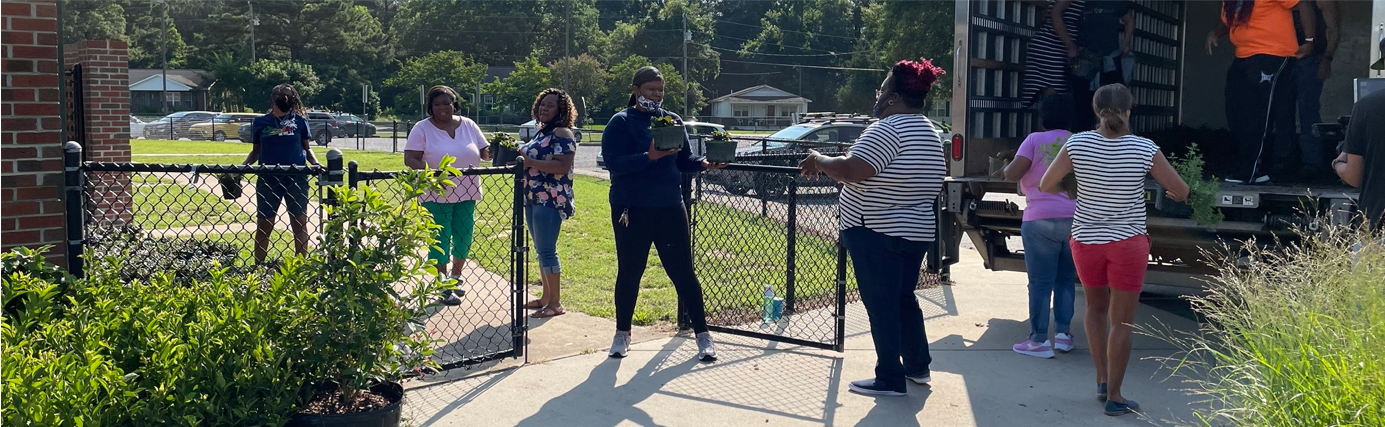
Princeville Elementary School teachers volunteer during a community planting day.
“Seeds of Climate Resilience” is a blog series to inspire ideas to help our state weather our changing climate. We can protect our families, economies, and the environment. The seeds of change planted today will help communities thrive for generations to come.
All too often, flood-prone communities are dotted with vacated lots that are scraped clean of man-made structures and left for nature to reclaim. These lots are usually deemed prone to future flooding, and the Federal Emergency Management Agency (FEMA) has given the landowners a path to sell their property and move away from the potential of repeated flooding.
What are FEMA buyouts? Buyouts are the primary federal program designed to increase disaster resiliency.
After a presidentially-declared disaster, local officials may decide to request money from the state to purchase properties that have either flooded or been substantially damaged. The state chooses to offer buyouts using FEMA’s money through its Hazard Mitigation Grant Program to reduce future disaster losses.
Buyouts are voluntary, and no one is required to sell their property. As part of the federal buyout program, the area is deed restricted and cannot be developed with permanent structures in the future. Existing properties and structures are demolished, cleared, and permanently maintained as green space by the local government.
The voluntary buyout program gives property owners the option to sell their property and move away from the potential of repeated flooding while reducing property damages and expenses incurred from flooding. The flood buyout program can be an extremely useful tool for communities recovering from a natural disaster.
Once homes are bought, the land is vacated and development rights removed. This provides communities with an opportunity to restore the land to a natural space that can be designed to store water and be flooded again while keeping future residents out of harm’s way. North Carolina relies on FEMA-funded buyouts to create more open space and reduce future disaster risks.
What if these abandoned spaces were given new life through conservation work? Land where buyouts occur is eventually deeded over to the town or other local government agency. The rules say that such lots can never be built on again. Too often they remain vacant and are seen as a blight to the remaining community members. But there are other options.
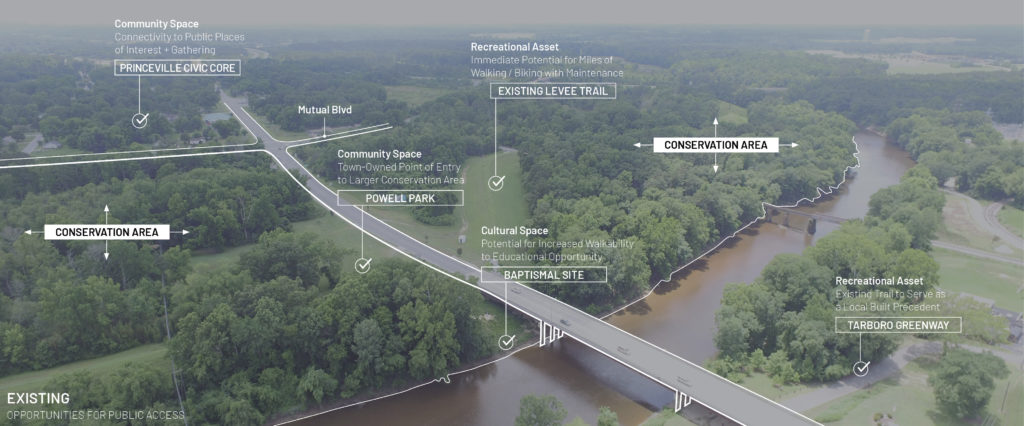
North Carolina Success Story: Princeville Finding effective land uses for FEMA buyout properties is a cornerstone in Princeville’s flood mitigation strategy.
How can citizens help determine how vacant land created from buyouts could be used or maintained? Advocate with your local elected officials for shared community green space and conservation projects on vacant and underutilized land owned by your city, town or municipality. Where possible, a local land trust or conservation organization may offer programs to support this effort.
Over the past 20 years, The Land Conservancy of New Jersey has worked with communities impacted by ongoing, damaging storms. In many of these municipalities, FEMA cannot provide the relief residents need to leave their properties and settle elsewhere. The Land Conservancy office worked with these towns, the State of New Jersey, and homeowners to purchase more than 200 homes and convert the land to open space. Restoring the land to its natural condition provides additional capacity to hold stormwater, offers safety to residents, reduces further loss of property, and saves the lives of emergency responders who continue to put themselves in harm’s way during these dangerous situations. It creates a park where none existed before and answered a community’s needs to reduce the harmful and serious effects of repetitive, overwhelming storms in some of our most vulnerable neighborhoods.
“Seeds of Climate Resilience” is a blog series to inspire ideas to help our state weather our changing climate. We can protect our families, economies, and the environment. The seeds of change planted today will help communities thrive for generations to come.
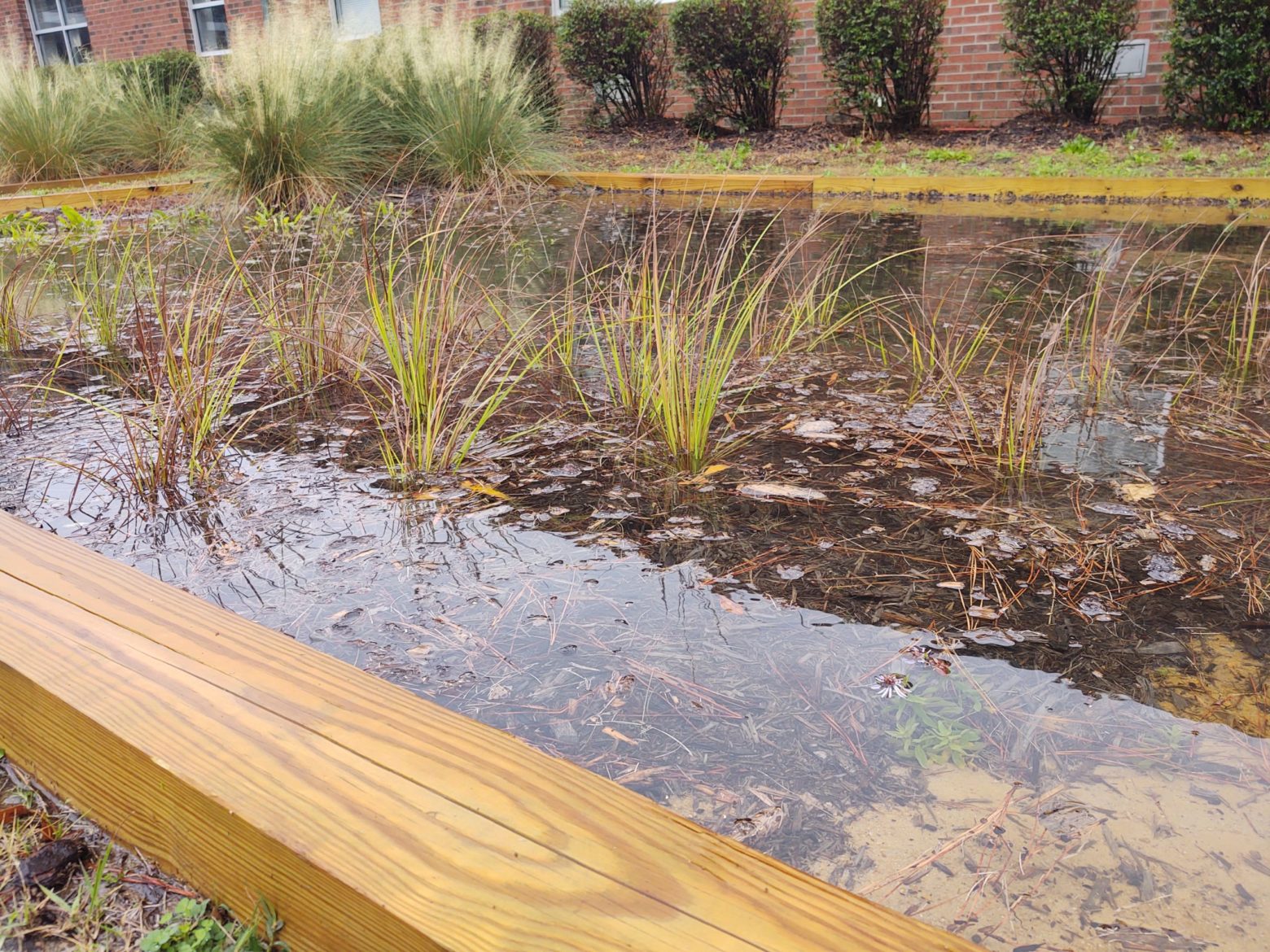
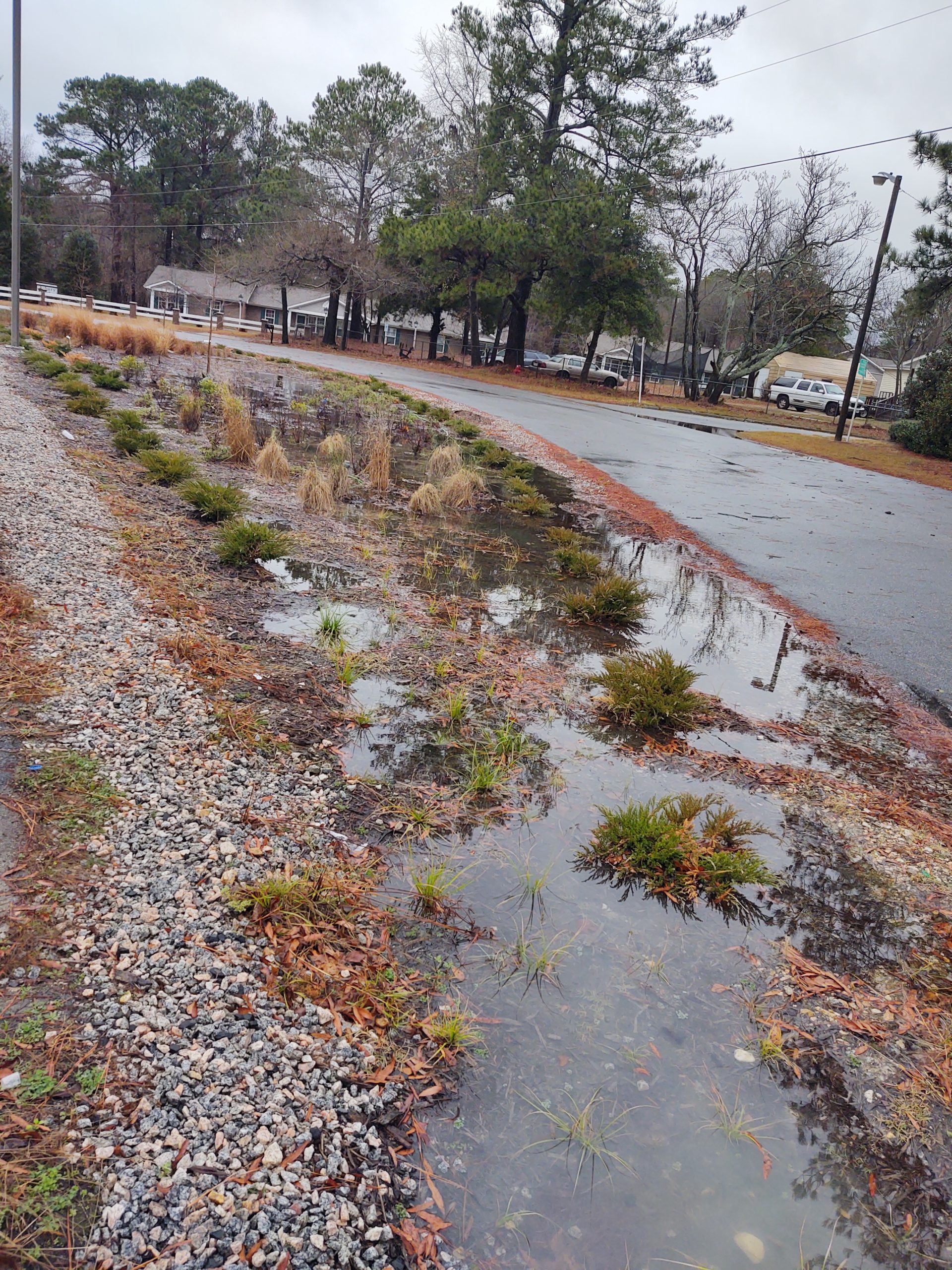
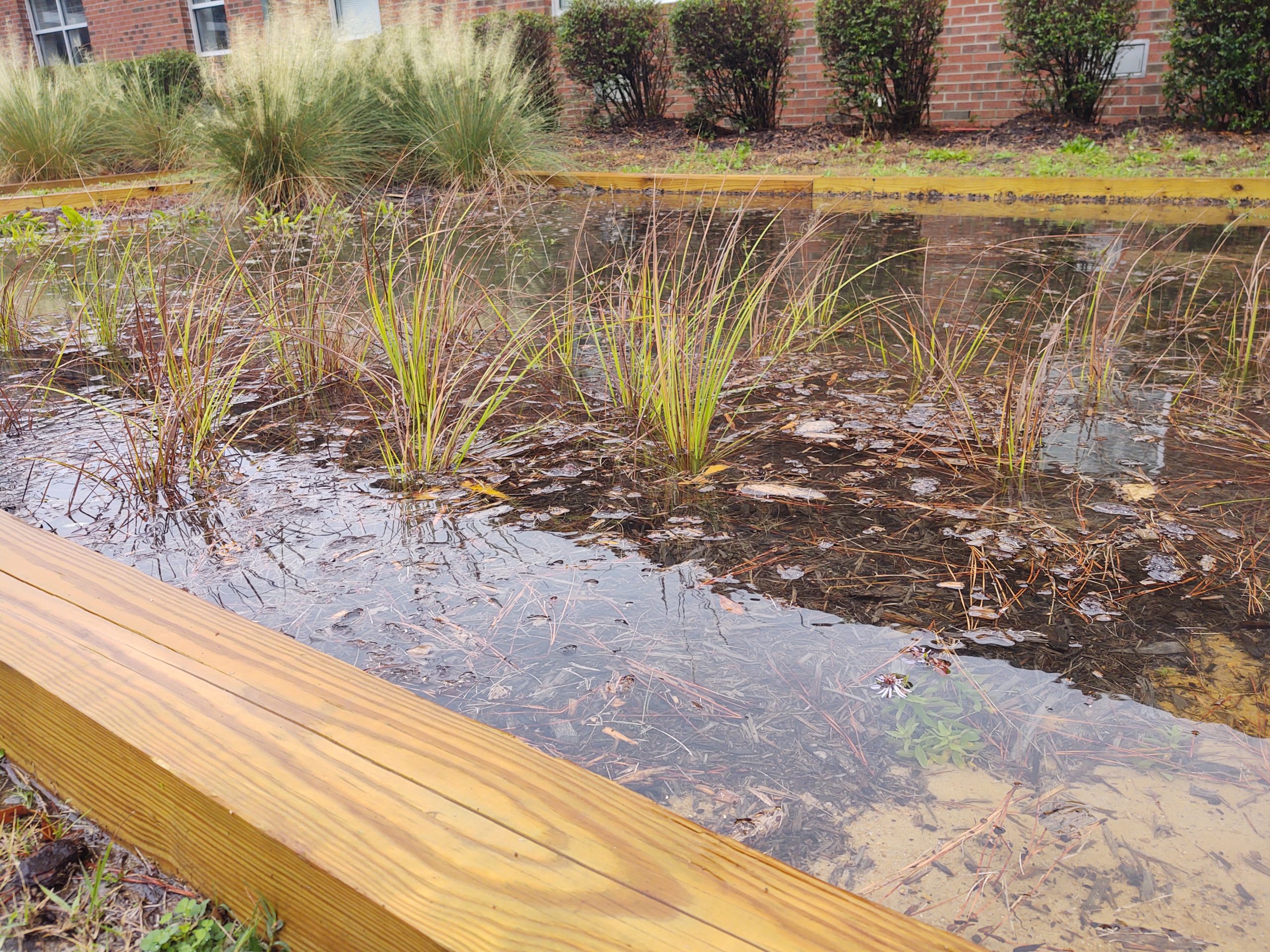
Rain gardens offer an attractive and effective solution to address flooding and increased rainfall on a property.
According to the North Carolina State Climate Office,
Heavy rains from hurricanes and other weather systems will become more frequent and intense. Annual precipitation is also expected to increase. These changes are driven primarily by increases in atmospheric water vapor as the climate warms. Extreme rainfall in North Carolina can result from hurricanes, Nor’easters, or other weather systems like thunderstorms. Severe thunderstorms are also likely to increase in a warming climate and can cause flash flooding, especially in urban areas.
Water containment will be increasingly important as our communities in low-lying areas or near lakes, rivers, and streams see rising waters and flooding.
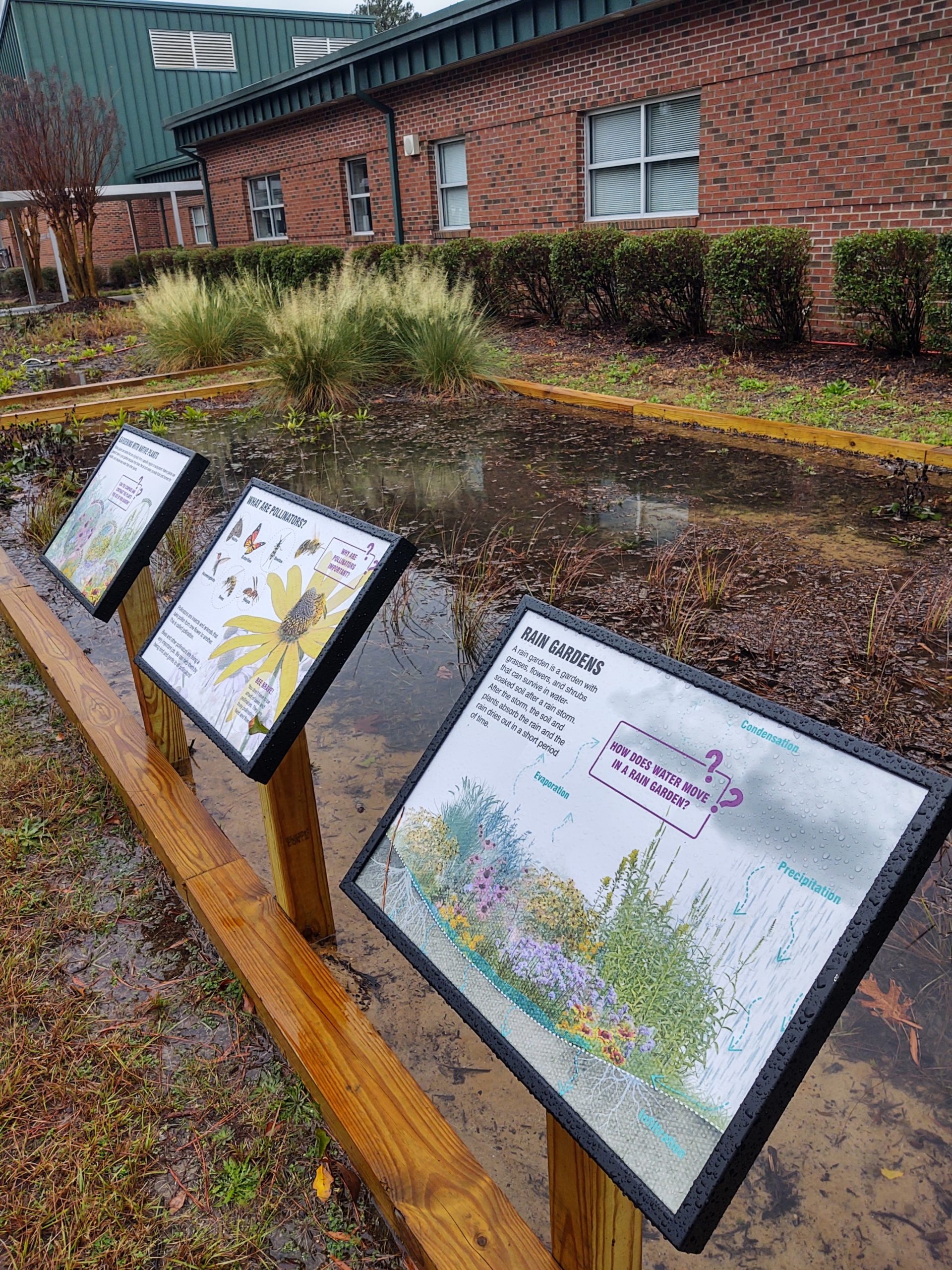
What is a rain garden? A rain garden has grasses, flowers, and shrubs that can survive in water-soaked soil after a rainstorm. Rain gardens are located in the low points of yards so that the water that runs off of roofs or driveways can be directed towards the rain garden. After the storm, the soil and plants absorb the rain, and the area dries out quickly.
A rain garden is NOT a wetland, a place for mosquitos to thrive, or difficult to maintain long-term. This garden area is dry to lightly moist most of the time. And it is naturally beautiful!
How does it help mitigate climate change? As our climate changes, communities are experiencing more frequent and severe rainfall and greater swings between rains and drought. Creating permeable spaces designed to capture water benefits plants, wildlife, people, and the built environment.
If rainwater has nowhere else to go, it will often result in flooding or standing water. However, if rainwater is captured where it lands, it can promote healthy plants and sustainable ecosystems that provide a conservation benefit to nearby residents.
Supporting habitat: Rain gardens capture and store water after heavy rainfall. The water is held in the garden area, absorbed by the water-loving plants, and naturally filtered back into the soil.
Managing stormwater: Any water that does not infiltrate the groundwater then moves through a canal, ditch, drain, or pipeline until it reaches a larger body of water such as a river, pond, or wetland area.
Rainwater is not treated at a facility to remove pollutants before entering larger waterways. This means that rain gardens are essential to help naturally filter the water that passes through them.
This process allows communities to better manage heavy amounts of rainfall and stormwater by slowing it down and using natural spaces to provide an added layer of filtration before the water reaches your home.
North Carolina Success Story: Princeville Elementary School After Hurricane Matthew devastated Princeville Elementary School in 2016, students had to go to schools in surrounding communities for three years until their school could be renovated and flood-proofed. Finally, in 2020, the Princeville Elementary School welcomed back its almost 200 students.
As part of a $200,000 grant from the National Fish and Wildlife Foundation and Wells Fargo Resilient Communities Program, CTNC worked with local organizations to install rain gardens at the school to capture and redirect water. Today, the gardens work to protect the school from excess water. The gardens were designed by the NC State Coastal Dynamics Design Lab and installed by volunteers from Conservation Corps NC, CTNC, NC State, M&M Landscaping Co. and residents of Princeville.
How can citizens help build a rain garden in your community? This article from NC State has great tips to bring this climate adaptation strategy to your community: “Why Your Yard Might Need a Rain Garden”
SOURCE: Rain Water Guide developed by NC State Coastal Dynamics Design Lab
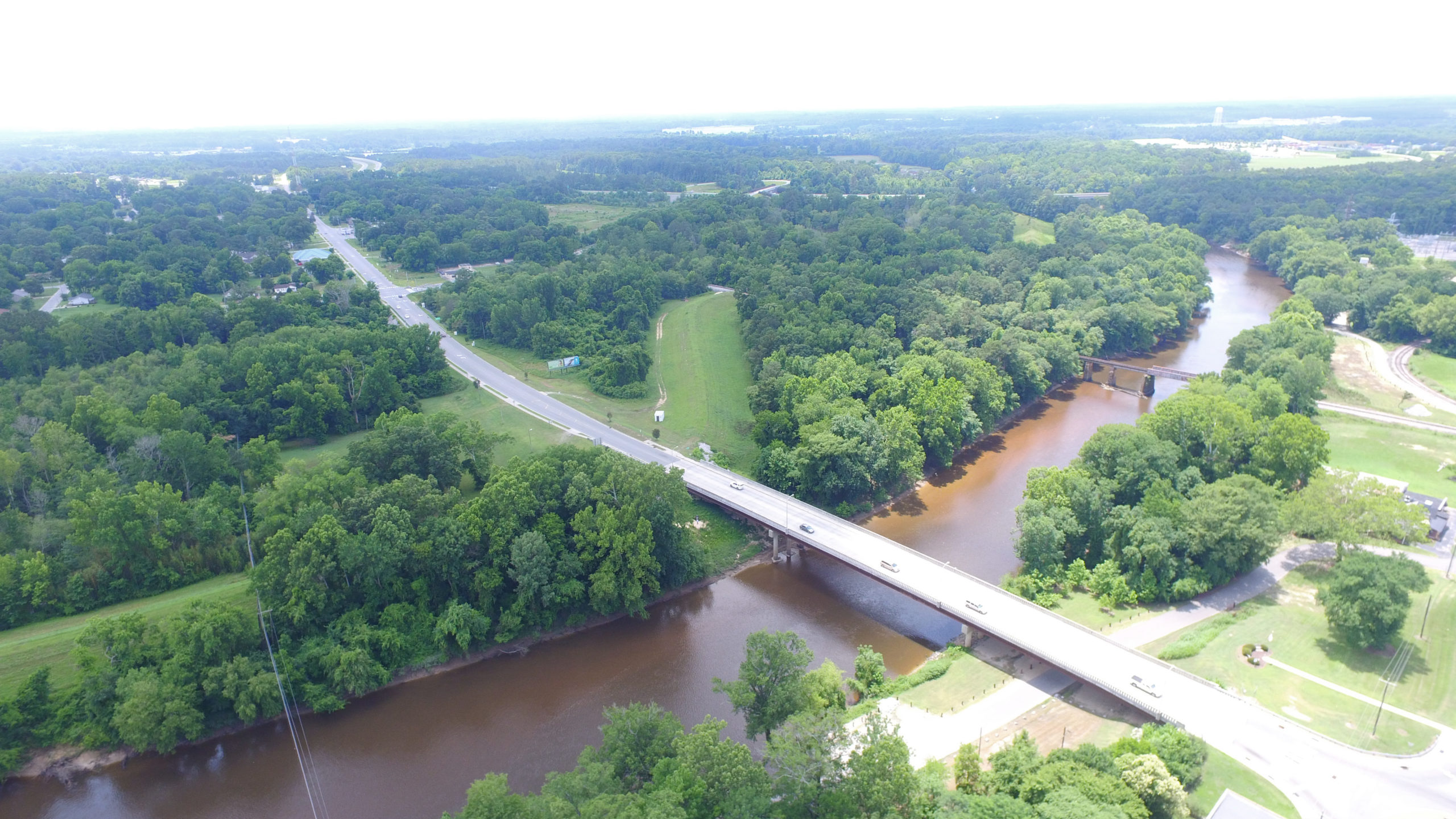
Photo: NC State Coastal Dynamics Design Lab arial view of the Tar River.
There is even more great news about the Princeville – Seeding Resilience project! 2022 brings many exciting actions to protect this community from the changing climate.
Since the debut of our latest video, this story has captured the attention of conservation champions nationwide. The project was featured in:
As we conclude the first phase of executing recommendations outlined in the Princeville Floodprint, the collaboration is turning our attention to Phase II. This phase will further lay the groundwork toward establishing an effective model of community-driven climate change adaptation that can be replicated in communities across the state. Throughout North Carolina, rural communities established along rivers, the coast, and lakes face repeated flood events. With the increasing threat of climate change, more communities will experience these impacts.
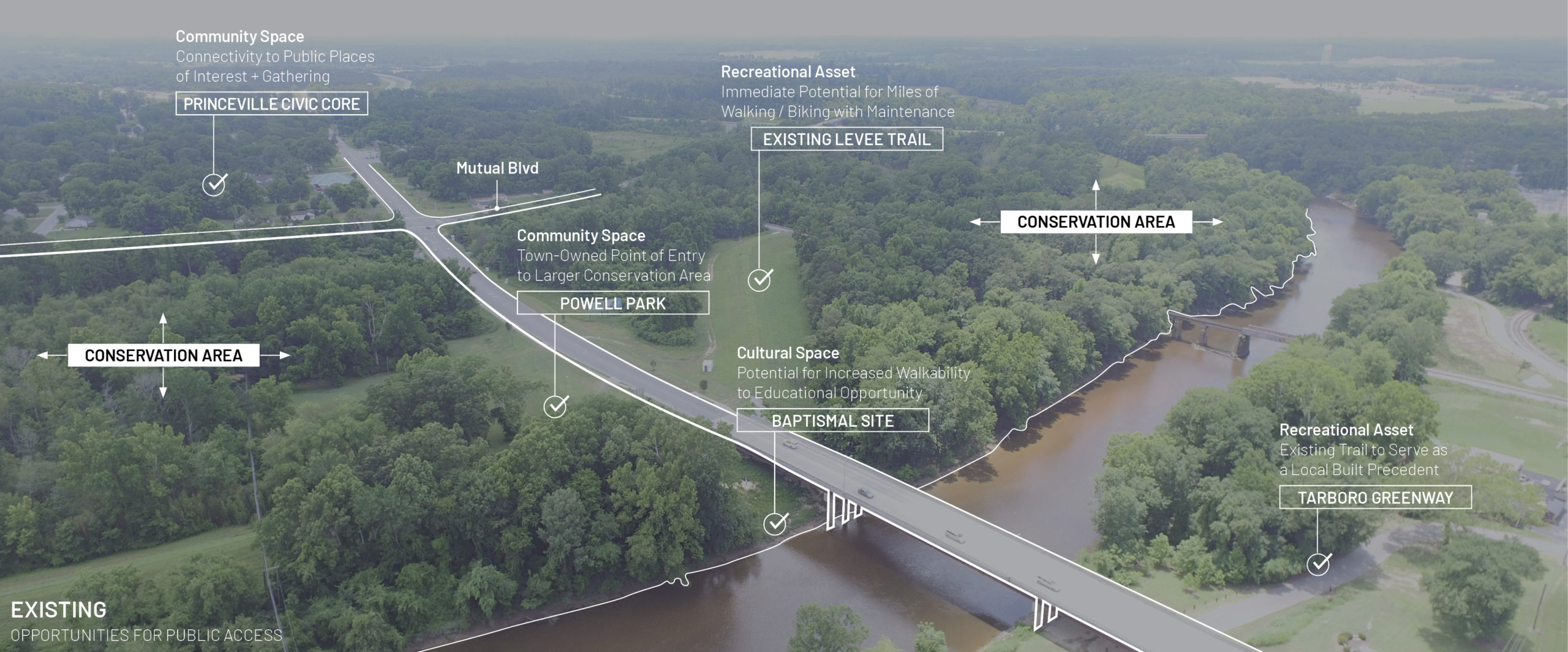
Phase II focuses attention toward converting vacant and underutilized land. The Town of Princeville, North Carolina State University Coastal Dynamics Design Lab, Conservation Corps NC, and Temboo Software will work to complete another round of conservation projects designed to better manage flood and stormwater, establish recreation opportunities for residents, build a model community garden to support locally-grown food operations, and connect youth and adults to environmental education opportunities. This phase focuses on transforming underutilized town-owned lots and property that FEMA has determined to be at risk of future flooding into absorbing flood impact while making them usable spaces for the community.
Over the next two years, this partnership will work to complete:
Installation of 6,000 square feet of rain gardens and managed wetlands on vacated lots to hold up to 28,000 gallons of water per rain event
Opening of a 24-bed model community garden on vacated lots to promote local, low-carbon agriculture
Planting of trees and native plants for 250,000 gallons of water absorption and 2,900 pounds of carbon storage per year
Creation of trails with educational and health-benefit elements at Princeville’s riverfront Heritage Park
“Our town has already seen the rewards from our collaboration with Conservation Trust, NC State, and all our partners,” said Princeville Town Manager Dr. Glenda Lawrence-Knight. “This next phase will only further prepare our town for the next flooding incident while showing a true investment in the health and well-being of our citizens.”
In tandem with the on-the-ground work, CTNC and our partners are writing an effective model for building a resilient community. We hope this community-based model can be replicated to benefit others facing similar challenges.
“Communities across North Carolina will benefit from the lessons learned as a result of the partnerships and outcomes in Princeville,” said Andrew Fox, FASLA, PLA of NC State Coastal Dynamics Design Lab. “It’s exciting to see people benefit from the principles that we’ve studied and developed.”
This work will be carried out with financial support from the Commission for Environmental Cooperation, the Anonymous Trust, and generous donors who have made an investment in resilience through CTNC and our partners.
View of the Tar River. Credit: NC State Coastal Dynamics Design Lab
Meet the people of Princeville, N.C. who are utilizing conservation to build a resilient future
As extreme weather events impact communities across North Carolina, places like Princeville are finding innovative ways to rebuild with greater resilience to our changing climate.
The 2021 budget for North Carolina has been passed with bipartisan support by the NC legislature, and officially signed by Governor Cooper, in a huge win for conservation. This legislation will substantially increase funding for land acquisition projects; major investments in parks, trails, and open space statewide; and new investments to advance resilience planning and floodplain protections that will help communities facing the impacts of climate change.
With a total of nearly $200 million for resilience and more than $300 million for conservation projects, this is the greatest investment in conserving North Carolina communities since before the Great Recession in the late 2000s.
What Does This Mean for Our Work? Since 2018, CTNC has been a leader among conservation groups across the state dedicated to achieving special funding for a statewide resilience planning initiative. In partnership with our colleagues at Environmental Defense Fund, NC Conservation Network, The Nature Conservancy, The Conservation Fund and many others, we collectively have brought models from other states and our own examples of working with communities to make the case for funding these critical projects. Collaborative partnerships and bipartisan support, like that fostered by the Land for Tomorrow Coalition, ensure we all move conservation forward in ways that benefit communities.
Through this funding and the other resources it will attract, we hope to collaborate with additional partners to:
Provide resources and funding to local governments to create resilient strategies to protect their communities.
Assist every small community across the state in creating flood plans, and with funding to implement. We are already a key advisor to the state on a resilience handbook for communities.
Create jobs in rural communities to restore and build natural infrastructure and other adaptive measures to reduce flood risk.
Prioritize economic investment in local communities, so they thrive.
The 2021 State Budget includes:
Land and Water Fund This is the primary source of grants allowing hundreds of local governments, state agencies, and conservation nonprofits to protect clean water and conserve ecologically, culturally, or historically significant lands. This investment will directly benefit acquisitions and easements sought along the Blue Ridge Parkway.
$49.5 million new revenue in FY21-22 and $51.5 million new revenue in FY22-23
$15 million in FY21-22 specifically for projects to protect & restore floodplains to reduce flood risk
Parks and Recreation Trust Fund This fund supports land acquisition and improvements within the State’s park system. PARTF is the main funding source for local parkland acquisitions, facility improvements, and public beach and estuarine access.
$45.5 million new revenue in FY21-22 and $45.5 million new revenue in FY22-23
$10 million new revenue in FY21-22 specifically for local parks projects to increase access for persons with disabilities
Additional Funding for Community Resilience In recognition of North Carolina’s continued and increasing exposure to the impacts of climate change — particularly storms and flooding — this funding launches a new critical level of statewide planning and investment to support the resilience of our communities.
Nearly $200 million in resilience investments to reduce the risk of catastrophic flooding.
Other Highlights
$40 million for a Coastal Storm Damage Mitigation Fund
$25 million for a Small Project Mitigation and Recovery Program
$20 million to create a “statewide Flood Resiliency Blueprint”
$15 million to the Land and Water Fund for floodplain projects
$15 million for a Disaster Relief and Mitigation Fund
$15 million for a Transportation Infrastructure Resilience Fund
$4 million for a Dam Safety Emergency Fund
$3.5 million for floodplain pilot projects
$1.15 million to the Resilient Coastal Communities Program
TAKE ACTION We’ve thanked legislators for these sweeping investments in conservation, but they want to hear from you, the people they represent. Join us by sending a short thank-you note to your local lawmakers for investing in our state.
Facilitating the permanent protection of land in Western North Carolina for future generations is the purpose of CTNC’s Mountain Revolving Loan Fund (MRLF). This fund often allows land trusts to get a project over the finish line.
The CTNC Mountain Revolving Loan Fund provides two benefits for land conservation:
It provides bridge financing with minimal interest to land trusts in Western North Carolina for the purchase of conservation land and easements. As loans are repaid, the money becomes available to re-lend
A percentage of the balance of the loan fund is given out each year in grant awards. Grants of up to $25,000 are not required to be paid back.
This year, CTNC is pleased to fund six different land acquisition projects to five land trusts totaling over $111,000. Congratulations to Blue Ridge Conservancy, Foothills Conservancy of North Carolina, Conserving Carolina, Piedmont Land Conservancy, and Mainspring Conservation Trust for receiving awards during this grant cycle.
Land provides a significant source of economic stability and growth for many families. This type of land ownership is common in North Carolina. Although no one is immune to the vulnerability of losing their land to a forced partition action, this issue disproportionately impacts Black, Indigenous, and People of Color throughout North Carolina.
A Legislative Solution:
The Uniform Partition of Heirs Property Act
Enacting the Uniform
Partition of Heirs Property Act (UPHPA) in North Carolina will address how
current state laws leave landowners of heirs’ property vulnerable to
involuntary land loss. The UPHPA will help families by giving them a solid
chance at keeping the land in the family when one or more owners wants to
divide or sell the land through a partition action. This bill has been enacted
in 17 states including Georgia and South Carolina. We hope North Carolina will be next.
Currently, the North Carolina General Assembly is considering
adoption of the bill that would safeguard families from forced sales through
partition action. The NC House
recently passed the heirs property bill (H367) with strong bi-partisan support.
We deeply appreciate those showing leadership on this important issue. The
Senate will soon vote on the bill.
Families in an heirs’ property situation have difficulties
accessing federal funding for sustainable forest and habitat management,
agricultural work, and natural disaster recovery. In states where the Uniform Act
is adopted, federal law allows landowners to gain access to beneficial funding
and aid programs, including FEMA disaster recovery and the USDA Farm Bill.
CTNC has joined a coalition of non-profit and for-profit partners advocating for the adoption of the Uniform Act so North Carolina families can be protected from involuntary land loss.
Who is involved? Black Family Land Trust
Inc., Roanoke Electric Cooperative, Audubon North Carolina, Conservation Trust
for North Carolina, The Conservation Fund, The Land Loss Prevention
Project, members of the North Carolina Bar Association, academic partners,
and other experts.
This website uses cookies to improve your experience. We'll assume you're ok with this, but you can opt-out if you wish. Cookie settingsACCEPT
Privacy & Cookies Policy
Privacy Overview
This website uses cookies to improve your experience while you navigate through the website. Out of these cookies, the cookies that are categorized as necessary are stored on your browser as they are as essential for the working of basic functionalities of the website. We also use third-party cookies that help us analyze and understand how you use this website. These cookies will be stored in your browser only with your consent. You also have the option to opt-out of these cookies. But opting out of some of these cookies may have an effect on your browsing experience.
Necessary cookies are absolutely essential for the website to function properly. This category only includes cookies that ensures basic functionalities and security features of the website. These cookies do not store any personal information.