Private Investment in Watershed Protection Advances Triangle Conservation Efforts

Novel partnerships and long-term collaboration enable the region to address watershed health

North Carolina’s Triangle region (Raleigh-Durham-Chapel Hill-Cary-Garner) is one of the fastest-growing areas in the country. Rapid development threatens the forests, wetlands and grasslands that naturally protect drinking water supplies for 600,000 people in Raleigh, Garner, Wake Forest, Rolesville, Knightdale, Wendell and Zebulon areas. Natural infrastructure, like forests and wetlands, can address these challenges by providing basic services from water flow regulation and flood control to water purification and water temperature regulation. But with the rising cost to acquire land in and around the Triangle, protecting these places has become increasingly costly for nonprofits and public agencies.

In recent years, public agencies Raleigh Water, Wake County, City of Durham and Town of Cary have worked alongside local land trusts including Conservation Trust for North Carolina, The Conservation Fund, and Triangle Land Conservancy to acquire and manage land in the Falls and Jordan Lake watersheds. Now, the Caterpillar Foundation is among corporate foundations and private investors stepping up to fill a critical funding need.

The Foundation will invest $250,000 in natural infrastructure and land conservation as part of a new partnership to safeguard important local natural lands.

“Local communities in the Triangle Region are increasingly investing in natural infrastructure, although the COVID-19 pandemic has strained public budgets and limited cities and their utilities resources and capacity to protect vast watersheds at a critical time,” said Edward Buchan, City of Raleigh.

This initiative fits into a growing movement to integrate natural infrastructure with traditional concrete-and-steel infrastructure to improve delivery of core services, like drinking water and flood protection, while increasing resilience. World Resources Institute, a global research organization, has advised this alliance on strategies to combine “green” and “gray” infrastructure by leveraging new partnerships and funding opportunities. The Caterpillar Foundation is one of the first corporate foundations to develop a dedicated program to support this new approach.

“Novel partnerships and long-term collaboration are critical to addressing watershed health across the region,” said CTNC Executive Director Chris Canfield. “Everyone has a role to play. Public water users provide the base funding through the utilities, land trusts collaborate on protection plans and secure the land, and private partners like the Caterpillar Foundation help get it all over the finish line.”

The Caterpillar Foundation hopes to both accelerate the program with this new financing and encourage volunteer engagement of their locally-based employees.

“This partnership provides us the opportunity to not only advance an exciting new model for watershed protection, but does so in a community in which many Caterpillar families call home,” said Caterpillar Foundation President Asha Varghese. “We hope the success of initiatives like this can build momentum for new environmental innovation and investment. We believe multi-sectoral collaboration is key to achieving sustainable infrastructure solutions, and ultimately, building resilient communities.”

“There are thousands of community water systems that could benefit from this model to protect and manage natural infrastructure assets,” said Todd Gartner, Director of WRI’s Cities4Forests and Natural Infrastructure Initiatives. “Leading initiatives like this set a new high-water mark for city-led innovation that harnesses nature’s potential to supply clean drinking water, creates recreational opportunities, and boosts resilience.”

The Caterpillar Foundation investment will supplement public and private funds to make possible the acquisition of land in the Upper Neuse watershed. It will protect river and stream frontage that are highly vulnerable to development. In addition to ecosystem services, these natural lands provide important outdoor opportunities for communities to connect with nature. Creating new outdoor recreational opportunities can both stimulate the local economy and boost public health.

In Raleigh, the average water customer pays an additional $0.57 per month, which contributes funds toward the protection of thousands of acres of crucial natural lands through the Upper Neuse Clean Water Initiative, a program of Raleigh Water. For more information on collaborative watershed protection and restoration efforts spearheaded by public and private partnerships in the Triangle, visit upstreammatters.org.
A Dedication to Climate Resilience

Championing climate-resilient conservation to achieve statewide systemic change

“A resilient North Carolina is a state where our communities, economies, and ecosystems are better able to rebound, positively adapt to, and thrive amid changing conditions and challenges, including disasters and climate change; to maintain quality of life, healthy growth, and durable systems; and to conserve resources for present and future generations.”

Executive Summary, North Carolina Climate Risk Assessment and Resilience Plan, June 2020

Addressing North Carolina’s Current Needs

Our state needs to prepare for the challenges our communities face today and tomorrow.  Historically, land protection efforts have been driven by a property’s conservation value scored by biology, geography and hydrology. Today, we must strive to bring additional focus to how people – all North Carolinians – may be impacted by the lands we conserve and how they benefit best from that work.

Our resilience strategy is all about protecting people just like you.

At CTNC, we seek to deliver conservation with this deeper purpose. Our diverse range of expertise in land protection along the Blue Ridge Parkway, our successful young adult service and education programs, and our commitment to advancing race equity in the conservation sector have well-positioned CTNC to respond to the needs of North Carolina communities in innovative and holistic ways. 

“Guided by our values, CTNC’s staff and board have adopted a holistic approach to land conservation. Alongside our community partners, CTNC seeks to understand people’s relationship with land so we can better understand how conservation can support better outcomes related to public health, economic development, access to recreation and healthy foods, and building communities resilient to the impacts of climate change.”

-Chris Canfield, CTNC Executive Director

A strategy that’s catching on

A community-led approach to conservation is emerging in the state. The recently released North Carolina Climate Risk Assessment and Resilience Plan – which CTNC contributed to – emphasizes the need for a holistic approach to statewide resilience. This plan provides CTNC and our partners with shared, foundational goals we can build on.

The report states that “immediate focus must be on developing strategic priorities for public and natural infrastructure improvements as well as actions that integrate climate resiliency into agency operations, local disaster recovery programs, and long-term planning.”

Our resilience work is inspiring a new approach to conservation

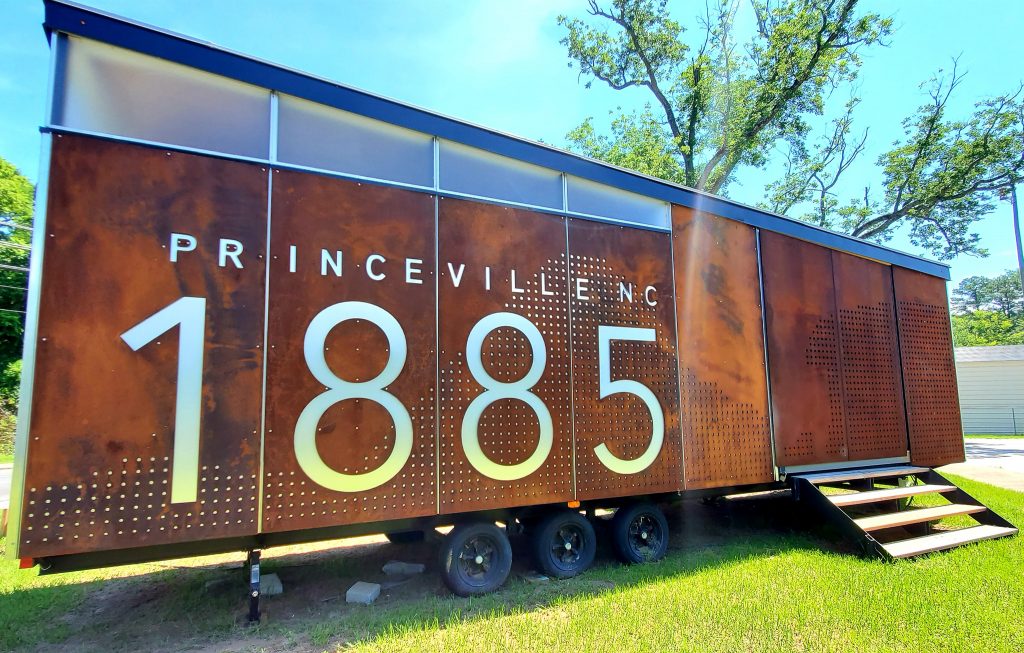
CTNC is well equipped to deliver on that focus: we have already begun to work with community partners to develop a long-term resilience plan in Princeville and look forward to modeling this approach across the state.

Embracing equity as a guiding priority for our work, we’re inspired to see North Carolina leadership acknowledge the need to build capacity among our most marginalized communities. That emphasis is key to seeding systemic change toward greater resilience. Our state now has the opportunity, and the responsibility, to adopt policies that promote statewide resilience for the health of our land and all our people.

A close-up on the strategy in action

CTNC’s holistic resilience strategy is already taking shape.

Using a variety of resources, we will assist the Princeville community to build a more resilient future

With the help of amazing community partners, the expertise of the NC State’s Coastal Dynamics Design Lab, and the trust of the Princeville citizens, we are completing the Floodprint this fall. This detailed plan shows how smart conservation and landscape planning can help the town survive future floods while building a vibrant economy that preserves and celebrates Princeville’s proud history. 

But a plan is only as good as the action it guides. CTNC is now launching on-the-ground action to begin a first phase of work outlined in the Floodprint.

We are collaborating with partners to build water-absorbing, green infrastructure around the Princeville Elementary School. The school building, at the hub of the community, has been recently renovated and flood-proofed. CTNC’s project adds rain gardens, bio-swales, and other natural approaches to water management on the expansive school grounds. A Conservation Corps North Carolina crew will do much of the work, including building an educational trail for public use. A CTNC AmeriCorps service member will help develop an environmental education curriculum in partnership with students and faculty.

We are documenting our steps during this process to learn from, improve our work, and share lessons toward developing a statewide, community-based model for building resilience.

These are only the beginning steps in a multilayered and multiyear partnership. We know that achieving resilience will be an ongoing, challenging mission, but we are excited – and hopeful – that you will join us to help build a resilient, more just North Carolina.

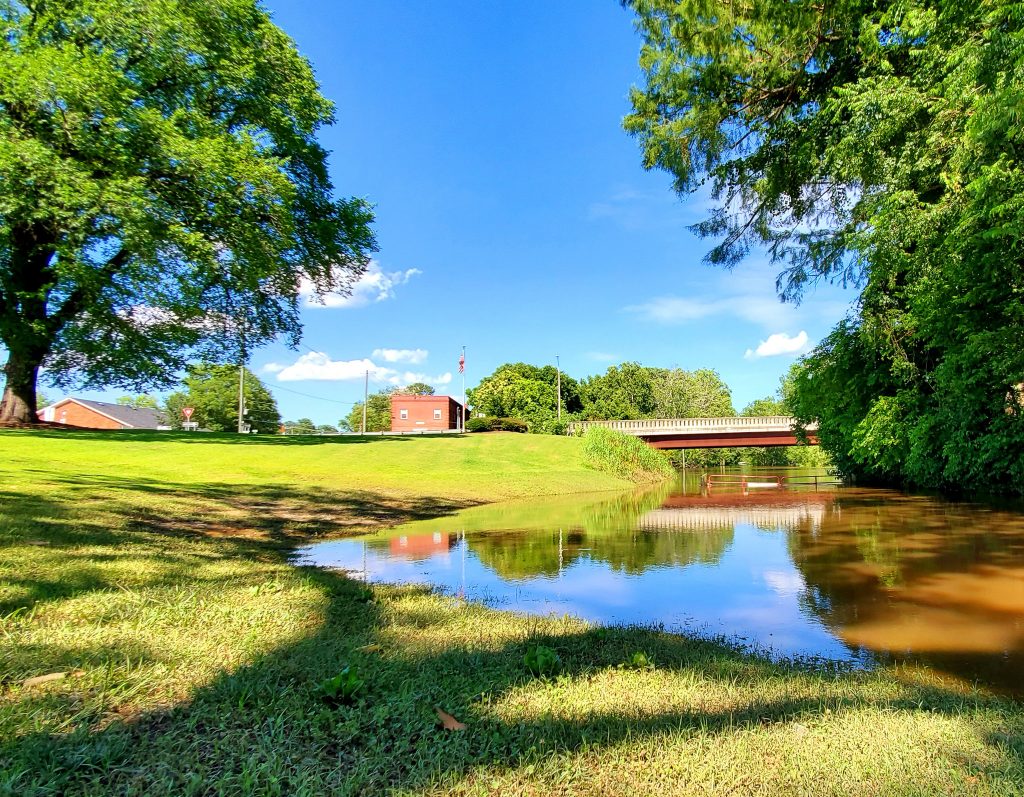
Princeville continues to struggle with flooding from the Tar River.

Learn more about our Princeville Collaborative by joining our email list. You’ll receive updates as we launch new projects with the Town and other communities throughout the state.

Are You Ready to Go Upstream?

Learn all about a new initiative to keep water sources around the Triangle safe and useable!

It’s because of clean water that small businesses can thrive, local farms are nourished and, above all, we all have clean water to use, drink and play in. So, how can we ensure it remains clean? To answer that, we have to look upstream.

Whether you need water to wash your dog or to have a nice refreshing drink, the one thing we all know is that our water needs to be clean. Clean water is a vital part of our everyday lives and through Upstream Matters, we can bring greater awareness to Raleigh’s water sources so we can keep it safe and clean for our communities. One of these water sources comes from the Upper Neuse River Basin, and making sure it’s well protected keeps our water clean for eating, drinking and playing.

Thankfully, there are programs and partnerships like the Upper Neuse Clean Water Initiative that work with local and state governmental agencies and landowners to keep our water clean and healthy.

Thanks to City of Raleigh water ratepayers, an average of about 57 cents of their water utility bill goes toward funding those programs that ensure our water remains clean.

Regardless of what your use for water is, you can be assured there are organizations actively working together to keep the upstream clean – and together we can continue to make it possible for them.

To learn more about why Upstream Matters, visit upstreammatters.org.

Upstream Matters is a collaborative campaign made possible by the Upper Neuse Clean Water Initiative partners including Conservation Trust for North Carolina, Ellerbe Creek Watershed Association, Eno River Association, The Conservation Fund, and Triangle Land Conservancy. 

A New Vision for Conservation

Our land is facing new threats.

It’s time to offer new solutions. 

From the Blue Ridge Parkway to the eastern coast of our amazing state, the Conservation Trust is working alongside communities to conserve land in ways that build resilient, just communities throughout North Carolina. 

We are committed to finding land-saving solutions that benefit all people. 

We need you to join us.

A bold new approach 

CTNC has developed a courageous new vision for conservation that is powered by the people of our state. Our work now focuses on addressing communities’ greatest needs: climate resilience in a changing state, conservation that is led by communities, and seeding an equitable sector that benefits all people regardless of race or economic status. 

CLIMATE: Climate change has increased the ferocity of extreme weather events like floods, mudslides, and fires, but it has also increased our drive to combat those effects. Our climate resilience strategy mitigates the effects of climate change by conserving land in North Carolina’s most vulnerable spaces.

EQUITY: CTNC is dedicated to seeding racial equality throughout every project, every investment, and every hire. Because all North Carolinians, regardless of race, should share in the benefits of healthy land. 

COMMUNITY: What does success look like? At the end of the day, saving land should help communities thrive. Securing more funding and support for land protection will strengthen the health, heritage, and economic ecosystems for all our communities. 

We need you 

Our conservation work needs to be relevant to the times we live in, meaningful to the people we work with, and effective for the future. We’re building a conservation movement powered by the people of North Carolina.

This new journey begins with you.

Will you join us?

Asheville Riverside Park

An Equitable Vision for Conservation

CTNC strives to seed equity and inclusion throughout the conservation community 

We’re born on the land. Eat food grown in it.  Drink water that flows over it. Build our communities within its hills, valleys, plains and rivers. There’s not a single aspect of our lives that’s not touched by land.

While land connects us all, it has also been used historically to separate us. Entire communities of people – especially people of color – have been intentionally displaced and excluded. That shared history of inequity means that collectively our conservation work does not benefit all people as we intend it to. 

If CTNC is to be successful building resilient, just communities, we must emphasize how racial equity can be seeded throughout our work.

From Diversity to Equity

For over a decade, we have focused on increasing the racial diversity within the conservation sector of North Carolina through the Diversity In Conservation Internship Program. The program was founded to create a pathway for rising leaders of color to find careers in conservation. Our work has not only connected many young people of color with a professional conservation network, it has also helped organizations understand their own role in promoting race equity in their culture and practice. 

“It’s really important for us to build these connections for youth of color in conservation because there isn’t a network like there is for other populations in conservation.”

Dawn Chávez, Asheville GreenWorks 

We all benefit from greater inclusion. 

While CTNC is proud of the strides made over the past decade, our collective history and the current state of conservation indicate that there’s still so much to be done. Our work must not only create pathways to employment for rising leaders of color, but also change our culture and practices. We must honor the stories of black, indigenous and other people of color who have felt the loss of access to productive land for living, farming and for preserving their heritage. 

CTNC understands that the historical legacy of conservation must be acknowledged in order to build more resilient, equitable communities for the future.

The stakes are high.

A conservation movement powered by people must include all people, not just those who have traditionally been seated at the head of the table. That’s why CTNC is committed to promoting equity through our work. Our vision is for all communities, regardless of race or economic status, to have a seat at the table.

Conserving land can be one facet of a larger effort to protect the stories, natural, and cultural heritage of historically marginalized communities across the state. 

Save the Green In-Between

The parks, greenways, trails, and overlooks that you love in North Carolina are not there by accident. They are the result of careful, consistent and dedicated conservation efforts happening every day throughout North Carolina. These places are protected in large part because of partnerships between land trusts, government agencies, and lawmakers who appropriate money to fund land and water conservation through the State’s Conservation Trust Funds.

A total of $1.24 billion has been given towards worthy land, water, farmland, and park projects through the Clean Water Management Trust Fund, Parks and Recreation Trust Fund, and the Agricultural Development and Farmland Preservation Trust Fund. ?

If conservation organizations are able to continue our work to preserve the diverse beauty of North Carolina communities – from the rolling mountains of the Blue Ridge Parkway all the way to the sandy dunes of the Atlantic coast – we need you to join us. Take a stand as an advocate for land and water conservation and help conserve the places you’ll love for life. ?

Many land trust-protected properties on our map have been protected thanks to funding awarded by the Clean Water Management Trust Fund and Parks and Recreation Trust Fund. While you’re out discovering the beauty of No. 21 Waterrock Knob; No. 23, The Orchard at Altapass; or No. 105, Springer’s Point Preserve, remember that public funds made it possible for these places to stay wild and green.

Money from the trust funds don’t simply go toward acquiring conserved lands, but it also goes to the continued upkeep and maintenance required. ? Without adequate and consistent funding, park staff will not be able to maintain the infrastructure of already existing parks and recreation areas.

We need your help to continue conserving properties like these.

Join this growing movement. We need you to remind your elected officials that land and water conservation is a priority. ?

North Carolina voters believe land and water conservation are important assets. 77% of registered voters say that protecting the forests is important and 78% say that protecting fishing and wildlife is important. If you agree, now is the time to add your voice to an important cause. Help us cut through the noise surrounding our local lawmakers with a single, resounding cry: Conserve North Carolina Lands.

So many things that we can accomplish in our lifetime are fading – but the land can be forever. If, as North Carolina residents, we want to continue to enjoy the beauty that surrounds us every day, we need to unite and advocate for that beauty. Speak up for the conservation issues close to your heart. 

If we’re not already connected through email, join our action alert network and be notified when we need you to join with us in our mission to protect North Carolina’s diverse beauty and stand with us.

Margaret Newbold honored with the Order of the Longleaf Pine

Conservation Trust for North Carolina congratulates Margaret Newbold, former Senior Associate, who was recently honored with the Order of the Longleaf Pine by the Governor of North Carolina, Roy Cooper in appreciation for more than 20 years of exemplary service for land conservation through her work with the Conservation Trust for North Carolina.

Margaret has forged partnerships across the state to support the growth and development of local land trusts. She focused on diversifying the land trust community and making conservation more inclusive through CTNC’s comprehensive diversity and equity program, which included an internship program, workshops and trainings, and small grants. Margaret’s passion, expertise, guidance, and commitment to partnerships has led to North Carolina’s land trusts, other conservation organizations, and local communities across our state protecting and elevating the importance of our natural and cultural treasures.

During her tenure, CTNC was able to conserve 34,500 acres of land along the Blue Ridge Parkway, support local land trusts with $15.05 million in low-interest loans leveraging protection of $46.6 million in land value, and connect hundreds of young people from diverse backgrounds to careers in conservation through the Diversity in Conservation Internship Program, NC Youth Conservation Corps, and CTNC AmeriCorps.

Thanks to Margaret, CTNC is recognized as a national land trust leader tackling issues related to racial equity, diversity, and inclusion seeking to build a conservation sector that represents all of North Carolina’s communities. Margaret has enabled CTNC to thrive as a leader because of the strong foundation she helped to build. Margaret’s impressive legacy for land and communities in NC will live on for generations to come.

“I feel strongly that the conservation sector must work closely with the community economic development sector to chart a course that fosters healthy, whole communities, as land is the foundation of this work and the common ground we all share,” said Margaret. “I am filled with gratitude to be recognized with this incredible honor and join the ranks of Order recipients who came before me. I accept this award on behalf of all my partners and colleagues who have worked with me to conserve our land for the enjoyment of all.”

Department of Natural and Cultural Resources Chief Deputy Secretary Reid Wilson presented Margaret with this distinguished award on behalf of the Governor. A group of Margaret’s friends, family, and colleagues gathered for the celebration at Irvin Farm, a Triangle Land Conservancy property.

The Order of the Long Leaf Pine is among the most prestigious awards presented by the Governor of North Carolina. The Order of the Long Leaf Pine is presented to individuals who have a proven record of extraordinary service to the state. Margaret joins an esteemed group of award winners, which includes Maya Angelou, Oprah Winfrey, and fellow land trust staff colleague Janice Allen of the Coastal Land Trust.

In addition to the Order, Margaret was also named Land Conservationist of the Year during the North Carolina Wildlife Federation 55th Annual Governor’s Conservation Achievement Awards.

CTNC Awarded $100,000 by Environmental Enhancement Grants Program

The Conservation Trust for North Carolina (CTNC) was recently awarded a $100,000 grant from the North Carolina Attorney General’s Office Environmental Enhancement Grant Program to apply toward the remaining balance of the 1,076-acre Wildacres Retreat conservation project.

By protecting this expansive landscape from future development, the Wildacres conservation easements will offer permanent protection of extensive aquatic and forest habitats that boast a rich diversity of native plants and animals. Additionally, the conservation easements managed by CTNC, Foothills Conservancy of North Carolina, and the Clean Water Management Trust Fund, will safeguard clean drinking water for downstream residents, enhance wildlife habitat, preserve scenic vistas along the Blue Ridge Parkway, provide environmental education opportunities for retreat visitors, and ensure public access to six miles of hiking trails.

CTNC and Foothills Conservancy completed the project at Wildacres in December 2017 with funding from the Clean Water Management Trust Fund, the Cannon Foundation, Open Space Institute, and generous donations from Wildacres and the Blumenthal family. A low-interest loan from the Will Henry Stevens Revolving Loan Fund covered the remaining balance allowing CTNC to leverage existing funding and complete the transaction by the end of the year. The funds awarded by the Environmental Enhancement Grants Program will help replenish the fund that allows us to continue offering assistance to land trusts working to acquire future lands.

The Wildacres property lies on the Blue Ridge Escarpment in McDowell County in the upper reaches of the Catawba River basin. The property offers a unique array of natural habitats as it sprawls from the top of the escarpment at the Blue Ridge Parkway to the valley below Armstrong Creek at Highway 226 A.

This natural and scenic landscape will have a lasting impact on our environment and will be enjoyed by future generations as visitors to the retreat center, the Blue Ridge Parkway and millions of others who will enjoy the benefits of clean and safe drinking water, healthy fisheries and spiritually nourishing recreation opportunities.

Conserving the Wildacres Retreat was possible because of our strong relationships with the local land trust, a committed conservation-minded landowner, grants from our generous partners, and donations from supporters of our Blue Ridge Parkway land protection work. We have all worked together on this opportunity over a long period of time. For more information on the Wildacres Retreat conservation project, read our blog post celebrating the project completion.

1,000-Acre Conservation Project Promises Clean Water and Pristine Parkway Views

Wildacres Retreat, a 1,076-acre property adjacent to Pisgah National Forest and the Blue Ridge Parkway, is now permanently protected thanks to a collaborative partnership among Foothills Conservancy of North Carolina, Conservation Trust for North Carolina (CTNC), and Wildacres Retreat.

Wildacres Retreat, located in northern McDowell County near Little Switzerland, is a nonprofit conference center governed by a board of directors. The center offers its facilities and surrounding woodlands to nonprofit groups for educational and cultural programming, and for board and staff retreats.

The property is protected under two conservation easements. A state-held Clean Water Management Trust Fund easement will protect stream buffers and critical natural heritage areas, while a second easement held by Conservation Trust for North Carolina will preserve a key portion of forested lands connected to the Blue Ridge Parkway and Pisgah National Forest. Together, the easements will safeguard wildlife habitat and protect water quality in five miles of streams of the Armstrong Creek watershed in the headwaters of the Catawba River.  Foothills Conservancy will monitor and steward these conservation easements on a contractual basis.

“Protection of these lands fills in a very important piece of the puzzle to permanently conserve extensive forests and habitats in the very high-quality Armstrong Creek watershed of the Catawba,” said Tom Kenney, Land Protection Director for Foothills Conservancy. “Wildacres adjoins a Wildlife Resources Commission fish hatchery and more than 10,000 acres of federal Pisgah National Forest Service lands. All this conservation helps ensure Lake James has a very clean water supply protection source.”

There are nearly six miles of hiking trails on the property for public use, including one trail into the property from Deer Lick Gap Overlook on the Blue Ridge Parkway.

The project was primarily funded by a $1 million grant from North Carolina Clean Water Management Trust Fund awarded to Foothills Conservancy and a $26,000 donation from Philip Blumenthal, director of Wildacres Retreat. In addition, CTNC secured a Duke Water Resources grant, $50,000 grant from the Cannon Foundation, a $100,000 grant from the North Carolina Attorney General’s Office Environmental Enhancement Grant Program, and $177,240 from the Open Space Institute’s Resilient Landscapes Initiative, which is made possible with funding from the Doris Duke Charitable Foundation. The Resilient Landscapes Initiative seeks to build the capacity of land trusts working to respond to climate change. A grant of $34,779 from the Duke Energy Water Resources Fund, administered by the NC Community Foundation enabled CTNC to pay off a loan secured to purchase the easements.

Clean Water Management Trust Fund Executive Director Walter Clark described the organization’s reasons for contributing to the project to conserve what he calls an “incredible piece of property.”

“The Clean Water Management Trust Fund supported the Wildacres project for multiple reasons, including its protection of five miles of high-quality trout waters, which contain headwater streams in the Catawba River Basin,” said Clark. “The project also protects multiple forest communities important to North Carolina’s natural heritage.” Since its establishment in 1996, Clean Water Management Trust Fund has protected over 500,000 acres, including 2,500 miles of streams.

“The Wildacres Retreat property has been among CTNC and Foothills Conservancy’s highest priority projects for years,” said Rusty Painter, CTNC Land Protection Director. “Conserving its ecologically diverse habitat between the Blue Ridge Parkway and Pisgah National Forest achieves the type of landscape-scale conservation that’s one goal of our Blue Ridge Parkway conservation plan. Successes like this would not be possible without the commitment of champions like Philip Blumenthal and the Wildacres Retreat Board of Directors.”

Blumenthal added, “It’s been a long-term goal of the Blumenthal family to ensure the ecological integrity of this unique property for the benefit of Wildacres Retreat visitors and all who enjoy the Blue Ridge Parkway. We’re fortunate to have land trusts like CTNC and Foothills Conservancy who work tirelessly to save places we all love in North Carolina. They ensure our state’s most valuable assets will be protected forever.”

“Permanent conservation of the Wildacres property marks a major milestone for the protection of habitat in North Carolina,” said Peter Howell, OSI’s Executive Vice President of Conservation Capital & Research Programs. “As the climate changes, this highly resilient property will provide a long-term haven for sensitive plants and animals. The Open Space Institute is proud to have supported this project and we applaud Conservation Trust for North Carolina and the Foothills Conservancy of North Carolina for their collaboration and tireless work to seize this once-in-a-lifetime opportunity.”

Federally-protected land in this region is fragmented and thousands of acres are still vulnerable to development. Western North Carolina land trusts frequently partner to preserve National Forest and Blue Ridge Parkway lands for the benefit of all North Carolinians.

For more information, contact:

Tom Kenney, Land Protection Director, Ph: 828-437-9930, tkenney@foothillsconservancy.org

Mary Alice Holley, CTNC Communications Director, Ph: 919-864-0428, mholley@ctnc.org

See what others are saying!

Duke Energy Grant Supports NC Youth Conservation Corps Expansion

Committed to doubling the impact of our work in North Carolina, CTNC is excited to expand the thriving North Carolina Youth Conservation Corps (NCYCC) program in 2017!

The Duke Energy Foundation awarded $70,000 to CTNC for its innovative Youth Conservation Corps program. The grant will:

  • increase the number of crews and provide more young people with paid jobs to serve their communities by building and maintaining trails and parks.
  • enable more local land trusts and low-income partner organizations to deploy crews to work on their projects.
  • fund our first Professional Development Day for Emerging Conservation Leaders. Through workshops, a job fair, and panel discussions, the event will help these future leaders launch successful careers and contribute to conservation.

“We are extremely grateful for this show of support by the Duke Energy Foundation,” said Jan Pender. “The work accomplished by these young people to improve, restore, and preserve our natural areas will have a lasting impact on conservation efforts, and we’re excited for this opportunity to grow.”

Benefits of the YCC Experience

The NCYCC furthers CTNC’s commitment to diversity and engaging young people in conservation. The NCYCC provides unique opportunities for 16-24-year-olds to work outdoors with their peers from a range of backgrounds, ethnicity, and geographic regions.

The NCYCC uses the natural world as a platform to teach NCYCC participants leadership, environmental stewardship, and community service. By immersing themselves in the outdoors through work that maintains North Carolina’s parks and natural areas, NCYCC participants gain a connection to nature and a sense of pride in protecting the places they love.

CTNC’s Partnership with Duke Energy Foundation

Annually, the Duke Energy Foundation funds $20 million in charitable grants in North Carolina including more than $1.5 million with 16 North Carolina environmental nonprofit organizations. The grants fund environmental projects, wildlife conservation efforts and environmental educational programs across the state.

The Duke Energy Foundation provides philanthropic support to address the needs of the communities where its customers live and work. The foundation’s education focus spans kindergarten to career, particularly science, technology, engineering and math (STEM), early childhood literacy and workforce development. It also supports the environment and community impact initiatives, including arts and culture. For more information, visit www.duke-energy.com/foundation.

Categories