One way CTNC facilitates permanent land protection in Western North Carolina is through our Mountain Revolving Loan Fund small grant program. This fund allows land trusts to secure funds for critical, transaction-related expenses that are not always covered by other sources.
This year, CTNC provided six grants to five land trusts totaling over $83,000:
Blue Ridge Conservancy
Foothills Conservancy of North Carolina
Highlands Conservancy
Mainspring Conservation Trust
Southern Appalachian Highlands Conservancy
This investment will help protect and manage 1,013 acres of land in Western North Carolina.
The CTNC Mountain Revolving Loan Fund has two significant benefits for our partners:
First, it provides bridge financing with minimal interest to land trusts in Western North Carolina to purchase conservation land and easements. As loans are repaid, the money becomes available to re-lend.
A percentage of the balance of the loan fund is given out each year in grant awards. Grants of up to $25,000 are not required to be paid back.
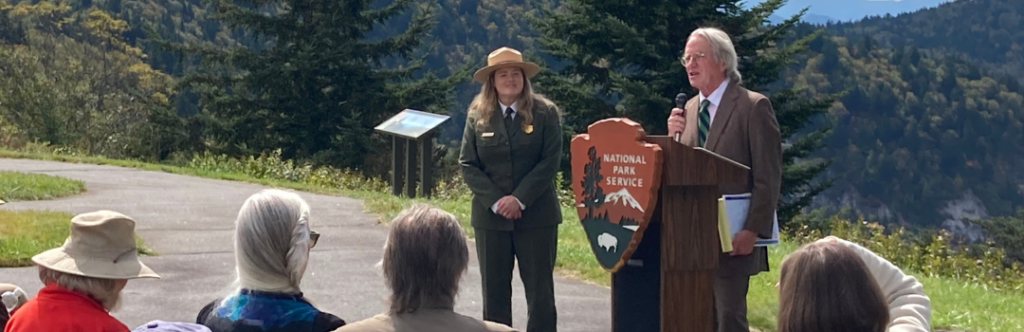
In late September, Conservation Trust for North Carolina (CTNC) joined National Park Service leaders along with representatives from the Eastern Band of Cherokee Indians and numerous partners in land conservation to celebrate the work to protect the Blue Ridge Parkway and Waterrock Knob.
We joined our partners from The Conservation Fund, The Nature Conservancy, Blue Ridge Conservancy, Conserving Carolina, Foothills Conservancy of North Carolina, Piedmont Land Conservancy, Mainspring Conservation Trust, the Blue Ridge Parkway Foundation, Southern Appalachian Highlands Conservancy, and others to celebrate the historic and current stewardship of the important natural and cultural resources along the Blue Ridge Parkway, and the generous donors who make it possible.
In 2016, land trust partners announced a large-scale protection effort that would ultimately expand Waterrock Knob conservation area by over 5,300 acres. To date, conservation partners acquired and donated nearly 3,400 acres to the National Park Service. More properties are slated for transfer to the park over the coming months.
The addition of all the new land now enables NPS to prepare a new strategic vision for the greatly expanded Waterrock Knob area. These lands are part of a larger set of 16 separate tracts being donated to NPS by the nonprofit groups thanks to long-term support from major private and public funding sources, including Fred and Alice Stanback and the North Carolina Land and Water Fund. Five of the 16 have already been donated by CTNC, bringing the total number of properties donated to the Blue Ridge Parkway by CTNC to 29, dating back to 1997!
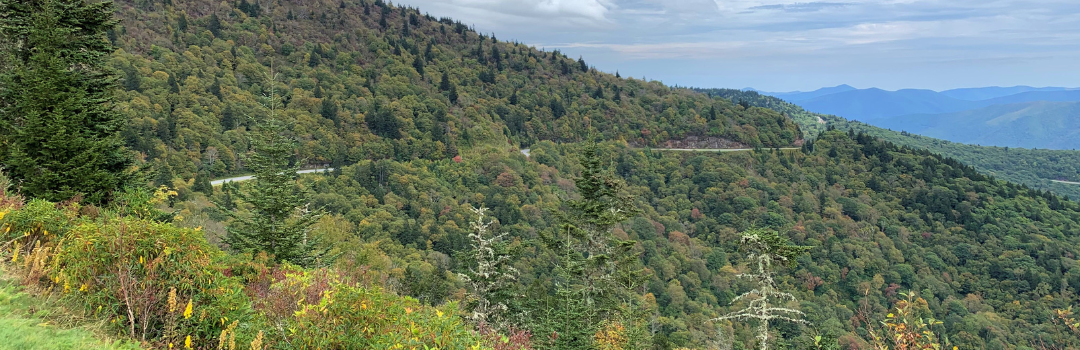
Waterrock Knob is located at milepost 451.2 on the Blue Ridge Parkway and features views of a vast landscape of rare Southern Appalachian spruce-fir forests visible from the visitor center and 6,273-foot summit. It is one of the highest visitor centers along the Blue Ridge Parkway and one of the most critically biodiverse landscapes in the Eastern United States. Elk, rare salamanders, flying squirrels, and high-elevation spruce-fir forests all inhabit the area, which is also home to rich Cherokee history.
“Approaching the protection of Waterrock Knob area from a large-scale conservation perspective requires partners and communities to share a recognition that healthy ecosystems, vibrant communities and economies, cultural heritage, and local sense of place are best protected at a landscape level,” said Tracy Swartout, Blue Ridge Parkway Superintendent. “The National Park Service is privileged to work alongside our partners in this work, and we look forward to how these lands will enhance and enrich the Blue Ridge Parkway experience for generations to come.”
National Public Lands Day, established in 1994 and held annually on the fourth Saturday in September, celebrates the connection between people and green space in their community, inspires environmental stewardship, and encourages use of open space for education, recreation, and health benefits.
Rusty Painter’s Master of Environmental Management from the Nicholas School of the Environment at Duke University wasn’t the end of his connection to the school and the future of climate protection. He returns each year to present to classes on a variety of topics, from CTNC’s strategic approach to address climate change and more. “I’m motivated by my son and future generations, from whom we are all ‘borrowing’ this planet.”
His background and his master’s degree in forestry are invaluable as Land Protection Director for CTNC. Rusty joined the CTNC family in 2001. He oversees CTNC’s land protection efforts along the Blue Ridge Parkway and our collaborative partnerships with local land trusts. Recent successes include the preservation of the Florence Boyd Home / Asutsi Trailhead Property, and the Cranberry Creek Expansion project, both of which will be transferred to the Blue Ridge Parkway.
Rusty Painter tours the Florence Boyd/Asutsi Trailhead property with Blue Ridge Parkway Superintendent Swartout, Chloe Ochocki, & Caitlin Markus (L to R).
When did you first realize the real and present impacts of climate change? The concept of global warming due to the greenhouse effect made sense to me the first time I heard about it, but I guess I really grasped the severity of the problem when Al Gore’s book An Inconvenient Truth came out. What a shame that our political, social and economic systems continued to drive us down this path. Think how much progress could have been made over the last 30 years had we committed to solving the problem back then.
What does climate resilience mean to you? Adaptation using a combination of evolution and technology – applying our experience, and projections based on sound science to adapt to our changing climate. We must realize that adaptation isn’t the only path forward. Humans must commit themselves to actions that will minimize the need to adapt, or the extent to which we must adapt.
How have you seen climate change impact North Carolina? One example that I struggle with in my work at CTNC is the expansion of tick habitat. I never used to get ticks while visiting our conservation properties along the Blue Ridge Parkway, but climatic shifts have enabled ticks to colonize areas that were previously too cold, so I’m now getting ticks while out on properties in the mountains. Yuck!
What are actions that organizations in NC can take right now to make our state more resilient? Conserve energy. Simply using less results in immediate reductions of carbon emissions and has the potential to save far more resources (of all kinds) than our slow, incremental conversion to renewable energy sources. I challenge everyone to consider every action they take throughout the day and do it with half of what they currently use. You’ll find it’s not as difficult as you think. That approach can be applied to most organizations, corporations and government agencies as well. Once ingrained in our psyche, daily routines, organizational procedures, and subsequently, our infrastructure, carbon neutrality on a timeline that will make a difference becomes legitimately achievable.
What’s one thing everyone should know about climate action? It’s up to all of us to change our mindset and daily routines, but also to support groups doing good work, and electing leaders committed to making the difficult decisions & changes we must make.
Working in climate resilience can be overwhelming. How do you keep going? I remain optimistic because of the resilience of the human spirit and advancements in technology. Organisms change and adapt…daily, yearly, and over generations. Humans have evolved to the point where we can adapt naturally, like other species, but also use technology to ‘artificially’ adapt. I just hope society is willing to change sooner rather than later, so future generations don’t have to rely on artificial adaptations that will diminish our connection to the natural world.
Our state’s conservation needs are not one-and-done. CTNC and our fellow members of the Land for Tomorrow coalition are working with state leaders to build on the foundation of conservation funding. Every generation deserves to have healthy functioning land and water that are not only beautiful but also provide clean air and water.
We commend our governor and legislators for passing a budget in 2021 that prioritized land and water conservation. Our state leaders put our parks, game lands, forests, trails, and farms at the top of the priority list and we are thankful for that. This historic spending allocation was the highest since the 2008 recession and will benefit people and nature for generations to come.
Land and water are North Carolina’s most important economic assets. The four engines of North Carolina’s economy – agriculture, tourism, forestry, and the military – depend on natural and working lands and clean water. Protecting these vital natural resources is essential to ensure these economic drivers will continue to flourish and provide jobs for North Carolinians.
Our state’s conservation trust funds ensure that the North Carolina Land and Water Trust Fund (NCLWF), Parks and Recreation Trust Fund (PARTF), and the Agricultural Development and Farmland Preservation Trust Fund (ADFPTF) are fully funded to be the safeguards for our state. These funds enable conservation groups to continue working with state agencies to protect North Carolina’s valuable natural resources, ensuring that both current and future generations will continue to benefit from all our land has to offer.
In 2022, we are asking for our legislators to invest in our state’s future. With necessary increases in funding to the conservation trust funds, we will all be able to protect our state’s clean water, parks and recreation land, and farmland. Our state legislators alone determine the fate of the conservation trust funds and important legislation that helps our state thrive. Forward planning is what we’re asking for today.
Land and Water Fund Increase recurring funds to:
$25 million recurring in FY22-23
$35 million recurring in FY23-24
$45 million recurring in FY24-25
Parks and Recreation Trust Fund Increase recurring funds to:
$25 million recurring in FY22-23
$35 million recurring in FY23-24
$45 million recurring in FY24-25
Additional Funding for Conservation Projects Non-recurring funds to LWF for military projects and to help match the FY 2023 ENC Sentinel Landscape REPI Challenge proposal to the US Dept of Defense
Heirs Property The Land for Tomorrow Coalition supports HB 367/S363, Uniform Partition of Heirs Property
Conservation Tax Credit The Land for Tomorrow Coalition supports H323, Military Readiness and Rural Resilience Act
Restore Dedicated Conservation Funding Adopt House Bill 372/Senate Bill 354 “Restore Funding/State Conservation Purposes”
Trails Funding Land for Tomorrow support recommendations from the Great Trails State Coalition
State Parks The Land for Tomorrow Coalition supports recurring funds to NC State Parks to open & operate new facilities and land funded by the Connect NC Bond, PARTF stateside LWCF and other sources as recommended by the Department of Natural & Cultural Resources
Game Lands The Land for Tomorrow Coalition supports recurring funds to NC Wildlife Resources Commission to manage new and expanded game lands as recommended by the WRC
Forests The Land for Tomorrow Coalition supports recurring funds for NC Forest Service to manage state forests as recommended by the Commissioner of Agriculture
Help us make sure that our land and water is protected for everyone.
Invest in Conservation for North Carolina’s Future
Share on social media – Share a photo or video about the land you’ve enjoyed and want to protect using #land4tomorrow on Twitter or Instagram.
Ask your friends to join – Encourage your friends to make a video.
Thank your legislators – Let them know we appreciate their support of NC land and water
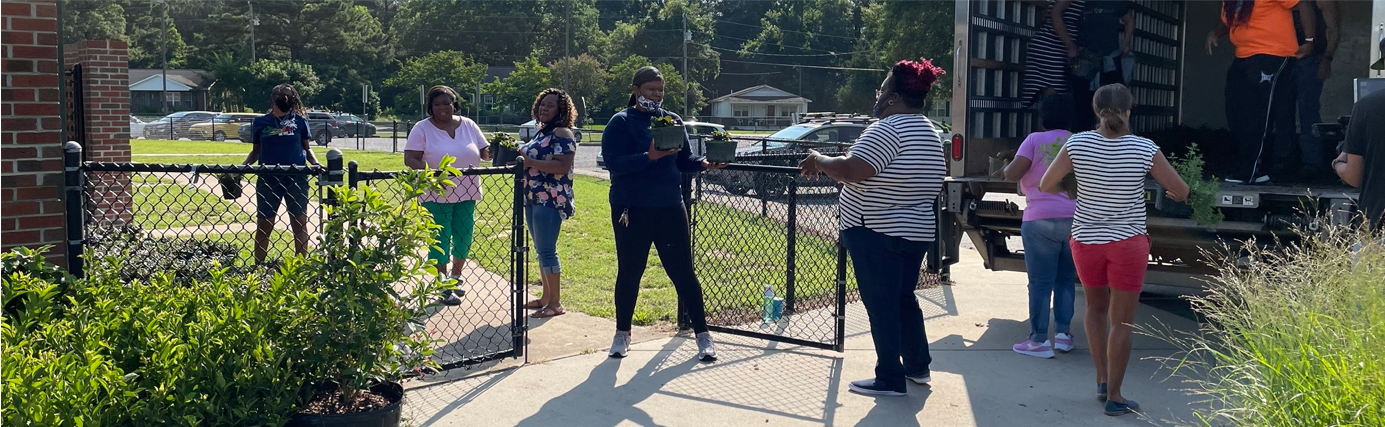
Princeville Elementary School teachers volunteer during a community planting day.
“Seeds of Climate Resilience” is a blog series to inspire ideas to help our state weather our changing climate. We can protect our families, economies, and the environment. The seeds of change planted today will help communities thrive for generations to come.
All too often, flood-prone communities are dotted with vacated lots that are scraped clean of man-made structures and left for nature to reclaim. These lots are usually deemed prone to future flooding, and the Federal Emergency Management Agency (FEMA) has given the landowners a path to sell their property and move away from the potential of repeated flooding.
What are FEMA buyouts? Buyouts are the primary federal program designed to increase disaster resiliency.
After a presidentially-declared disaster, local officials may decide to request money from the state to purchase properties that have either flooded or been substantially damaged. The state chooses to offer buyouts using FEMA’s money through its Hazard Mitigation Grant Program to reduce future disaster losses.
Buyouts are voluntary, and no one is required to sell their property. As part of the federal buyout program, the area is deed restricted and cannot be developed with permanent structures in the future. Existing properties and structures are demolished, cleared, and permanently maintained as green space by the local government.
The voluntary buyout program gives property owners the option to sell their property and move away from the potential of repeated flooding while reducing property damages and expenses incurred from flooding. The flood buyout program can be an extremely useful tool for communities recovering from a natural disaster.
Once homes are bought, the land is vacated and development rights removed. This provides communities with an opportunity to restore the land to a natural space that can be designed to store water and be flooded again while keeping future residents out of harm’s way. North Carolina relies on FEMA-funded buyouts to create more open space and reduce future disaster risks.
What if these abandoned spaces were given new life through conservation work? Land where buyouts occur is eventually deeded over to the town or other local government agency. The rules say that such lots can never be built on again. Too often they remain vacant and are seen as a blight to the remaining community members. But there are other options.
North Carolina Success Story: Princeville Finding effective land uses for FEMA buyout properties is a cornerstone in Princeville’s flood mitigation strategy.
How can citizens help determine how vacant land created from buyouts could be used or maintained? Advocate with your local elected officials for shared community green space and conservation projects on vacant and underutilized land owned by your city, town or municipality. Where possible, a local land trust or conservation organization may offer programs to support this effort.
Over the past 20 years, The Land Conservancy of New Jersey has worked with communities impacted by ongoing, damaging storms. In many of these municipalities, FEMA cannot provide the relief residents need to leave their properties and settle elsewhere. The Land Conservancy office worked with these towns, the State of New Jersey, and homeowners to purchase more than 200 homes and convert the land to open space. Restoring the land to its natural condition provides additional capacity to hold stormwater, offers safety to residents, reduces further loss of property, and saves the lives of emergency responders who continue to put themselves in harm’s way during these dangerous situations. It creates a park where none existed before and answered a community’s needs to reduce the harmful and serious effects of repetitive, overwhelming storms in some of our most vulnerable neighborhoods.
“Seeds of Climate Resilience” is a blog series to inspire ideas to help our state weather our changing climate. We can protect our families, economies, and the environment. The seeds of change planted today will help communities thrive for generations to come.
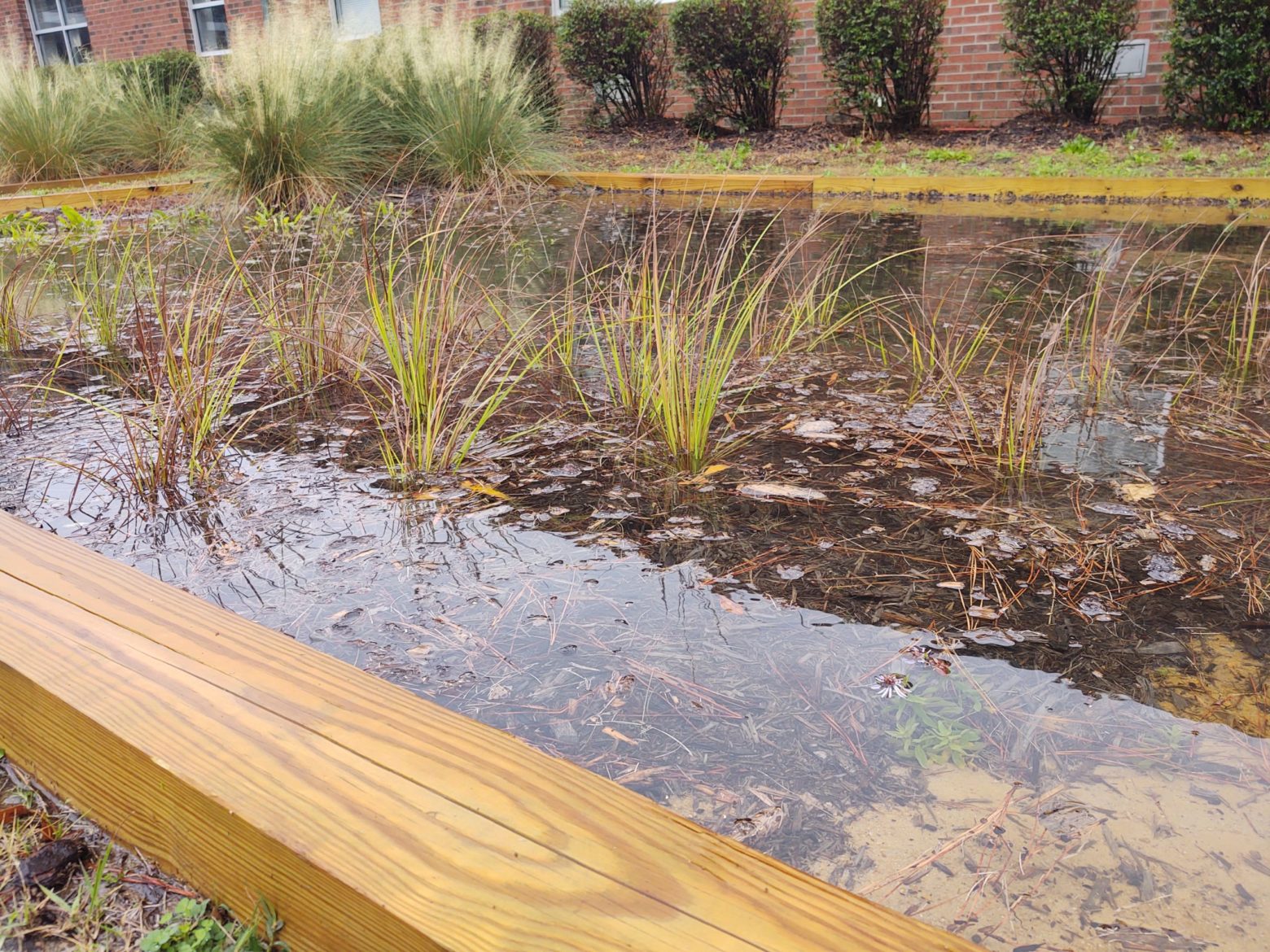
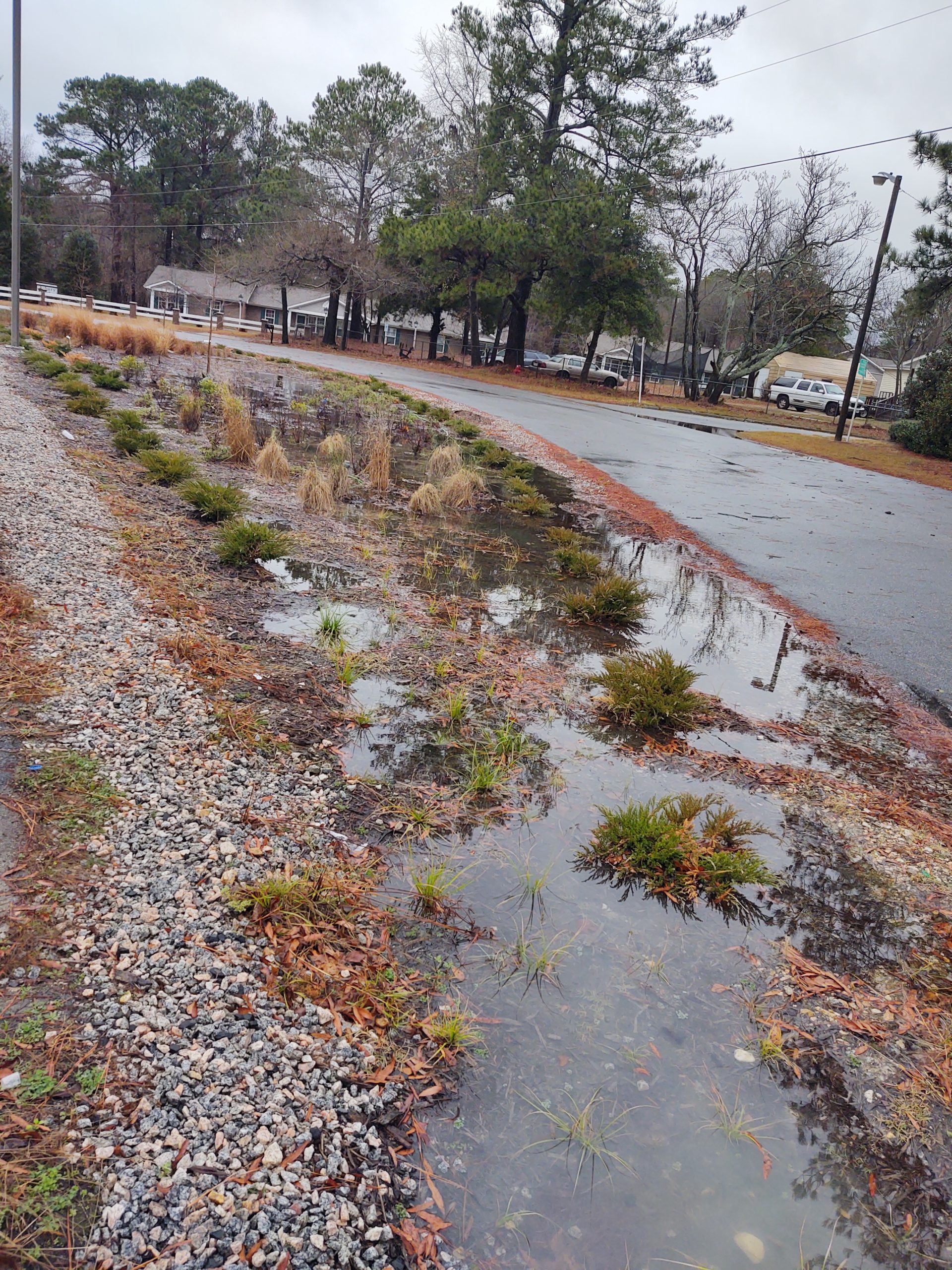
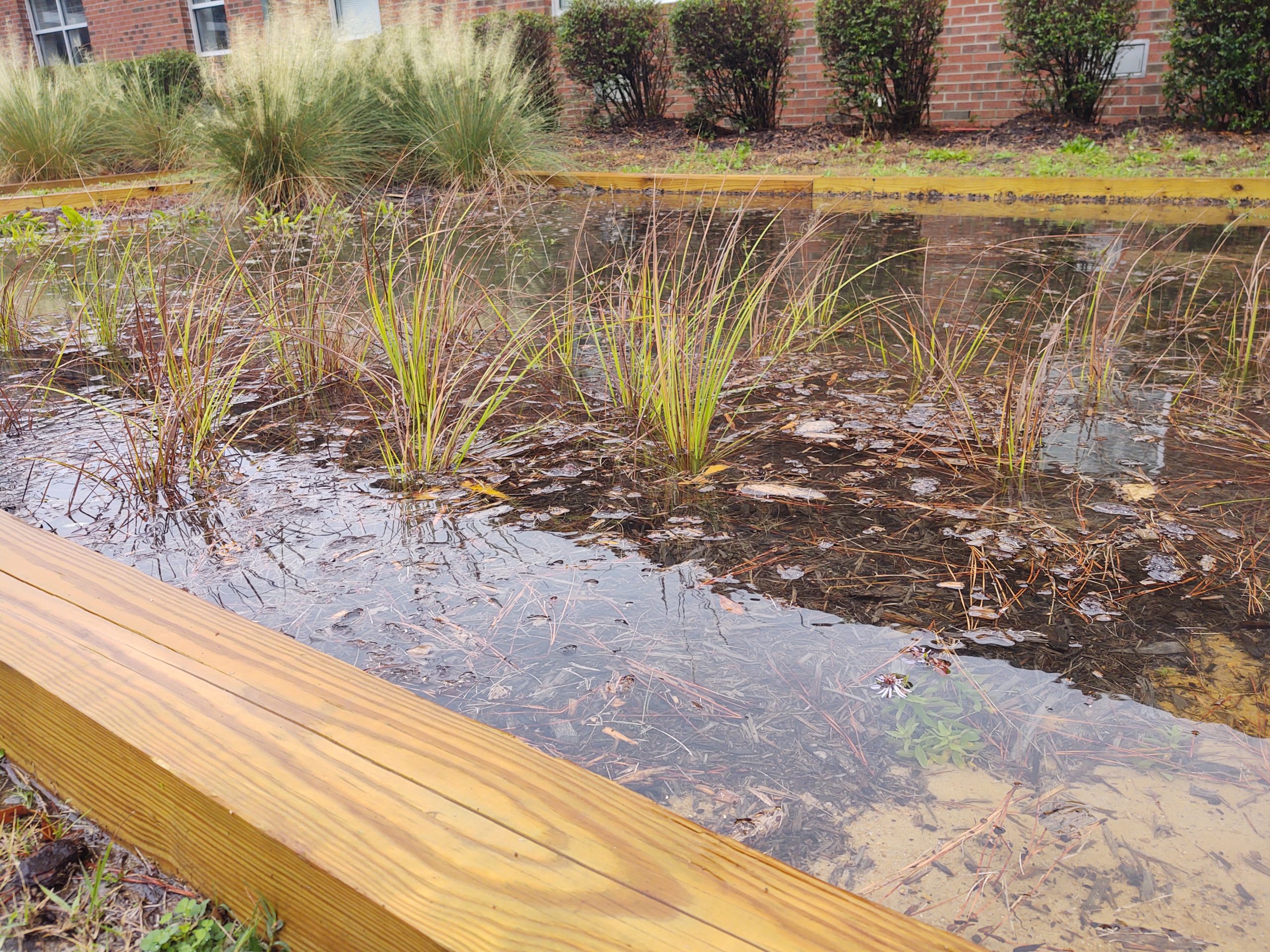
Rain gardens offer an attractive and effective solution to address flooding and increased rainfall on a property.
According to the North Carolina State Climate Office,
Heavy rains from hurricanes and other weather systems will become more frequent and intense. Annual precipitation is also expected to increase. These changes are driven primarily by increases in atmospheric water vapor as the climate warms. Extreme rainfall in North Carolina can result from hurricanes, Nor’easters, or other weather systems like thunderstorms. Severe thunderstorms are also likely to increase in a warming climate and can cause flash flooding, especially in urban areas.
Water containment will be increasingly important as our communities in low-lying areas or near lakes, rivers, and streams see rising waters and flooding.
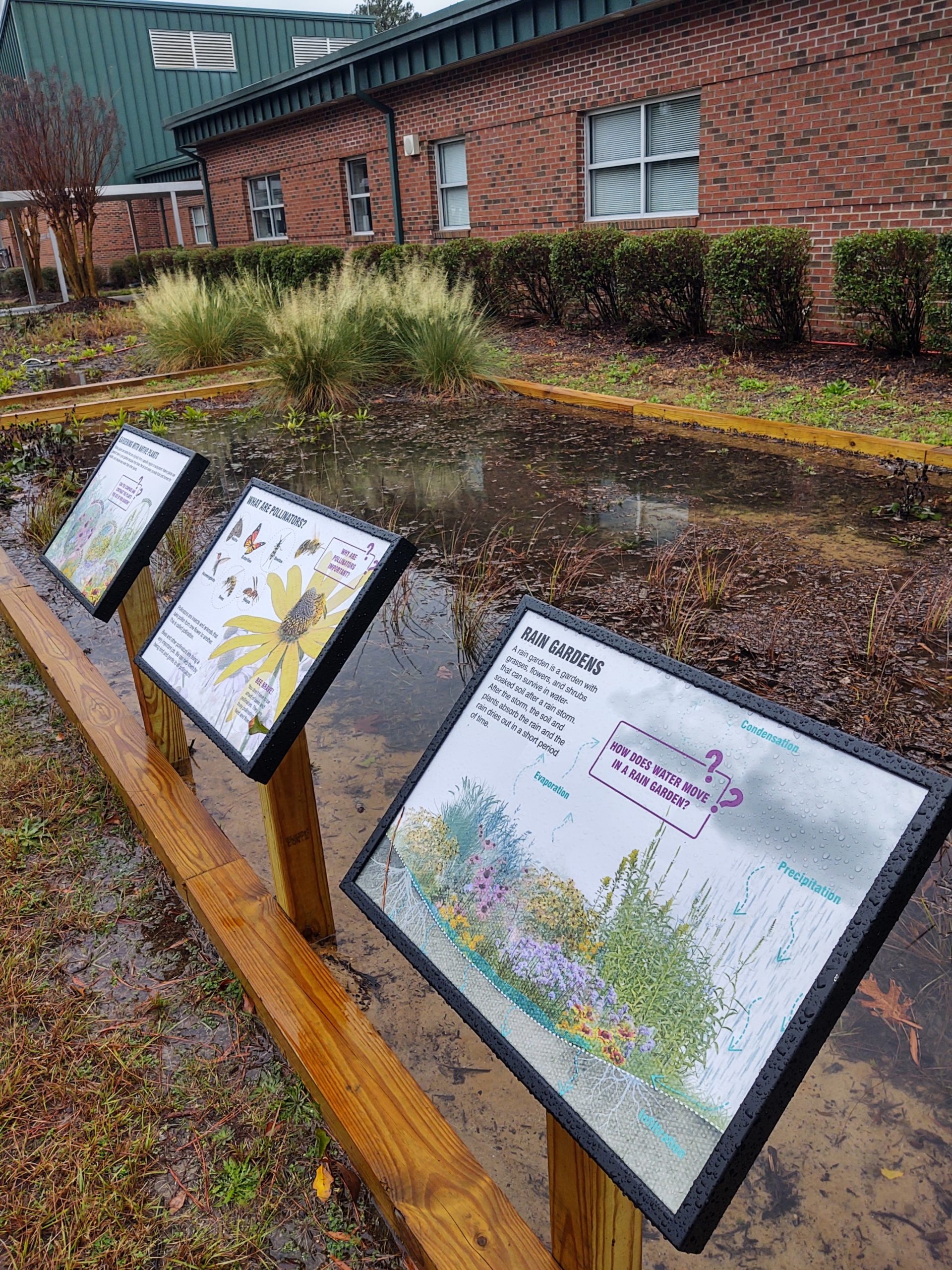
What is a rain garden? A rain garden has grasses, flowers, and shrubs that can survive in water-soaked soil after a rainstorm. Rain gardens are located in the low points of yards so that the water that runs off of roofs or driveways can be directed towards the rain garden. After the storm, the soil and plants absorb the rain, and the area dries out quickly.
A rain garden is NOT a wetland, a place for mosquitos to thrive, or difficult to maintain long-term. This garden area is dry to lightly moist most of the time. And it is naturally beautiful!
How does it help mitigate climate change? As our climate changes, communities are experiencing more frequent and severe rainfall and greater swings between rains and drought. Creating permeable spaces designed to capture water benefits plants, wildlife, people, and the built environment.
If rainwater has nowhere else to go, it will often result in flooding or standing water. However, if rainwater is captured where it lands, it can promote healthy plants and sustainable ecosystems that provide a conservation benefit to nearby residents.
Supporting habitat: Rain gardens capture and store water after heavy rainfall. The water is held in the garden area, absorbed by the water-loving plants, and naturally filtered back into the soil.
Managing stormwater: Any water that does not infiltrate the groundwater then moves through a canal, ditch, drain, or pipeline until it reaches a larger body of water such as a river, pond, or wetland area.
Rainwater is not treated at a facility to remove pollutants before entering larger waterways. This means that rain gardens are essential to help naturally filter the water that passes through them.
This process allows communities to better manage heavy amounts of rainfall and stormwater by slowing it down and using natural spaces to provide an added layer of filtration before the water reaches your home.
North Carolina Success Story: Princeville Elementary School After Hurricane Matthew devastated Princeville Elementary School in 2016, students had to go to schools in surrounding communities for three years until their school could be renovated and flood-proofed. Finally, in 2020, the Princeville Elementary School welcomed back its almost 200 students.
As part of a $200,000 grant from the National Fish and Wildlife Foundation and Wells Fargo Resilient Communities Program, CTNC worked with local organizations to install rain gardens at the school to capture and redirect water. Today, the gardens work to protect the school from excess water. The gardens were designed by the NC State Coastal Dynamics Design Lab and installed by volunteers from Conservation Corps NC, CTNC, NC State, M&M Landscaping Co. and residents of Princeville.
How can citizens help build a rain garden in your community? This article from NC State has great tips to bring this climate adaptation strategy to your community: “Why Your Yard Might Need a Rain Garden”
SOURCE: Rain Water Guide developed by NC State Coastal Dynamics Design Lab
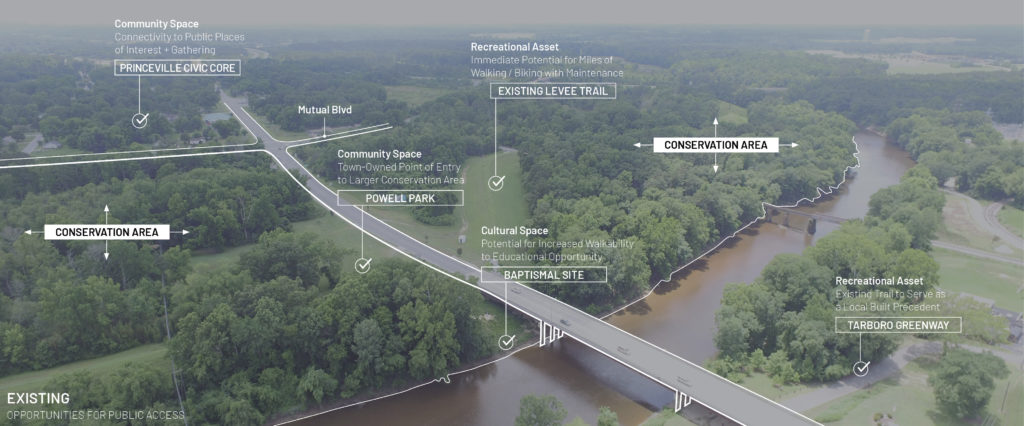
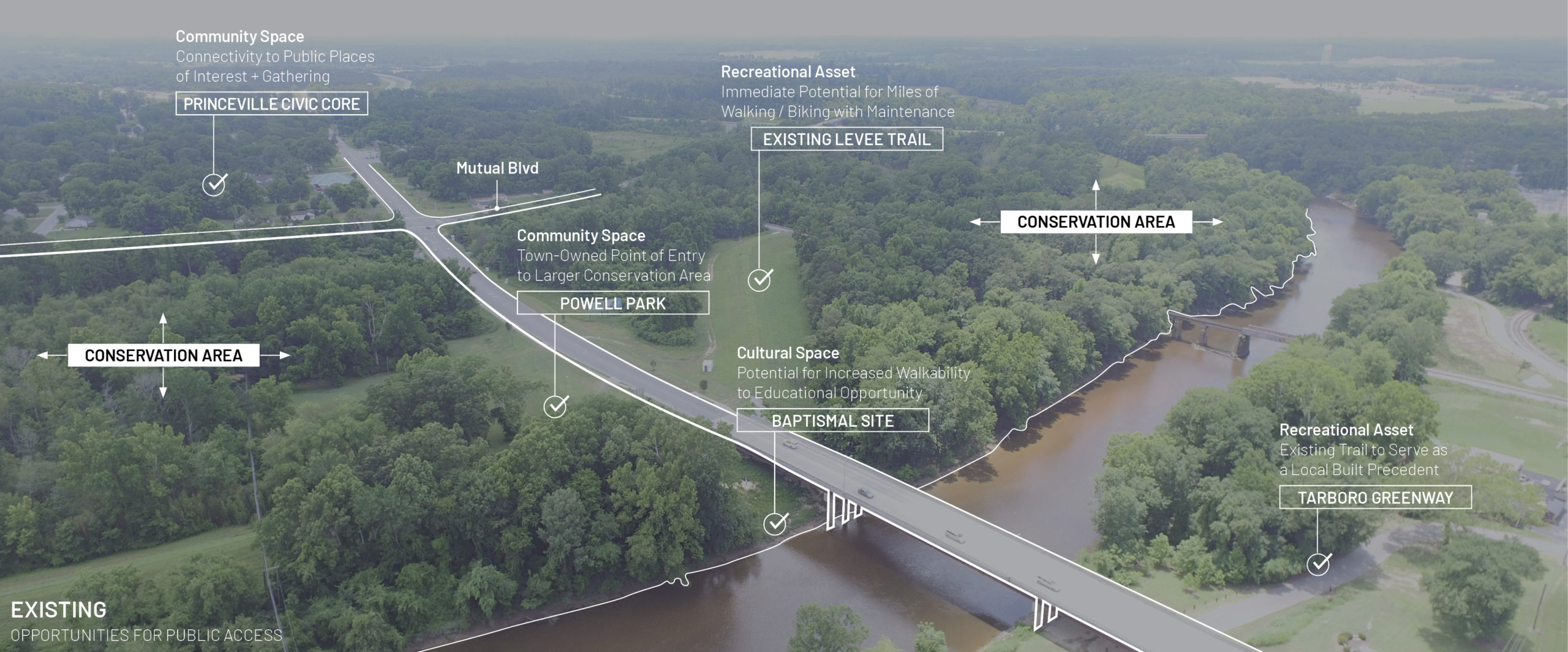
Photo: NC State Coastal Dynamics Design Lab arial view of the Tar River.
There is even more great news about the Princeville – Seeding Resilience project! 2022 brings many exciting actions to protect this community from the changing climate.
Since the debut of our latest video, this story has captured the attention of conservation champions nationwide. The project was featured in:
As we conclude the first phase of executing recommendations outlined in the Princeville Floodprint, the collaboration is turning our attention to Phase II. This phase will further lay the groundwork toward establishing an effective model of community-driven climate change adaptation that can be replicated in communities across the state. Throughout North Carolina, rural communities established along rivers, the coast, and lakes face repeated flood events. With the increasing threat of climate change, more communities will experience these impacts.
Phase II focuses attention toward converting vacant and underutilized land. The Town of Princeville, North Carolina State University Coastal Dynamics Design Lab, Conservation Corps NC, and Temboo Software will work to complete another round of conservation projects designed to better manage flood and stormwater, establish recreation opportunities for residents, build a model community garden to support locally-grown food operations, and connect youth and adults to environmental education opportunities. This phase focuses on transforming underutilized town-owned lots and property that FEMA has determined to be at risk of future flooding into absorbing flood impact while making them usable spaces for the community.
Over the next two years, this partnership will work to complete:
Installation of 6,000 square feet of rain gardens and managed wetlands on vacated lots to hold up to 28,000 gallons of water per rain event
Opening of a 24-bed model community garden on vacated lots to promote local, low-carbon agriculture
Planting of trees and native plants for 250,000 gallons of water absorption and 2,900 pounds of carbon storage per year
Creation of trails with educational and health-benefit elements at Princeville’s riverfront Heritage Park
“Our town has already seen the rewards from our collaboration with Conservation Trust, NC State, and all our partners,” said Princeville Town Manager Dr. Glenda Lawrence-Knight. “This next phase will only further prepare our town for the next flooding incident while showing a true investment in the health and well-being of our citizens.”
In tandem with the on-the-ground work, CTNC and our partners are writing an effective model for building a resilient community. We hope this community-based model can be replicated to benefit others facing similar challenges.
“Communities across North Carolina will benefit from the lessons learned as a result of the partnerships and outcomes in Princeville,” said Andrew Fox, FASLA, PLA of NC State Coastal Dynamics Design Lab. “It’s exciting to see people benefit from the principles that we’ve studied and developed.”
This work will be carried out with financial support from the Commission for Environmental Cooperation, the Anonymous Trust, and generous donors who have made an investment in resilience through CTNC and our partners.
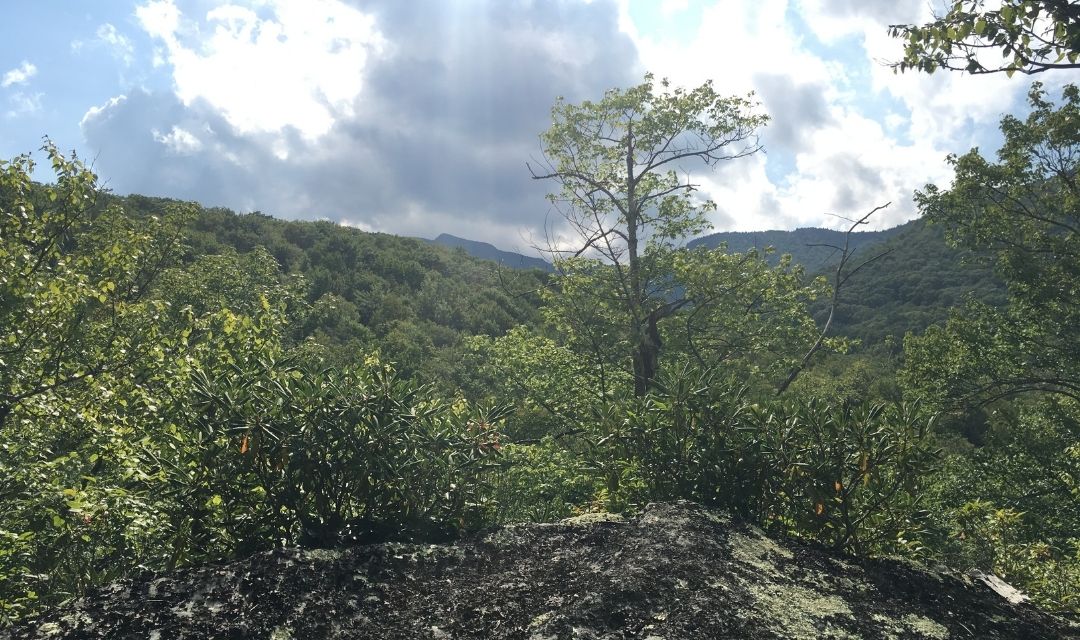
View of Calloway Peak from protected property. Credit: Rusty Painter
Uninterrupted – Florence Boyd Home & Asutsi Trailhead Protected!
Protecting the Florence Boyd Home / Asutsi Trailhead Property in Watauga County was a final wish of a generous family.
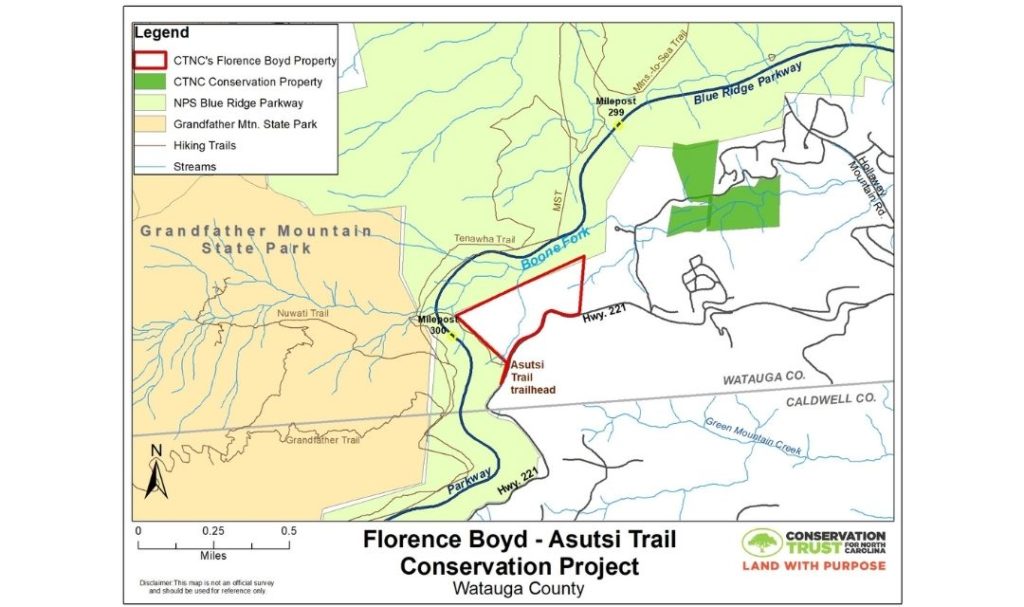
This tranquil plot is 41 acres just north of the Caldwell County line and full of purpose. Nestled in the area nicknamed “The Little Parkway,” the forested land can be seen from Grandfather Mountain State Park, the Blue Ridge Parkway and Highway 221.
While these acres have conservation value, it is also a piece of North Carolina history. This property is named for native daughter and nurse Florence Boyd. This is where she founded the Florence Boyd Home for Crippled Children, a nature-based therapy center for physically-challenged children who had few treatment options in the 1930s and ’40s. Ms. Boyd served as the only medical professional and midwife in the area for years, and old-timers will regale you with stories of her courage and compassion. In addition, the remnants of her roadside store and cabin remain on site.
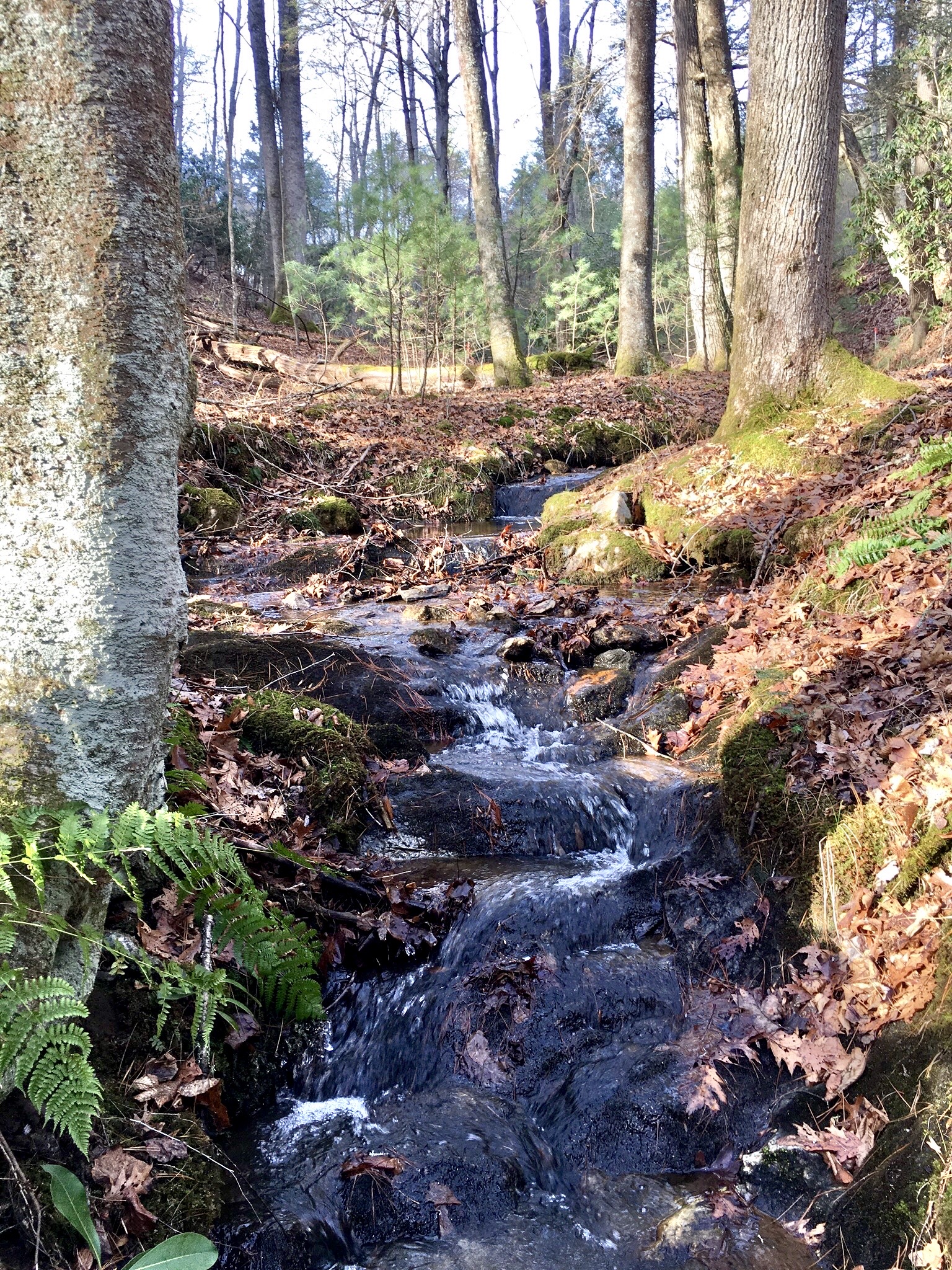
Protecting this property means safeguarding our clean water. The creeks flowing from the property meet up with the Boone Fork. We can reduce the impacts of floods exacerbated by climate change through forever preserving this land. The protected forestlands also offer carbon sequestration.
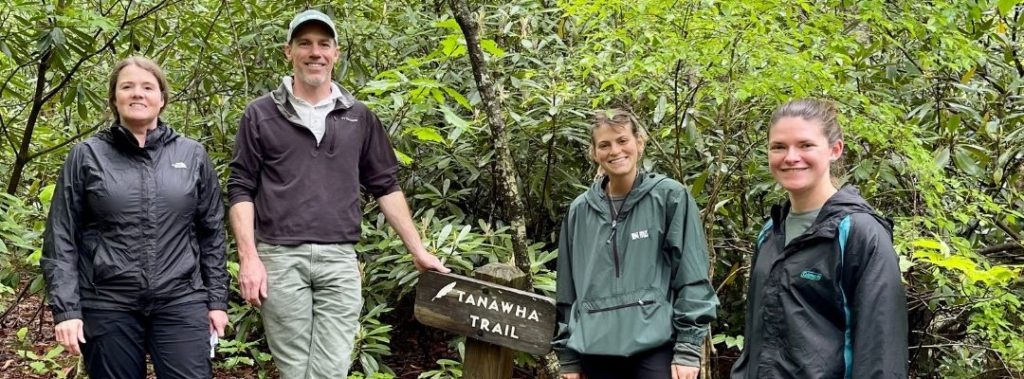
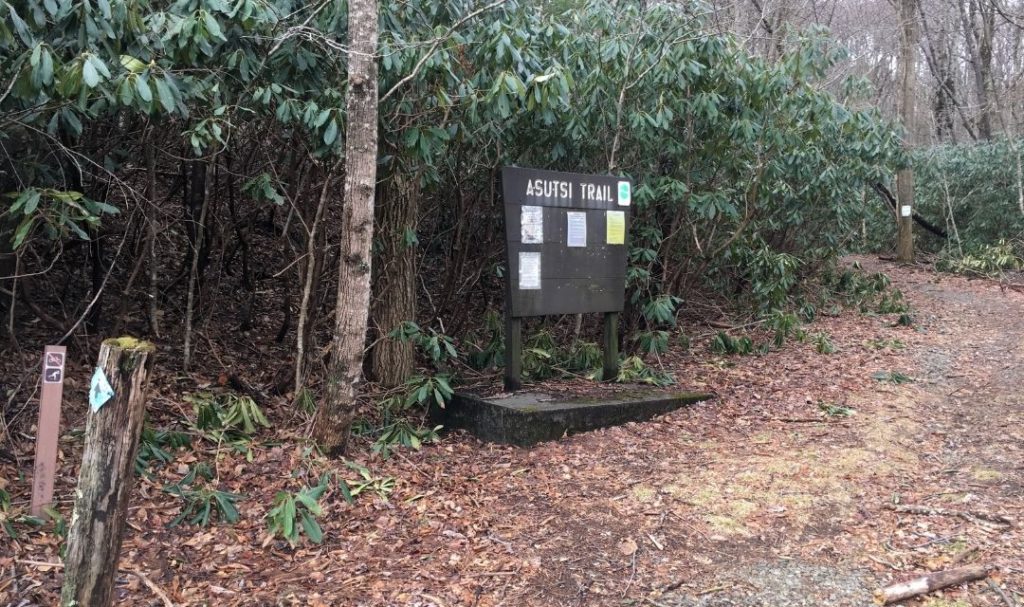
This land deal also ensures that the Asutsi Trail is uninterrupted. A-Su-Tsi is a Cherokee term meaning “to bridge,” which accurately describes this 0.4-mile connector from Hwy. 221 to the Tanawha Trail and the Grandfather Mountain State Park trail network. The Asutsi Trail offers access to popular hiking trails along the Blue Ridge Parkway. It is the only entry point to the network of trails on the east side of Grandfather Mountain during winter closures of the Parkway.
“Successful conservation of the Florence Boyd tract honors the legacy of Ms. Boyd, protects water quality in a pristine stream, eliminates the risk of unsightly development, affords protection to 41 acres of forestland, and preserves an opportunity for additional recreation amenities. We are grateful to our generous supporters and the Blue Ridge Parkway for ensuring permanent protection of this unique property,” said Chris Canfield, CTNC Executive Director.
Funding for this project was made possible by the NC Land and Water Fund and support from Fred and Alice Stanback. Special thanks to partners The Florence E. Boyd Home Foundation, the Hughes family (Linville, NC), Blue Ridge Parkway.
Thank you to everyone who made this conservation project possible. If you’d like to learn more about adding your property to a legacy of conservation contact Land Protection Director Rusty Painter.
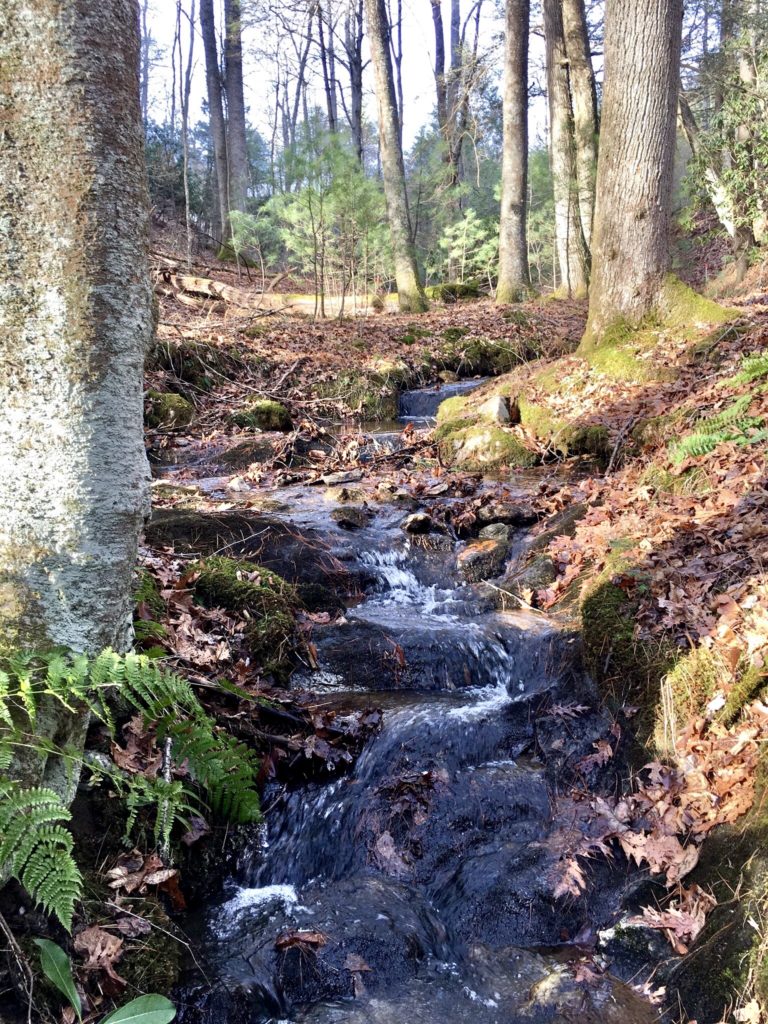
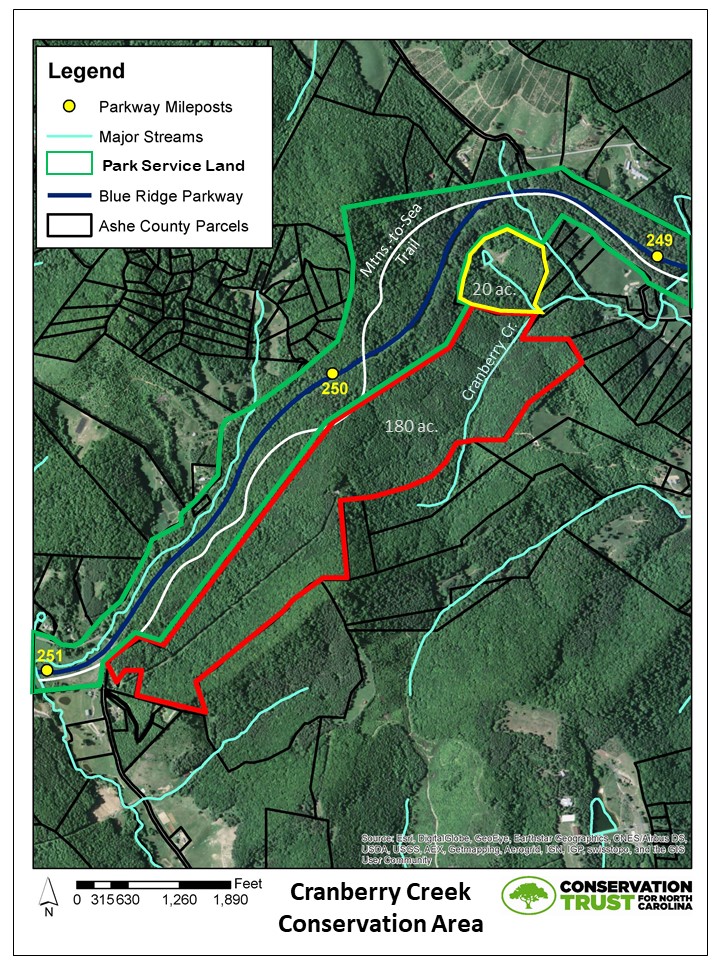
If you love fishing, hiking, bird-watching, or mountain ambling, we have a land-protection update that should make you happy! Conservation Trust for North Carolina recently closed on the Cranberry Creek Expansion Project. This 20-acre parcel will increase hiker safety along the Mountain-to-Sea Trail and removing a dam to protect native Brook Trout populations.
“The best conservation results come from partnerships between landowners, agencies, nonprofits, and stakeholders. This is a great example of that effort coming to fruition. Restoring the tributary to Cranberry Creek will help preserve our state’s native fish habitat, which is critical to maintaining a healthy ecosystem for us all.” said North Carolina Trout Unlimited Council Chair Mike Mihalas.
In partnership with Friends of the Mountains-to-Sea Trail, this land acquisition will reconnect the trail to eliminate two crossings of the Blue Ridge Parkway motor road. This will enhance the safety and scenic value of the hiking experience on the trail.
A small portion of the property is subject to a 1940 ‘scenic easement’ dating back to the creation of the Parkway. However, that old easement would not sufficiently protect views of this property. Permanent protection of the property ensures that scenic views of the property from the National Historic Landmark of the Blue Ridge Parkway will not be disrupted by development.
Thank you to the supporters who made this land acquisition possible: North Carolina Trout Unlimited, Fred and Alice Stanback, The Glass Foundation, Ron and Judy Thurman, and other generous donors of Conservation Trust for North Carolina. Thank you to the hardworking partners on this project for helping conserve this land: New River Conservancy, Friends of the Mountains-to-Sea Trail, Blue Ridge Parkway, NC Wildlife Resources Commission, NC Trout Unlimited, and American Rivers.
This website uses cookies to improve your experience. We'll assume you're ok with this, but you can opt-out if you wish. Cookie settingsACCEPT
Privacy & Cookies Policy
Privacy Overview
This website uses cookies to improve your experience while you navigate through the website. Out of these cookies, the cookies that are categorized as necessary are stored on your browser as they are as essential for the working of basic functionalities of the website. We also use third-party cookies that help us analyze and understand how you use this website. These cookies will be stored in your browser only with your consent. You also have the option to opt-out of these cookies. But opting out of some of these cookies may have an effect on your browsing experience.
Necessary cookies are absolutely essential for the website to function properly. This category only includes cookies that ensures basic functionalities and security features of the website. These cookies do not store any personal information.