CTNC awards $112,790 in grants to six land trust partners
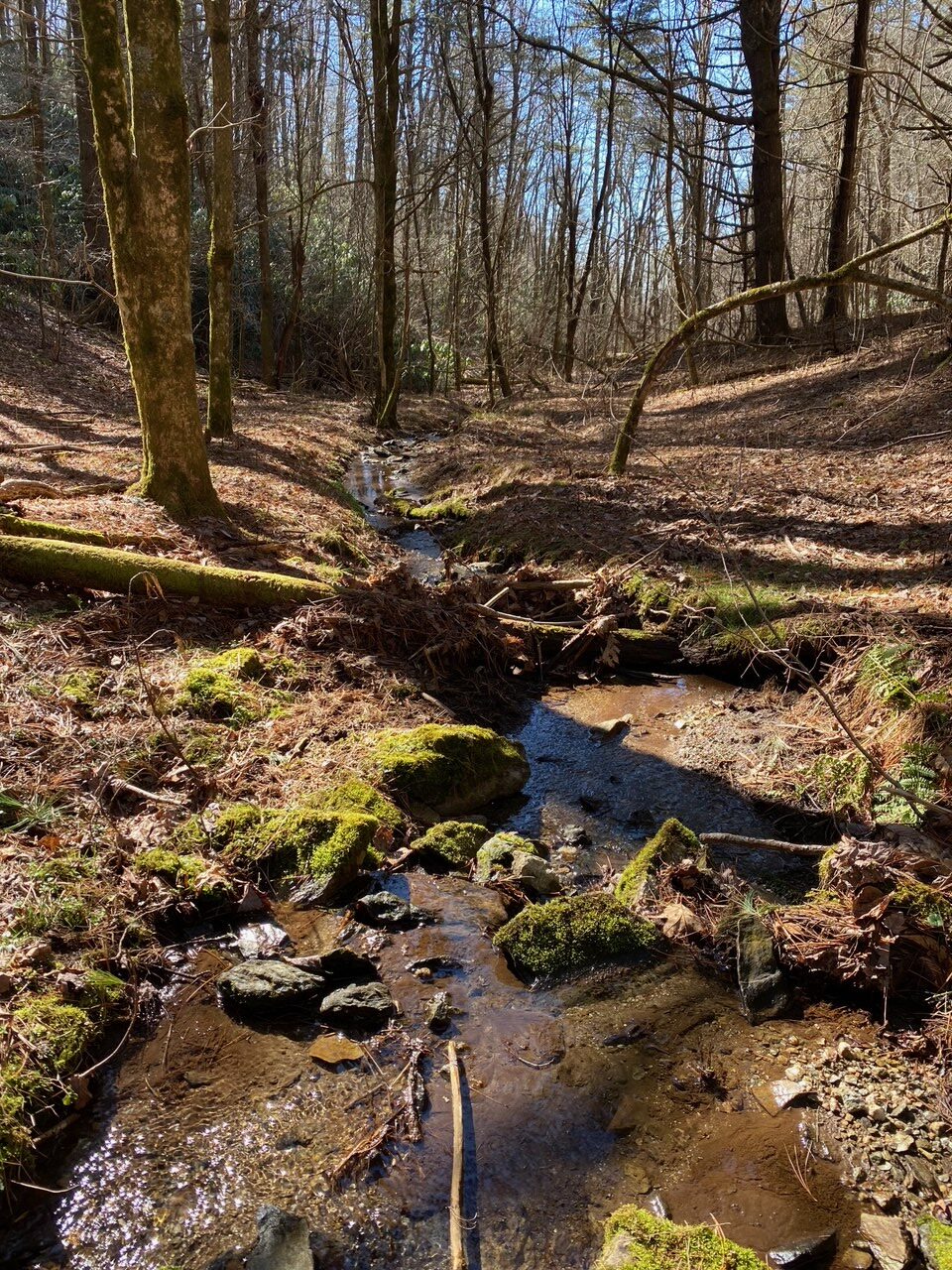
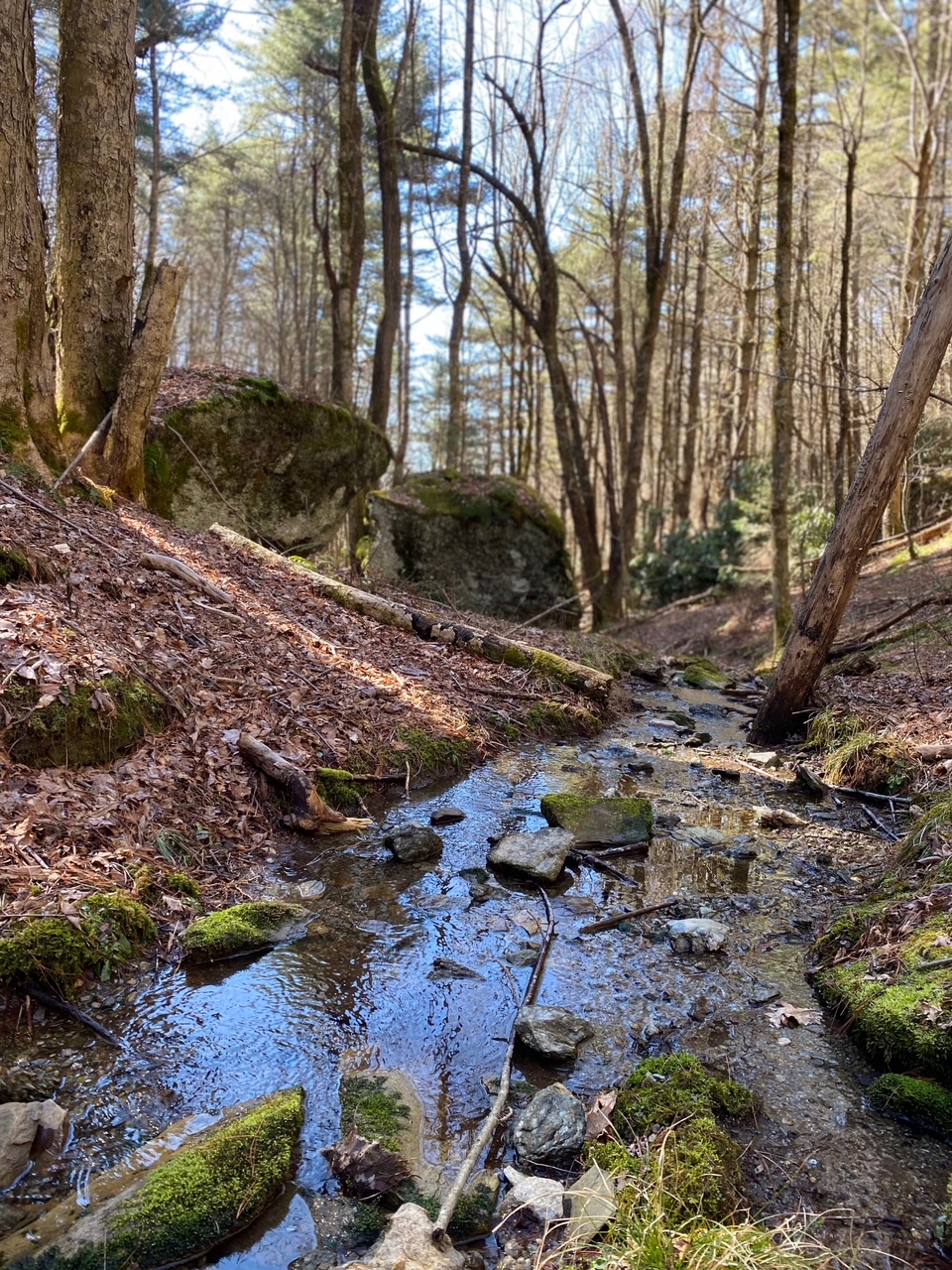
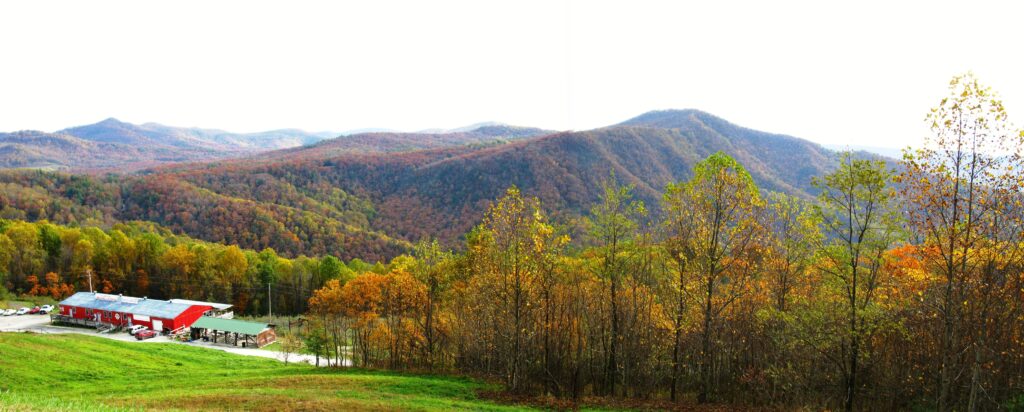
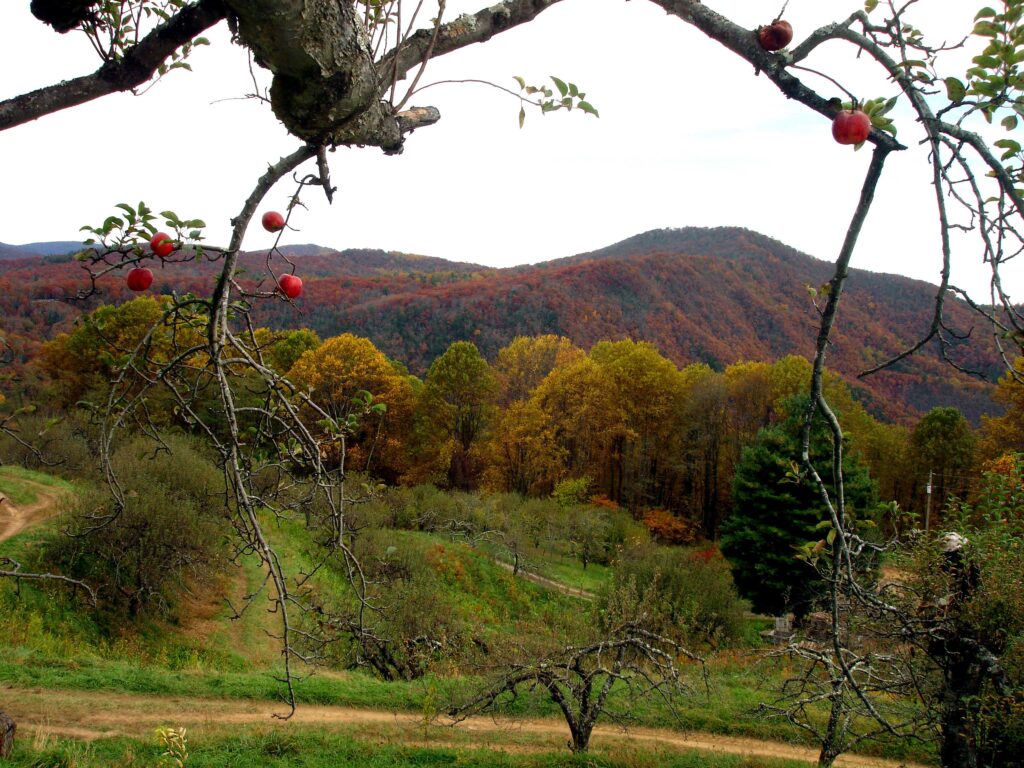
In October, CTNC awarded six grants to six local land trusts in Western North Carolina to help them close the final funding gap on land protection projects. Through the Mountain Revolving Loan Fund (MRLF), CTNC is allocating $112,790 that will support partner land trusts in the mountains to protect an additional 4,790 acres.
The CTNC Mountain Revolving Loan Fund has two significant benefits for our partners:
It provides crucial bridge financing with minimal interest to land trusts in Western North Carolina to purchase conservation land and easements. As loans are repaid, the money becomes available to re-lend.
A percentage of the balance of the loan fund is given out each year in grant awards. Grants of up to $25,000 are not required to be paid back. CTNC’s grants help cover transaction-related costs, land management, project administration, and long-term stewardship; often the most difficult project funding to raise.
This marks the 15th year of CTNC’s program! In that time, the program has provided a total of $1,507,000 to eight eligible land trusts supporting land conservation in the Blue Ridge mountains. Grants from CTNC have helped our fellow land trusts leverage more than $99M and protect 21,259 acres through 108 projects over the life of the program.
CTNC is proud to support the work of our amazing group of partner land trusts, and thankful for their conservation successes.
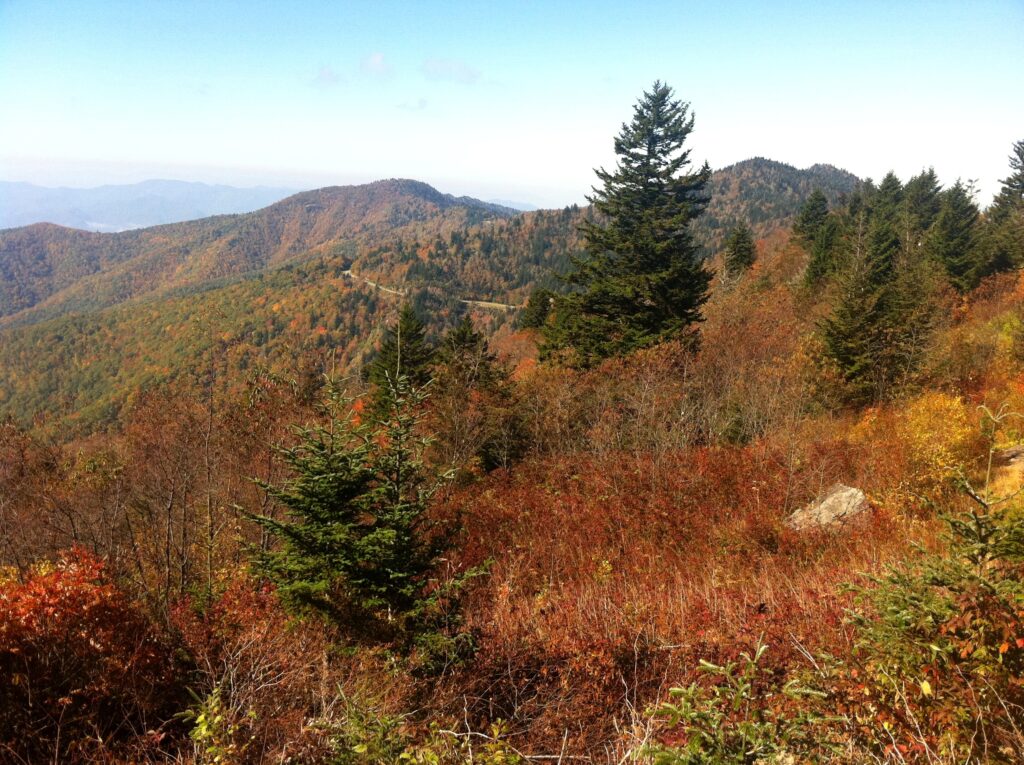
Support the Blue Ridge Parkway’s gateway communities recovering from Hurricane Helene while viewing the vibrant autumnal transformation
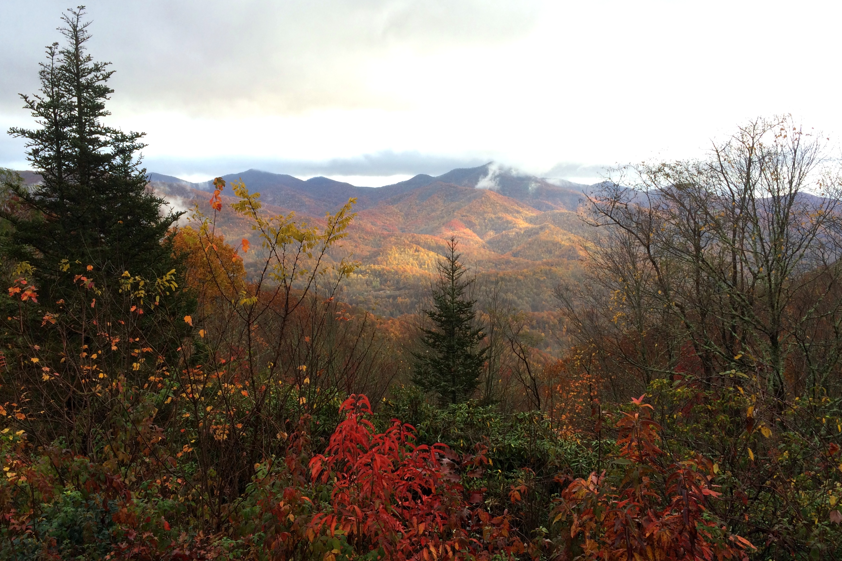
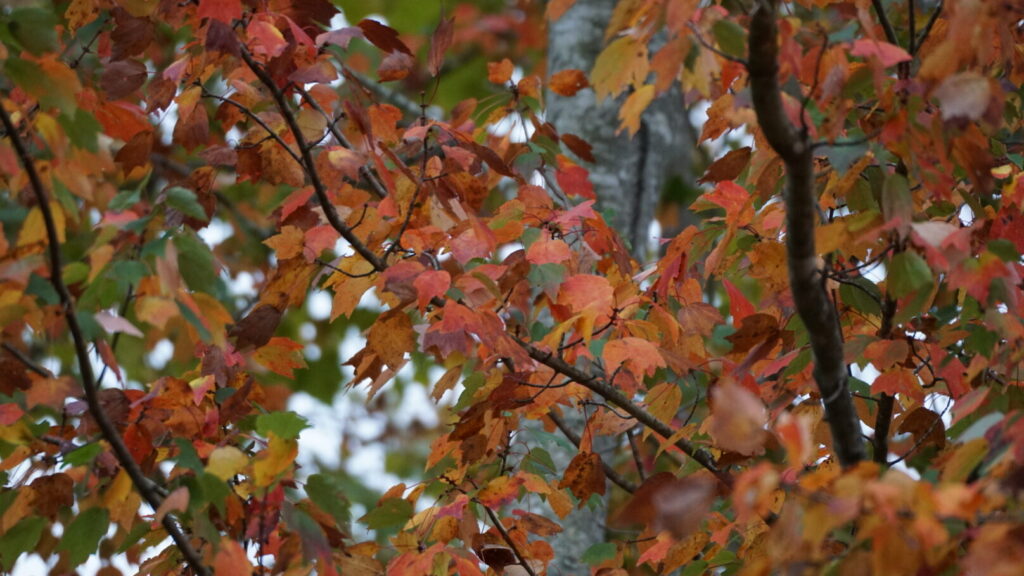
Last year, Hurricane Helene left a lasting mark on Western North Carolina. In the face of devastation, these communities responded with unwavering resilience, a testament to the deep-rooted connection between the people and the land they call home. As autumn returns and the mountains turn to the vibrant colors of peak leaf season, there’s no better time to experience the beauty of this region while playing a role in its recovery.
This fall, you can view the fall foliage and mountain scenery while supporting the Parkway’s gateway communities that are actively rebuilding. By visiting local shops, dining at family-owned restaurants, and staying in family-run lodges or inns, you help strengthen the local economies that form the backbone of this cherished landscape.
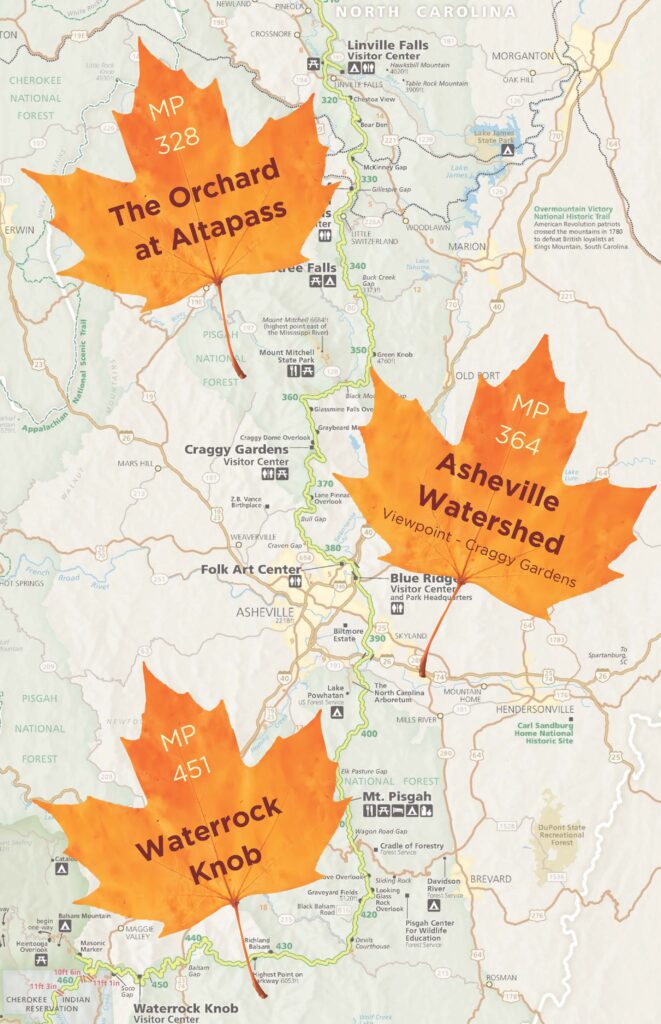
The “peak week” of fall foliage varies by location and elevation, so it’s important to plan ahead to ensure you can view the leaves at the optimal time. Check out this article for a fall photo tour of the Parkway with milepost locations. This website shares a fall foliage map with the projected timing of peak leaf colors by region.
From our partners at the National Park Service: “Whether leaf color for any given year is classified as ‘spectacular’ or simply as ‘average,’ the display will nonetheless be pleasing to the eye somewhere along the parkway. One reason is the parkway’s amazing diversity of trees. Some 100 species of native trees grow in the southern Appalachians and the majority of these are deciduous. Various species change color at different times over a long fall season.” Read more about when and why the leaves change here.
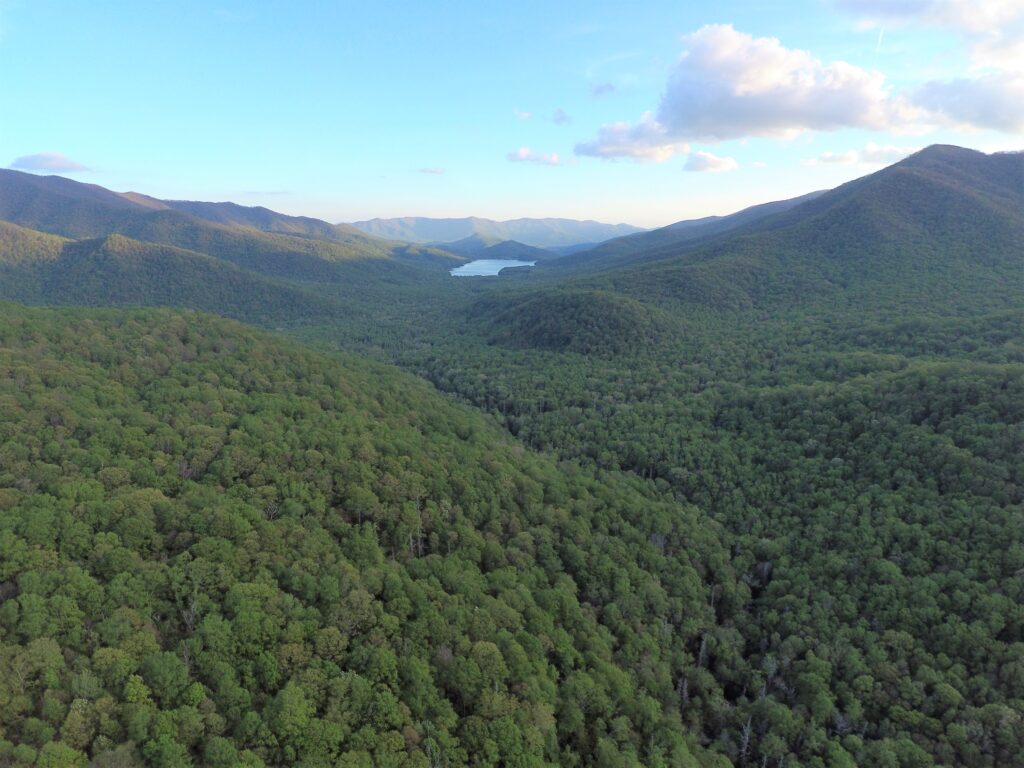
By permanently protecting critical forestland along the Blue Ridge Parkway, CTNC ensures the land continues to produce clean air and water, safeguarding vibrant plant and animal communities, sequestering carbon from the atmosphere, and providing space for the diverse tree species that produce the extraordinary autumn colors Western NC displays each year.
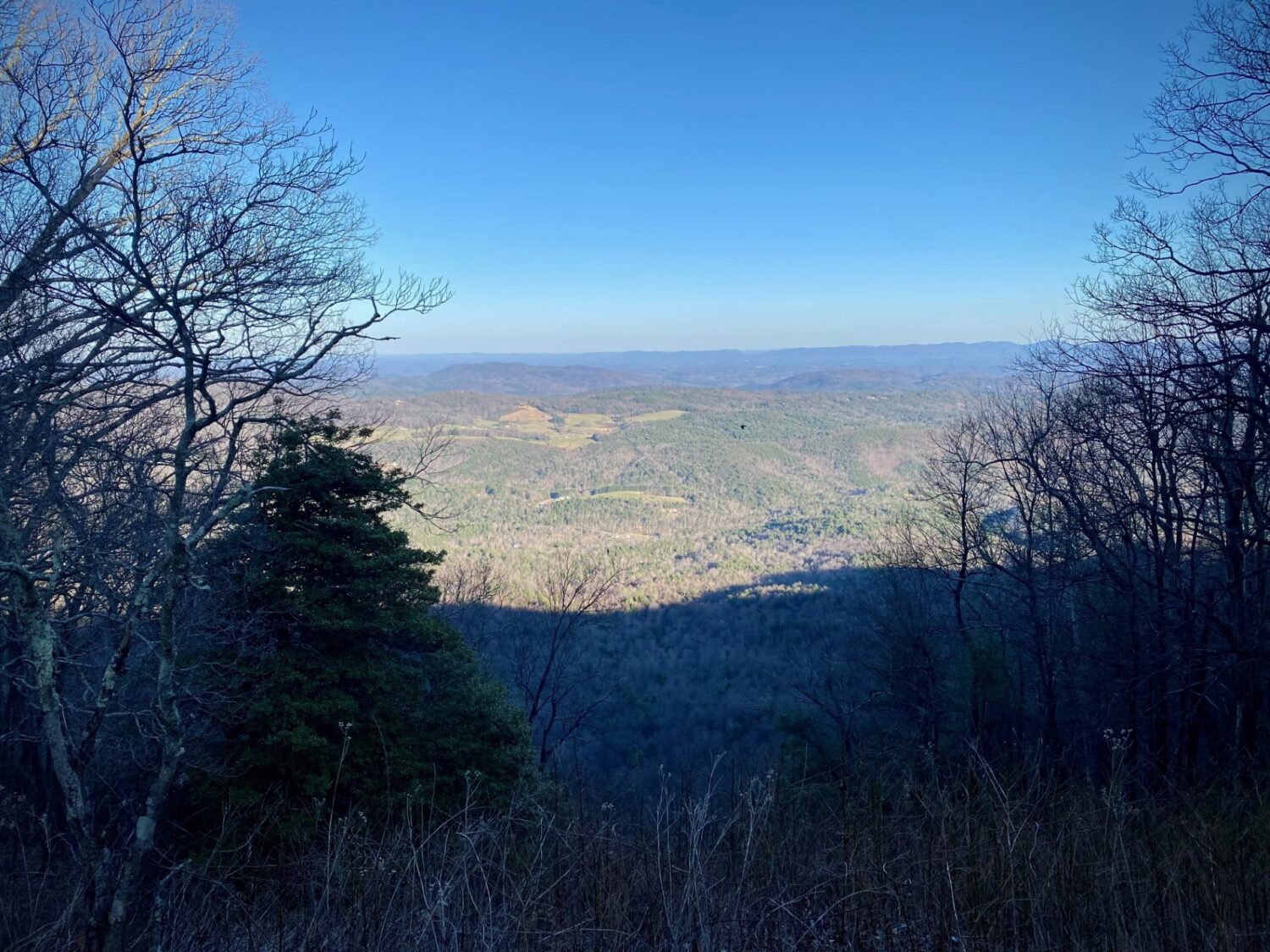
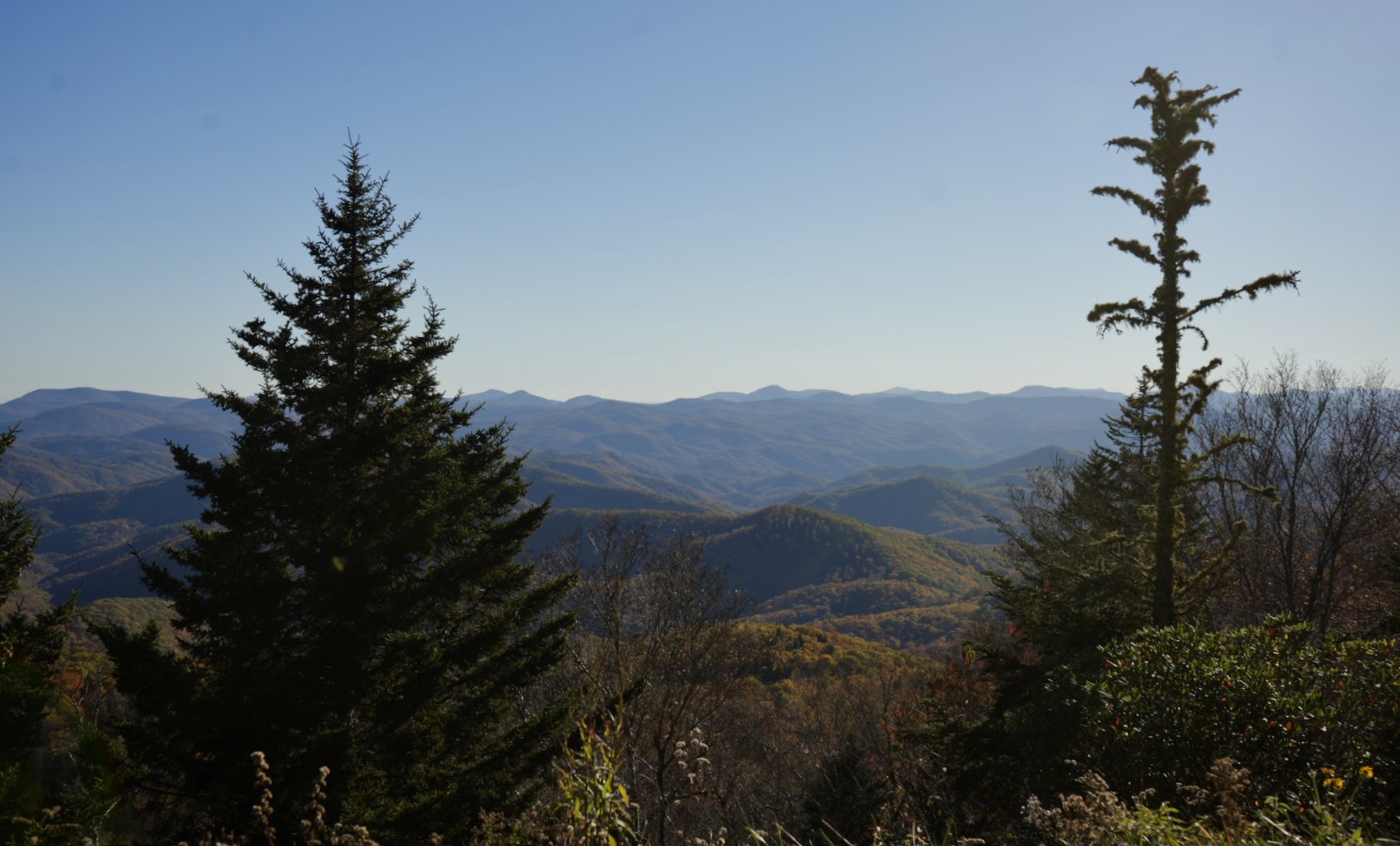
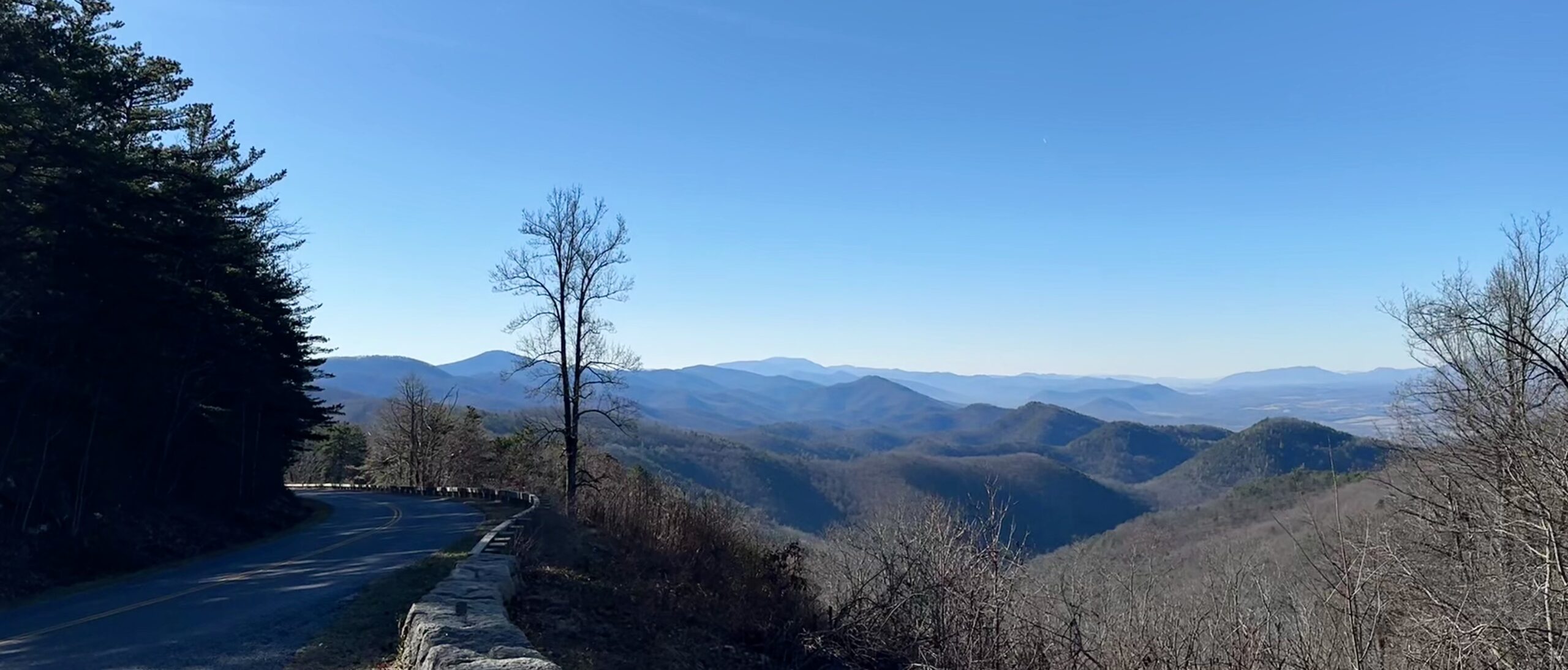
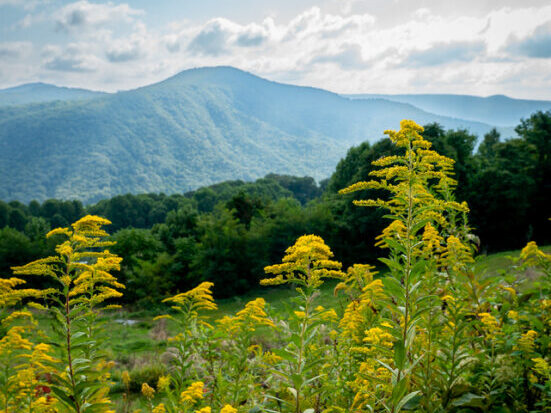
While you’re on the Parkway this fall, check out a few overlooks and locations with views you helped CTNC protect.
Developments to Cranberry Creek Preserve enriching local ecosystem
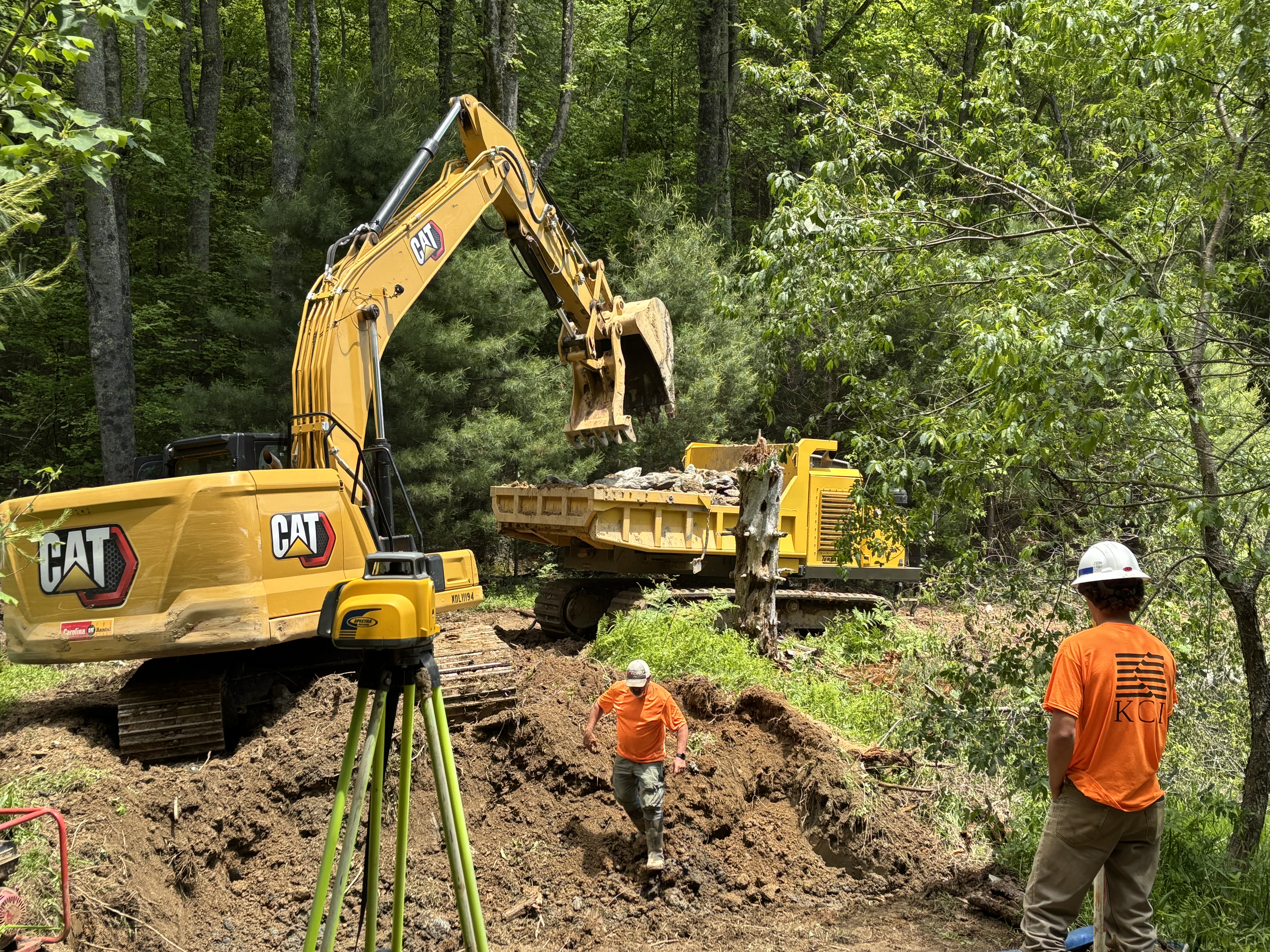
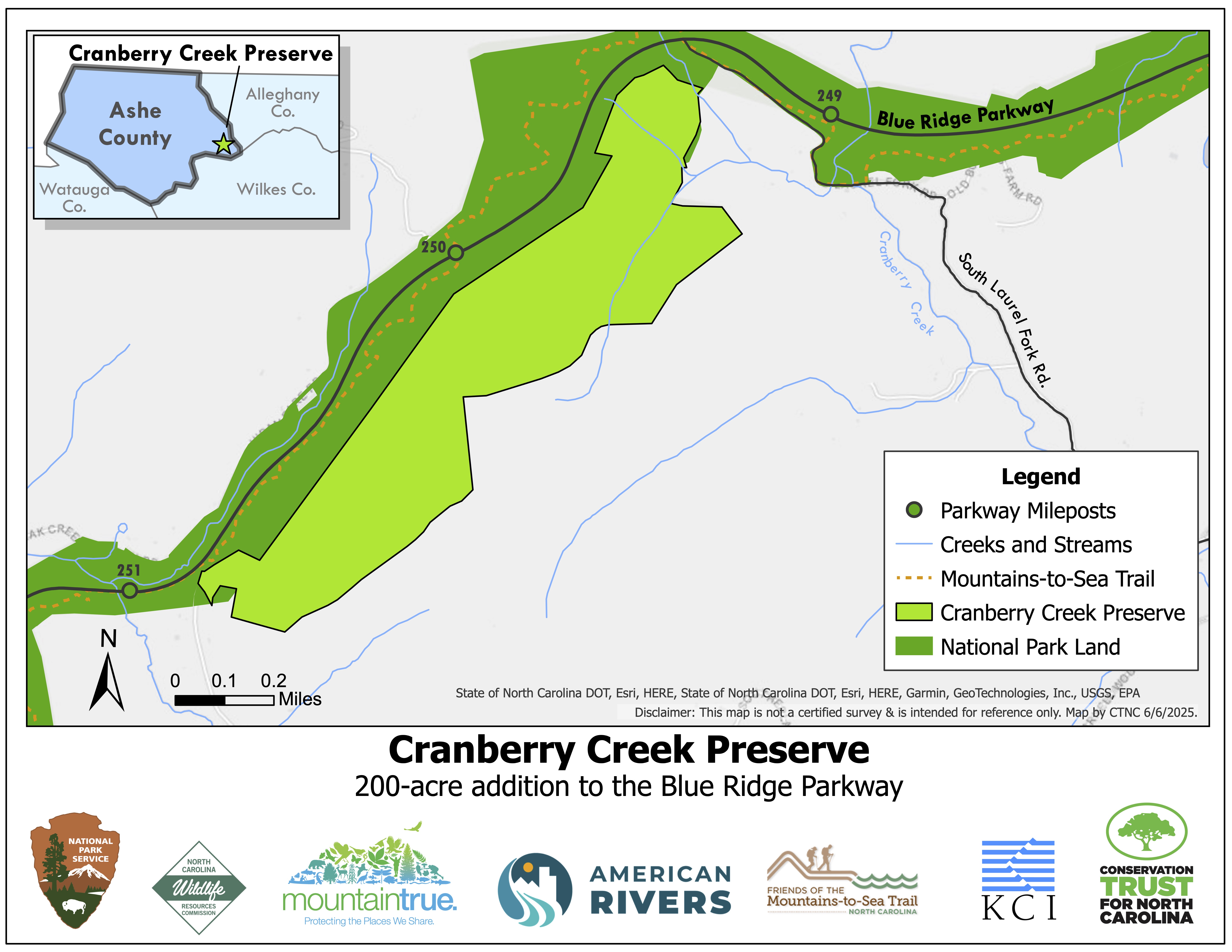
In the hills of eastern Ashe County near Glendale Springs, CTNC’s Cranberry Creek Preserve is a hidden gem along the Blue Ridge Parkway. Spanning 200 acres and hugging the Parkway for nearly a mile and a half, from milepost 249.5 to 251, this protected property has recently undergone an exciting transformation that will benefit downstream residents, hikers, wildlife, and the environment.
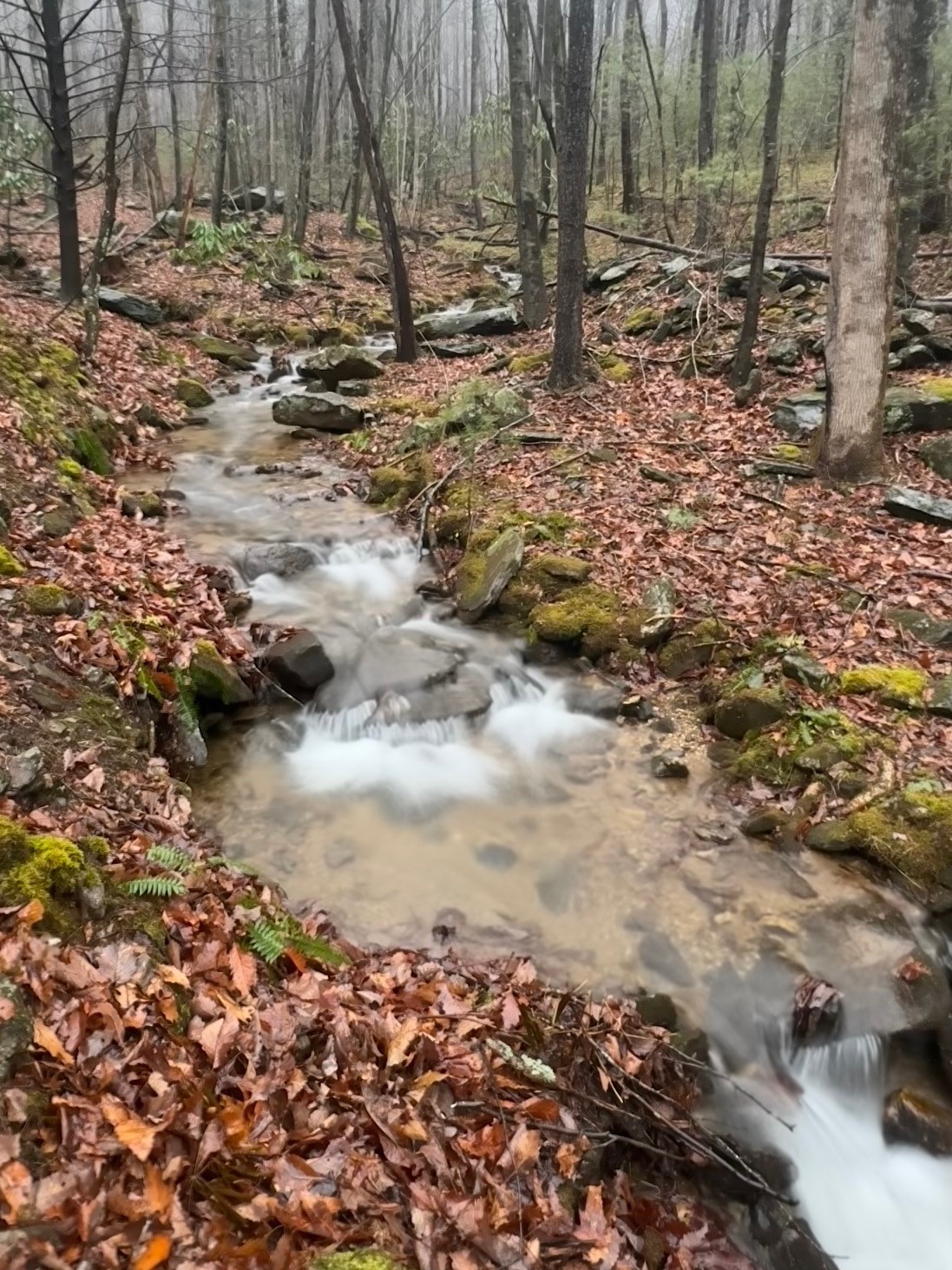
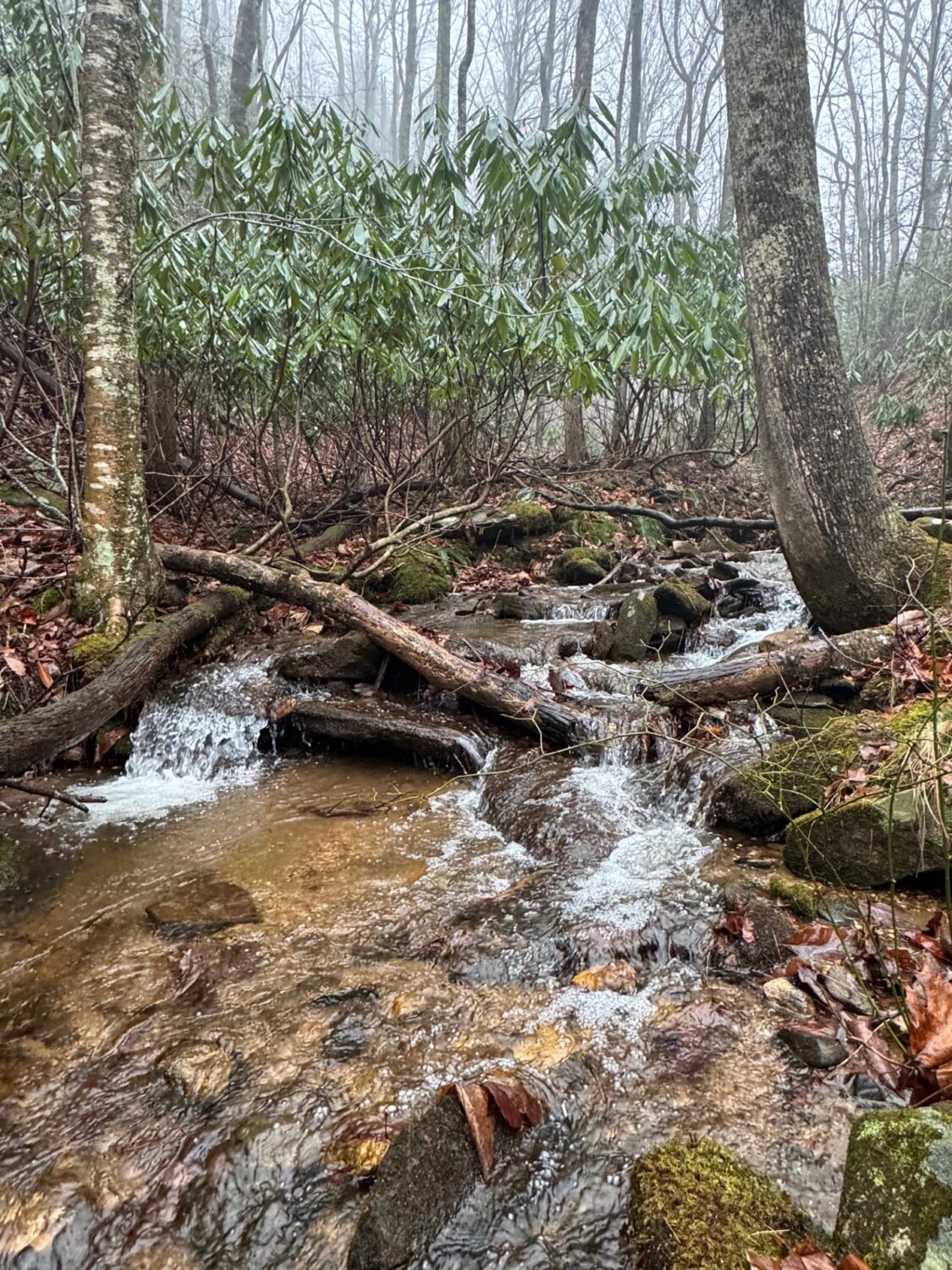
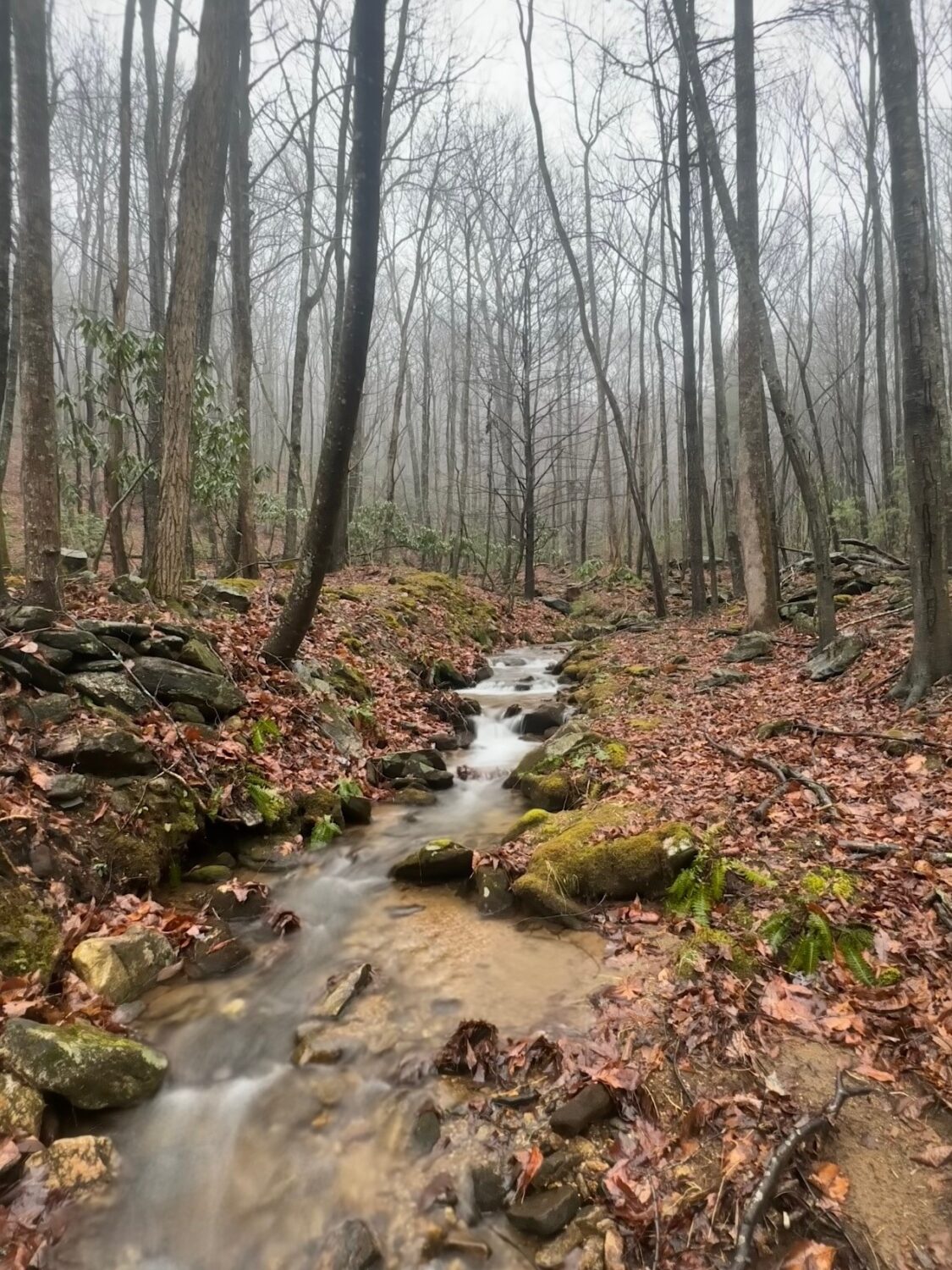
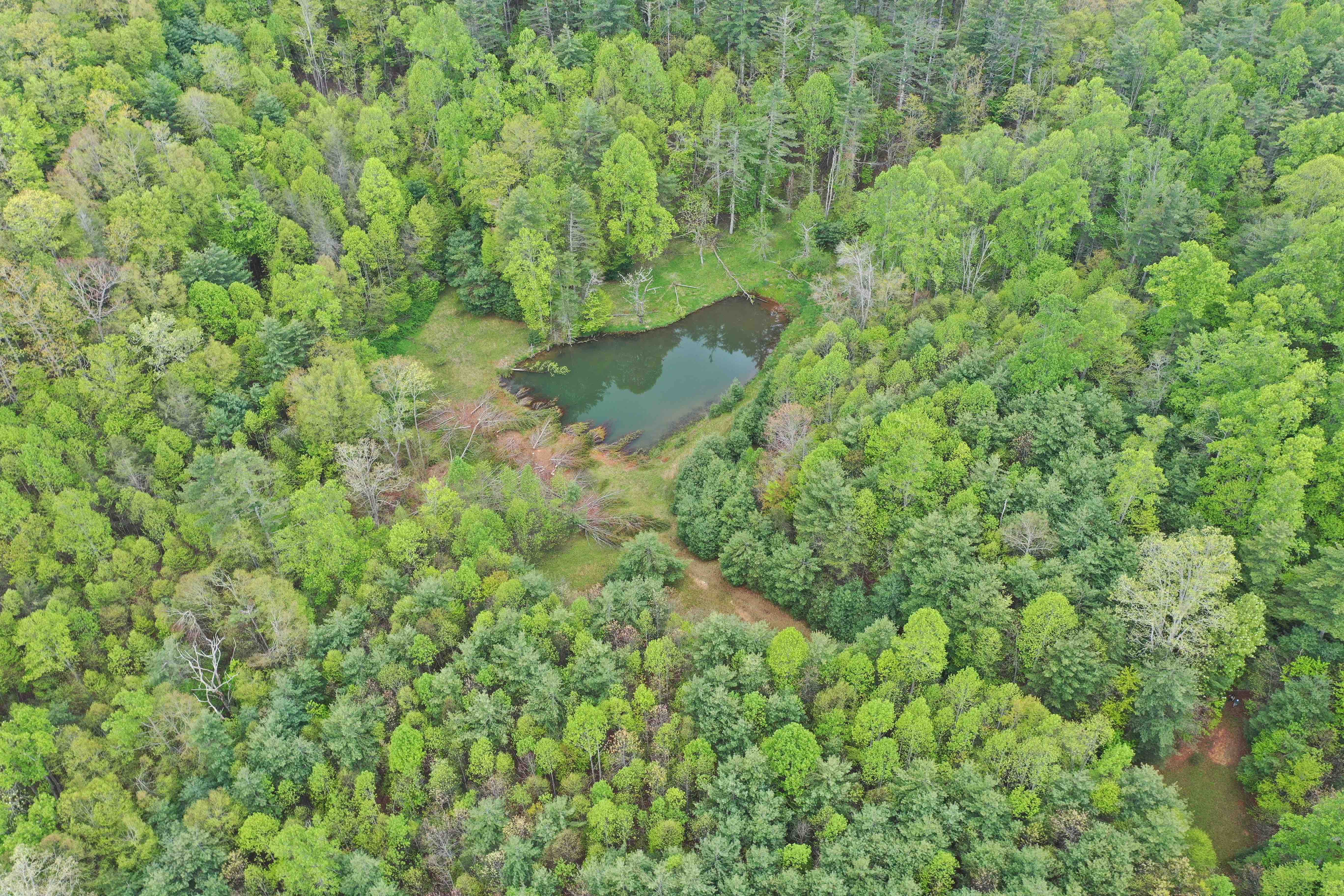
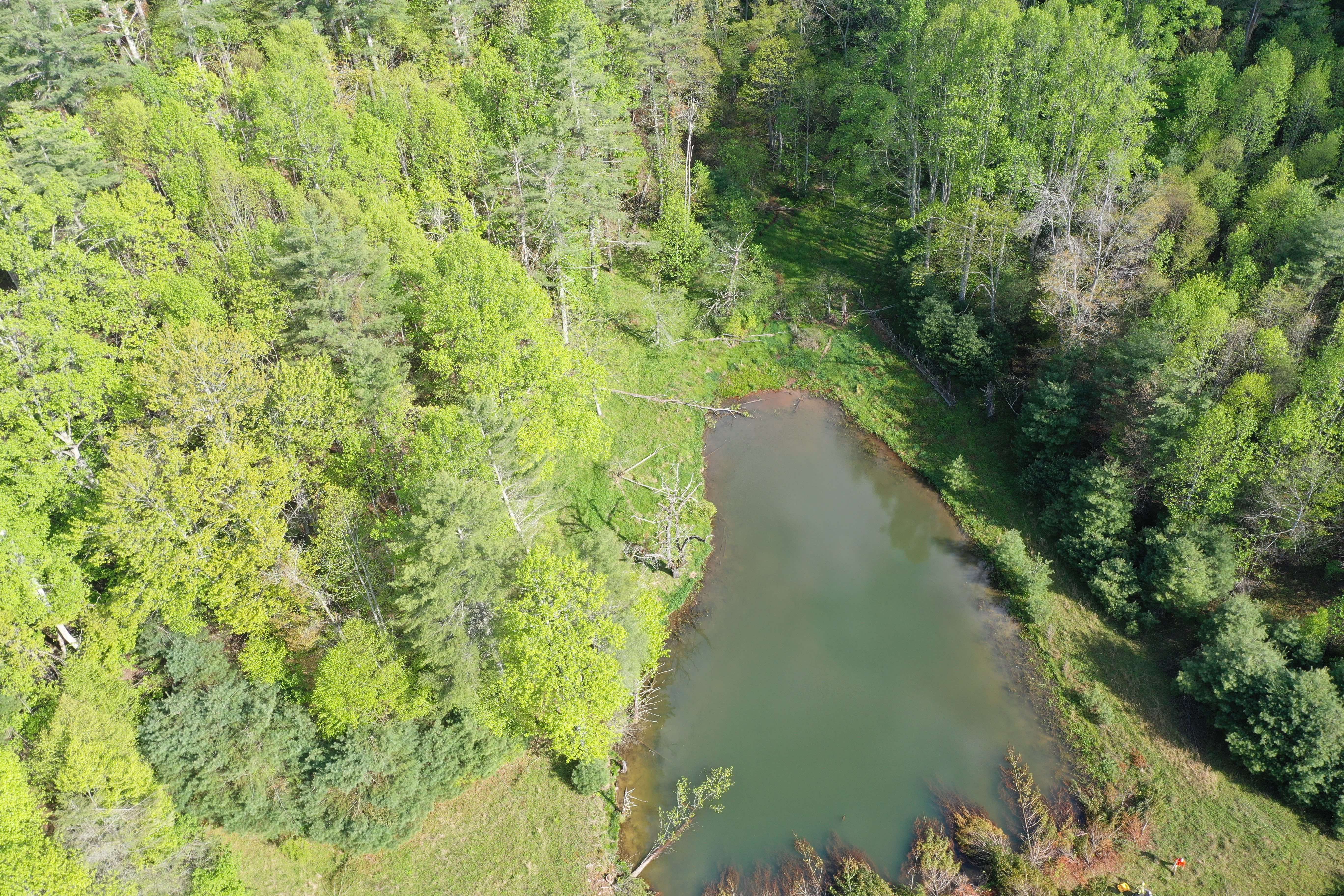
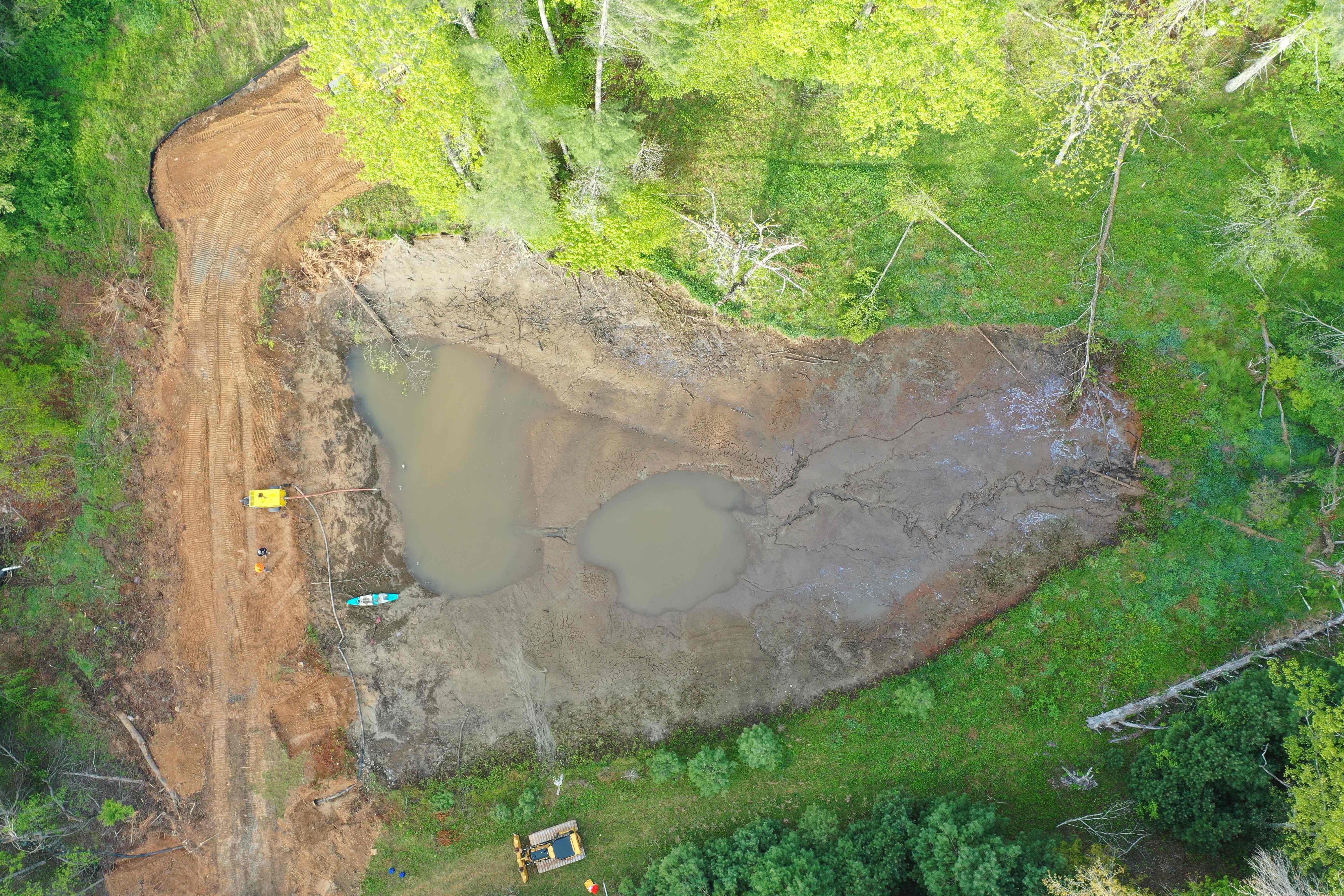
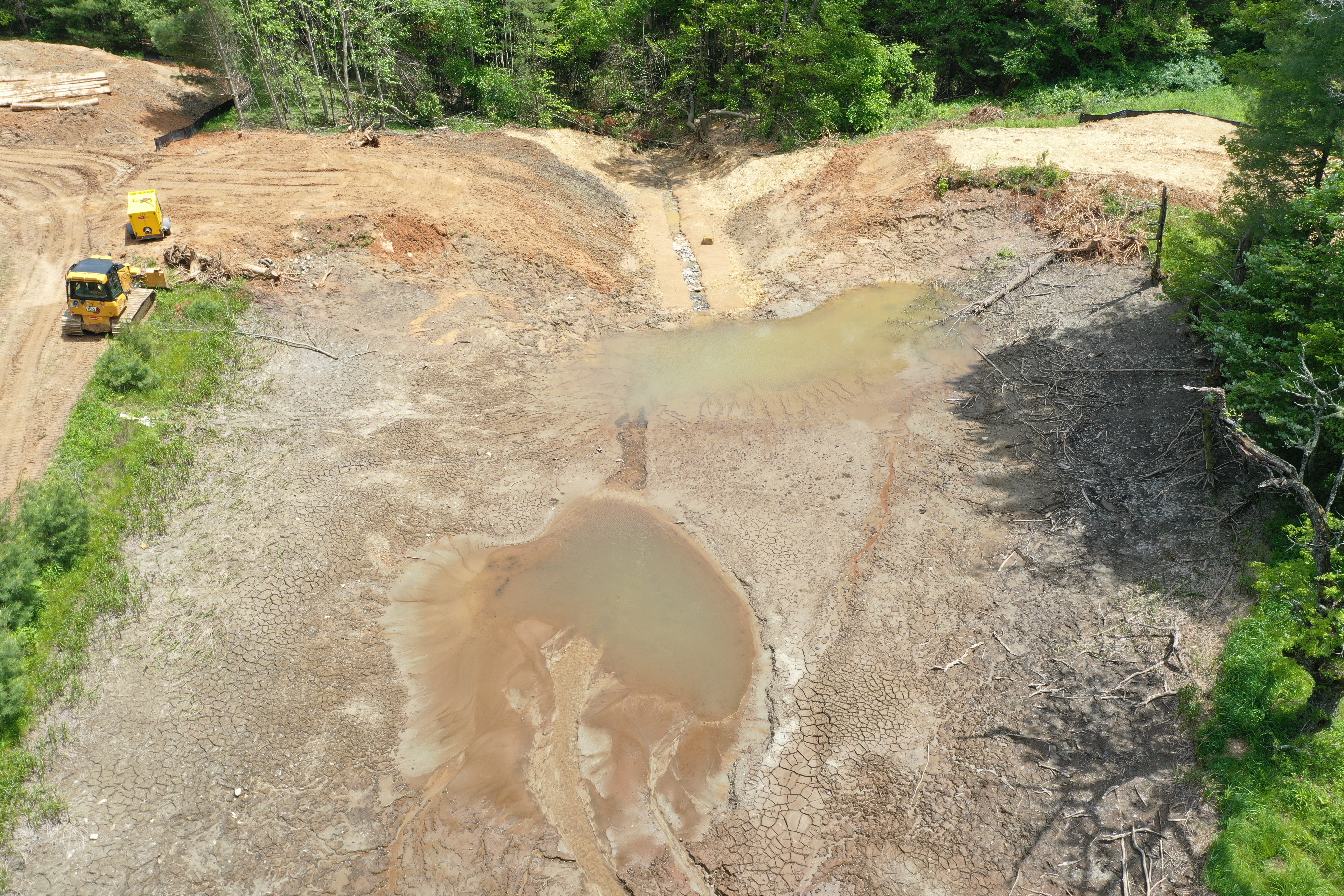
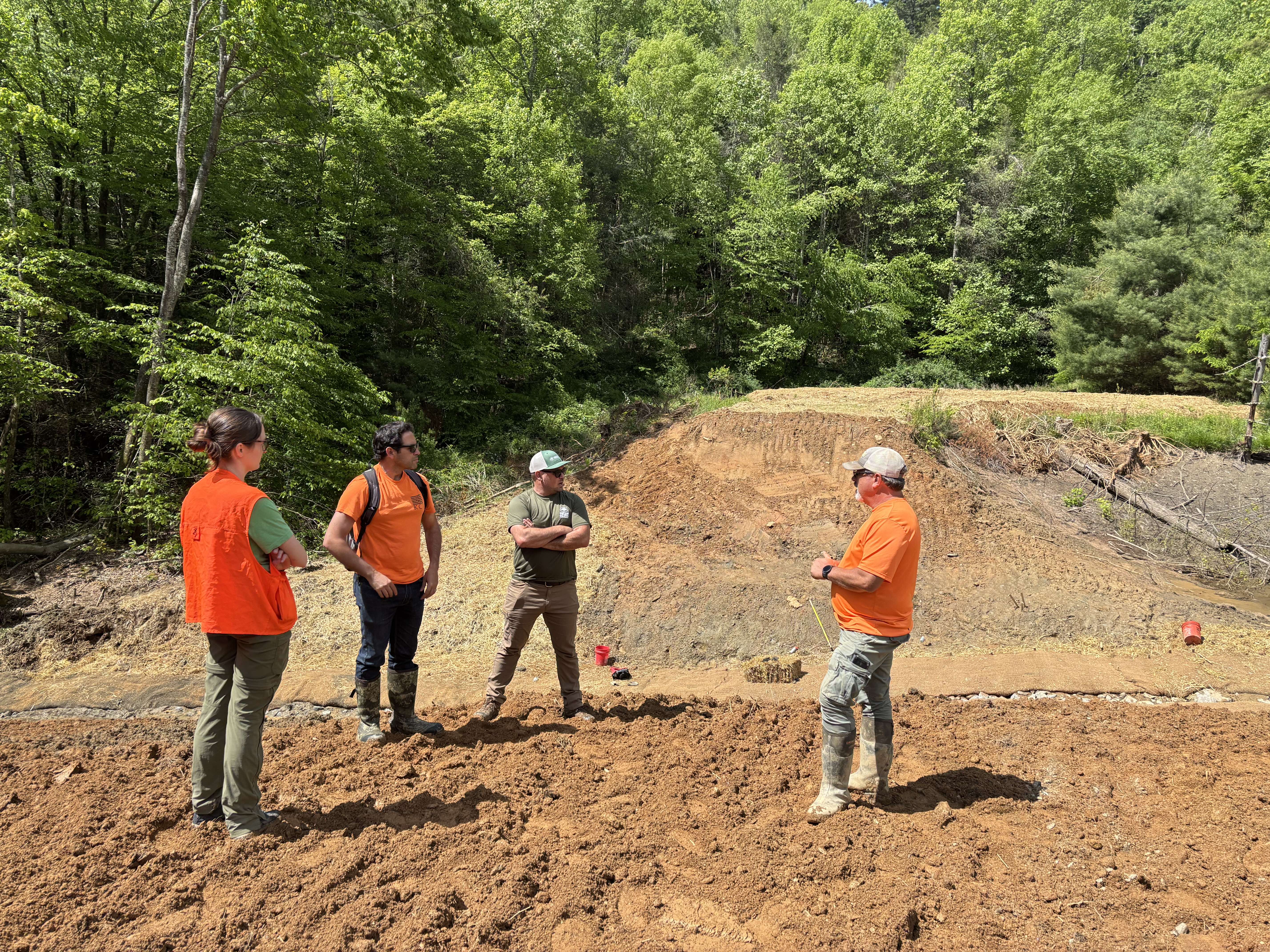
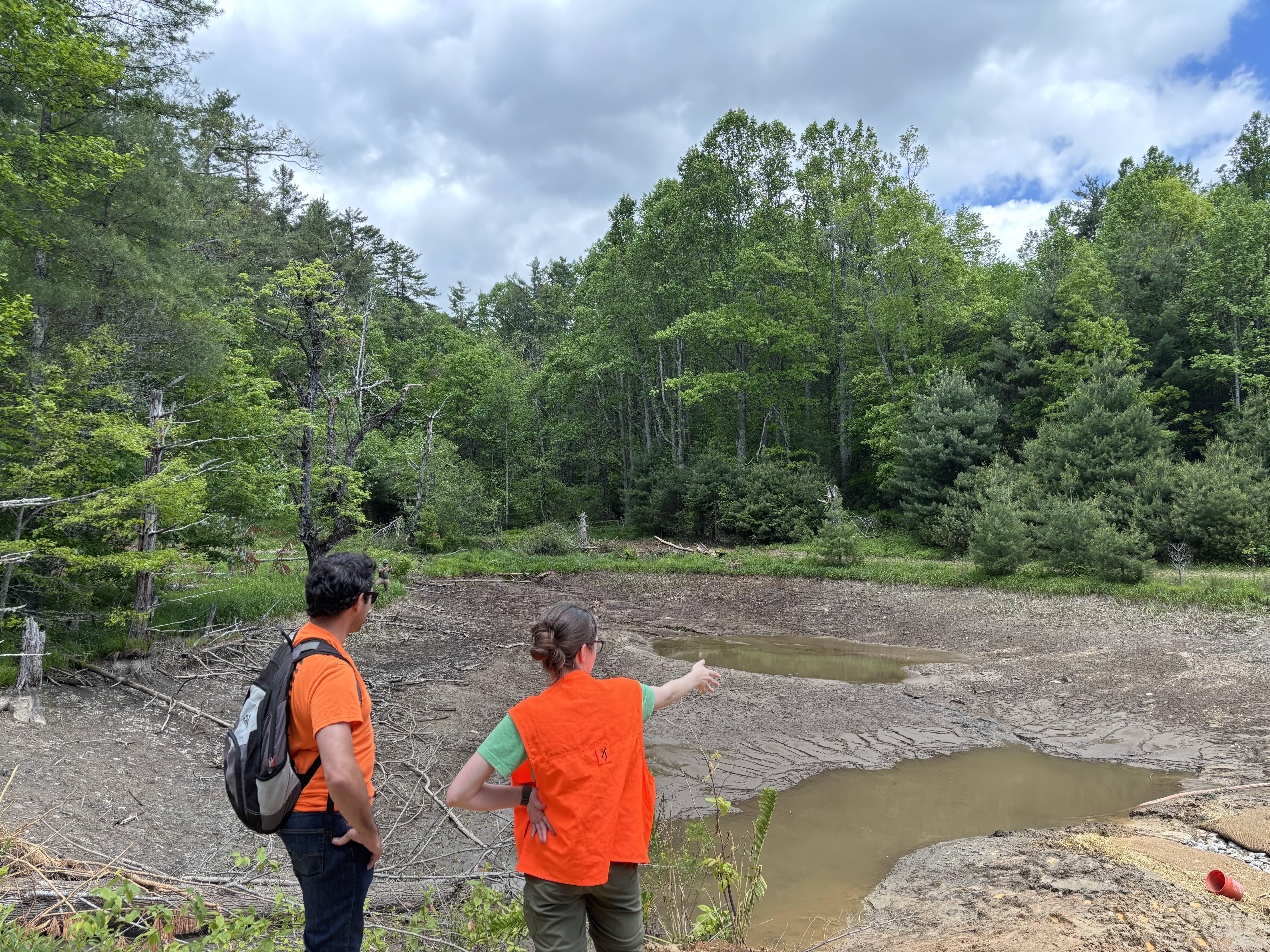
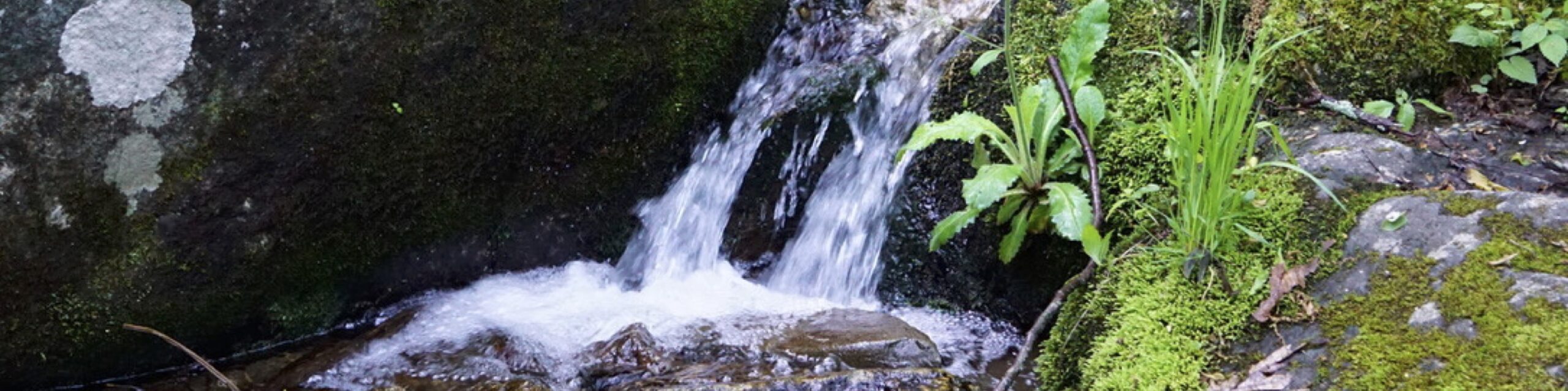
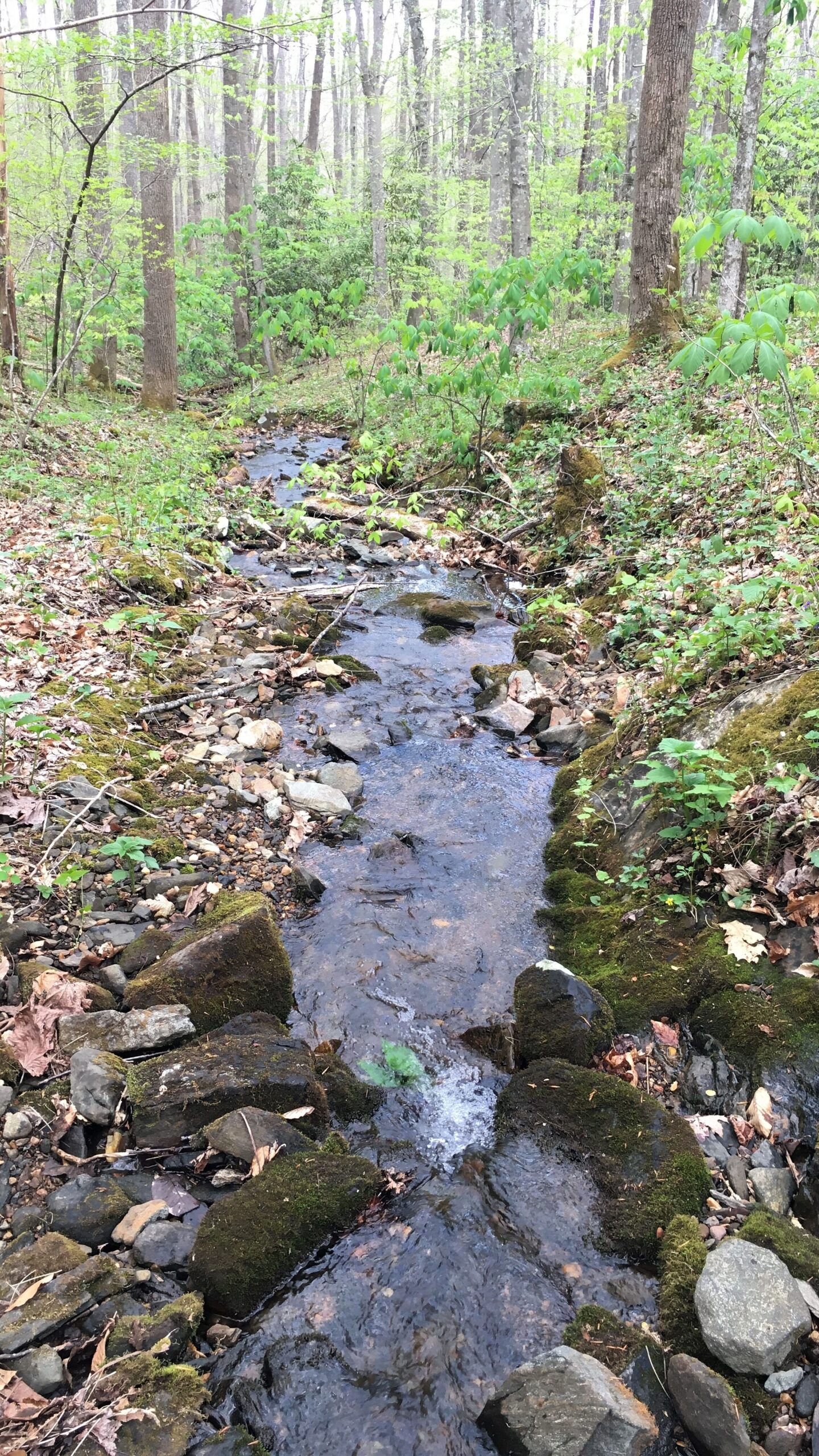
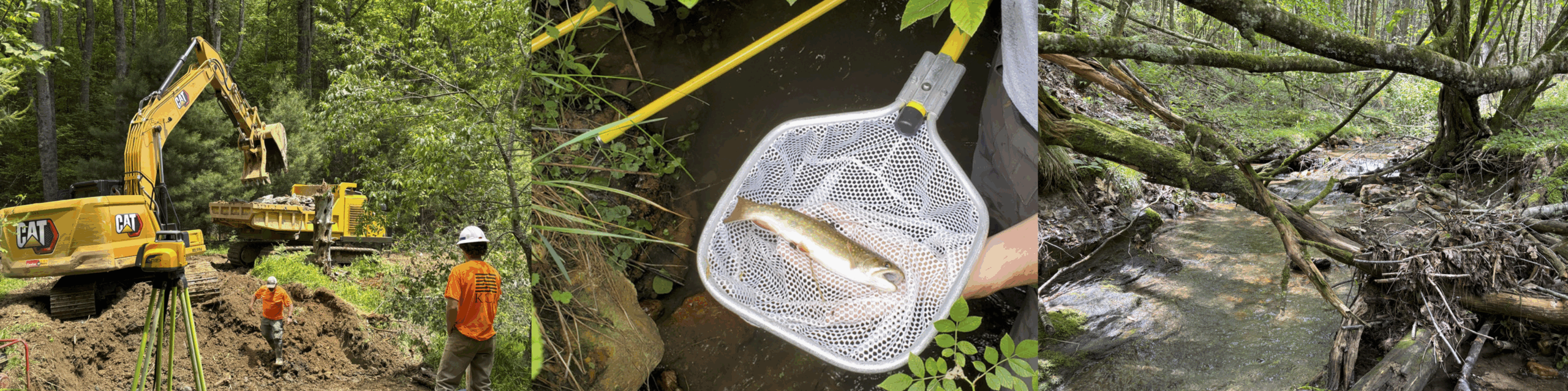
CTNC’s Cranberry Creek Preserve previously held a failing earthen dam that blocked an unnamed tributary of Cranberry Creek. Now that it’s removed, the stream flows freely for the first time in nearly 75 years, restoring natural hydrology to the area. This ecological enhancement to the flowing channel of the stream will support brook trout and many other native species.
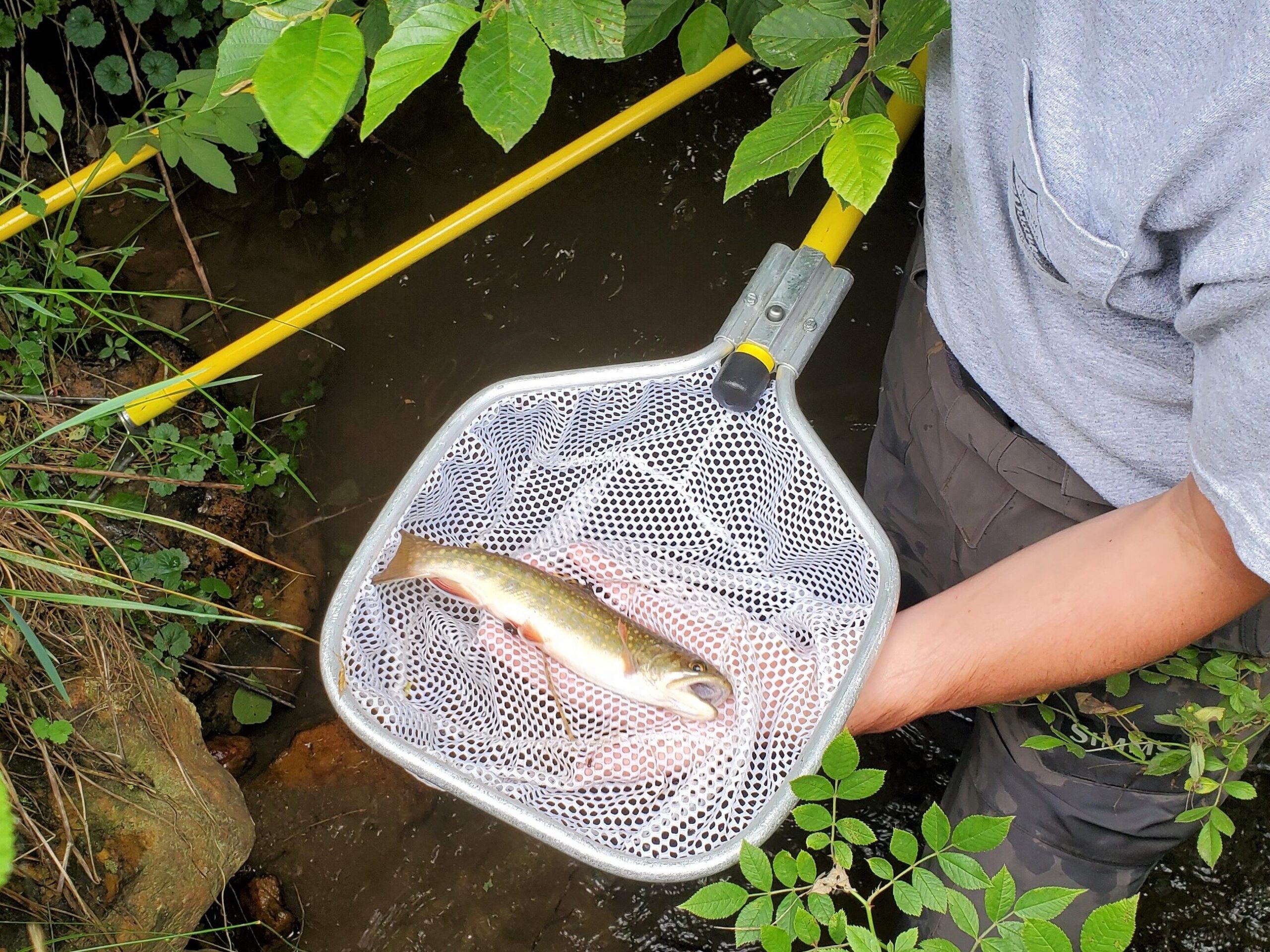
Brooktrout,Salvelinus fontinalis, are the only native species of trout in North Carolina. Found primarily in the high elevations of the Blue Ridge and Smoky Mountains, these fish prefer pristine, cold streams with rocky bottoms and dense overhanging vegetation. Often referred to as “speckled trout” by locals, brook trout are known for their vibrant coloring and delicate size. Learn more about brook trout.
Brook trout caught by a fisheries biologist directly below the dam prior to its removal. Soon, these fish will be able to migrate further upstream and enjoy cooler, cleaner water.
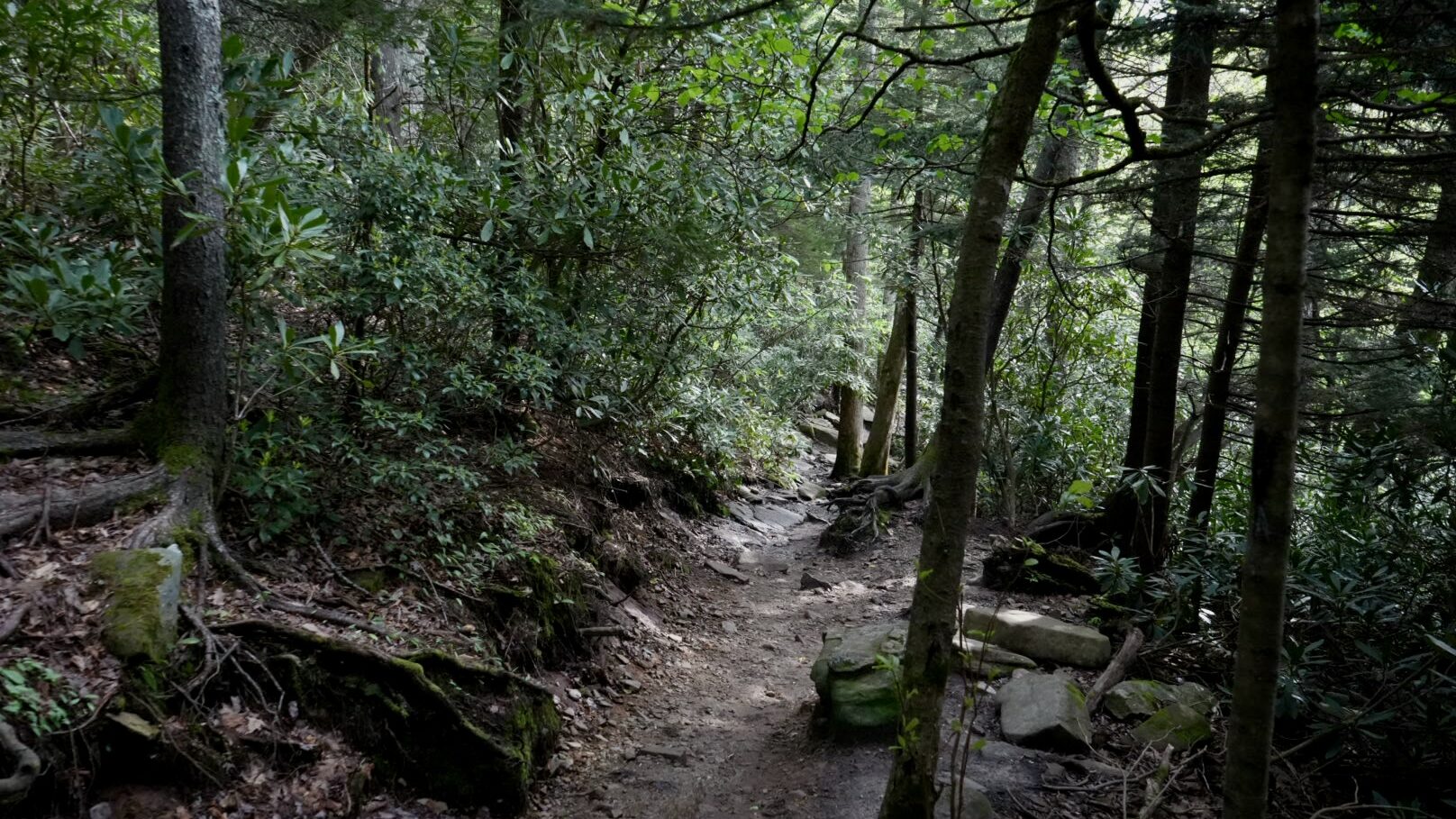
CTNC is also partnering with Friends of the Mountains-to-Sea Trail to prepare Cranberry Creek Preserve to host a re-route of a key section of the Mountains-to-Sea Trail . Currently, this popular hiking route crosses the Parkway motor road twice along this stretch, hugging the edge of the road in some places. The planned re-route will eliminate the need for those road crossings and take hikers off the shoulder and into the peaceful woodlands of Cranberry Creek Preserve—offering a safer and more immersive experience in nature.
CTNC plans to transfer ownership of the preserve to the National Park Service, ensuring its permanent protection as part of the Blue Ridge Parkway. This transition not only safeguards the land for generations to come but also opens it to enhanced recreational use and ecological restoration.
Blue Ridge Parkway Designated a National Historic Landmark
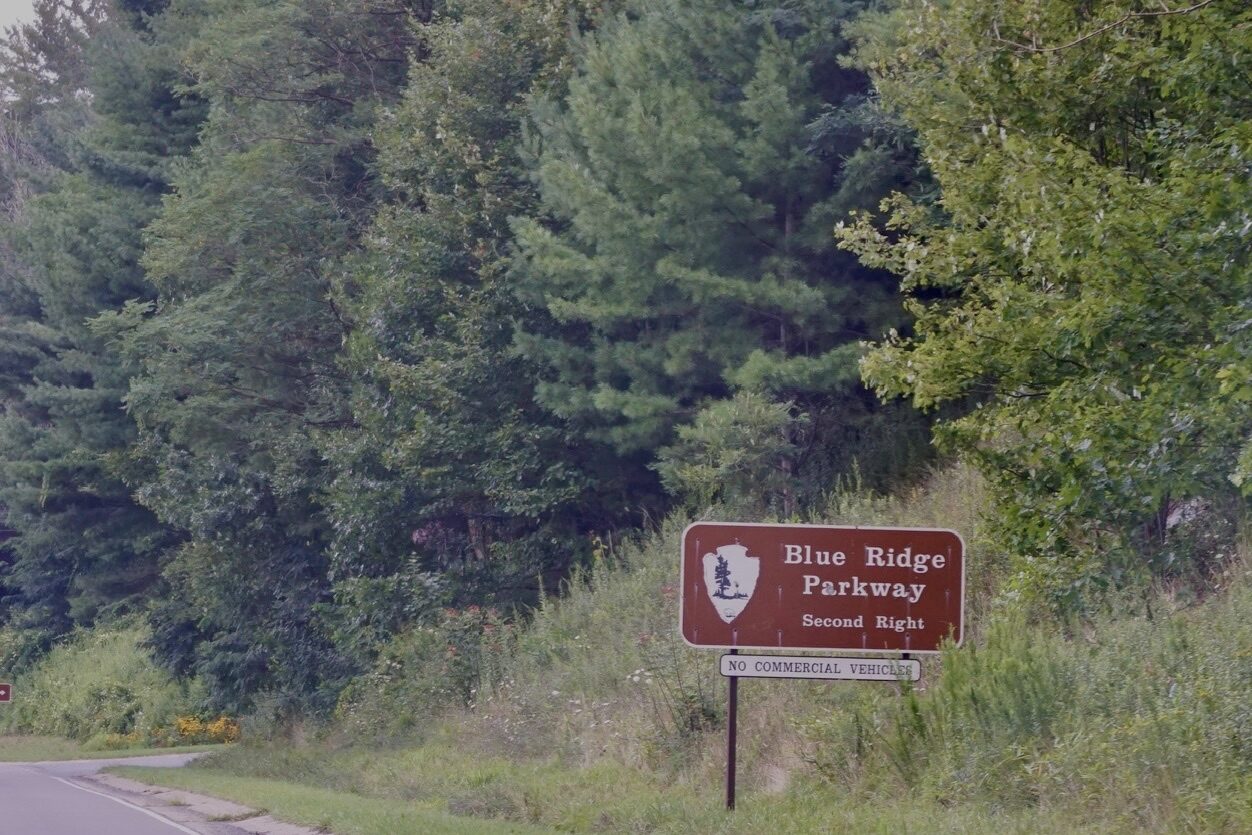
Spanning 469 miles through the breathtaking Appalachian Mountains, the Blue Ridge Parkway has long been cherished as “America’s Favorite Drive.” Now, this beloved roadway has received an official designation as a National Historic Landmark, cementing its place in history as a protected national treasure.
This new status not only recognizes the Parkway’s rich cultural, historical, and environmental significance but also ensures its preservation for generations to come.
Heavy rains and wind couldn’t dampen the festivities at this year’s Conservation Celebration
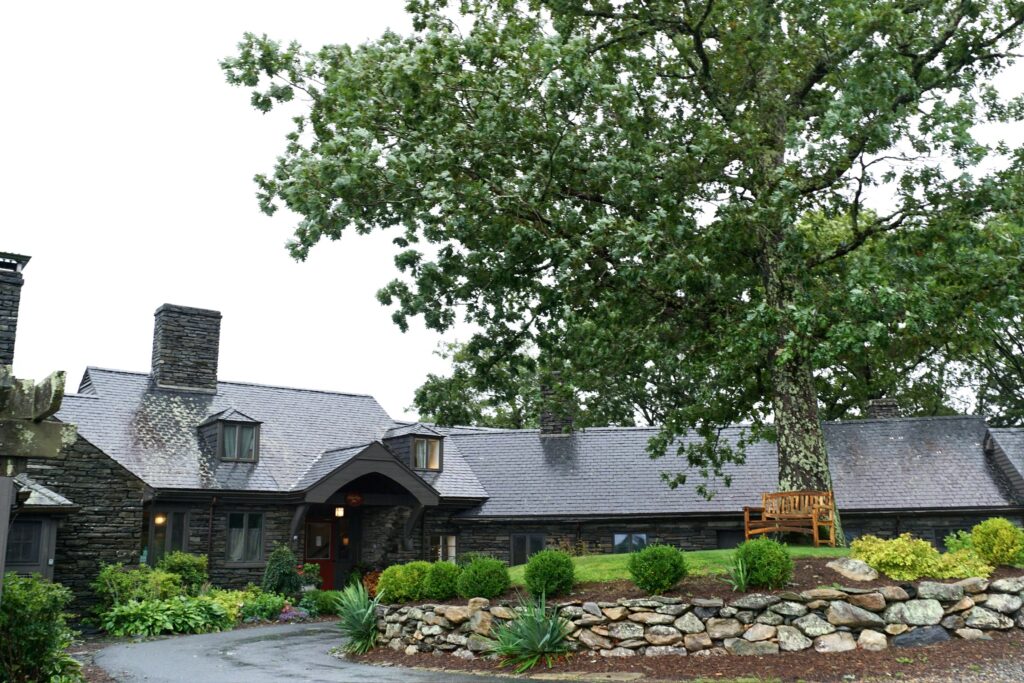
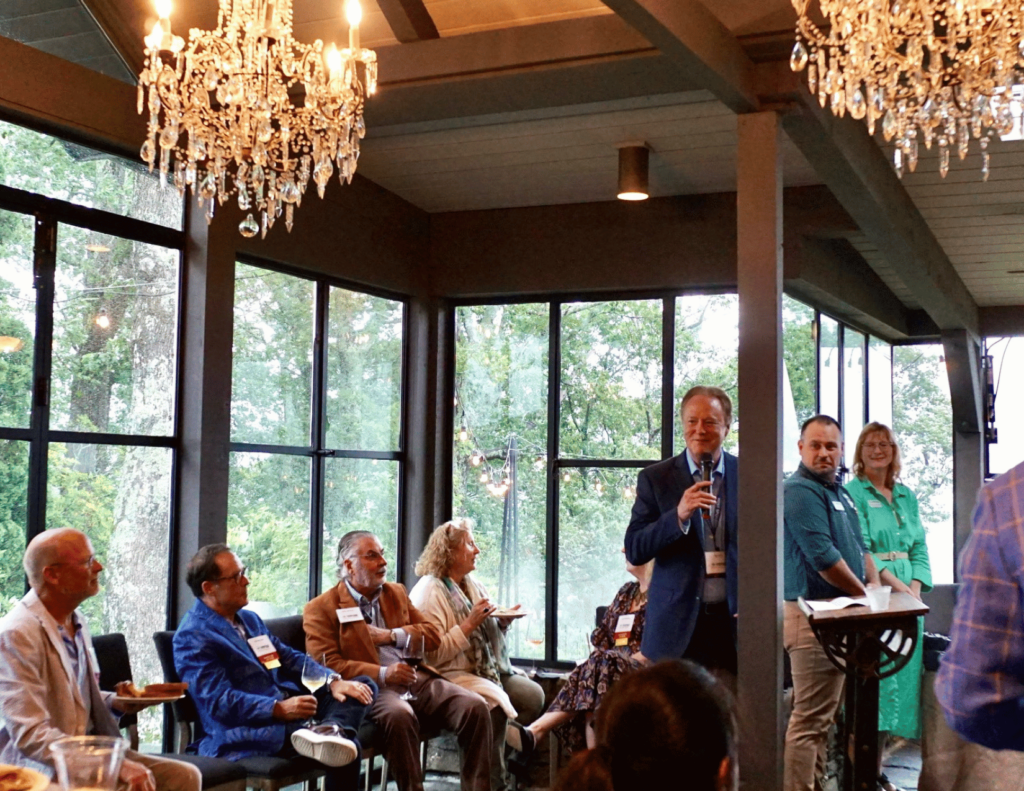
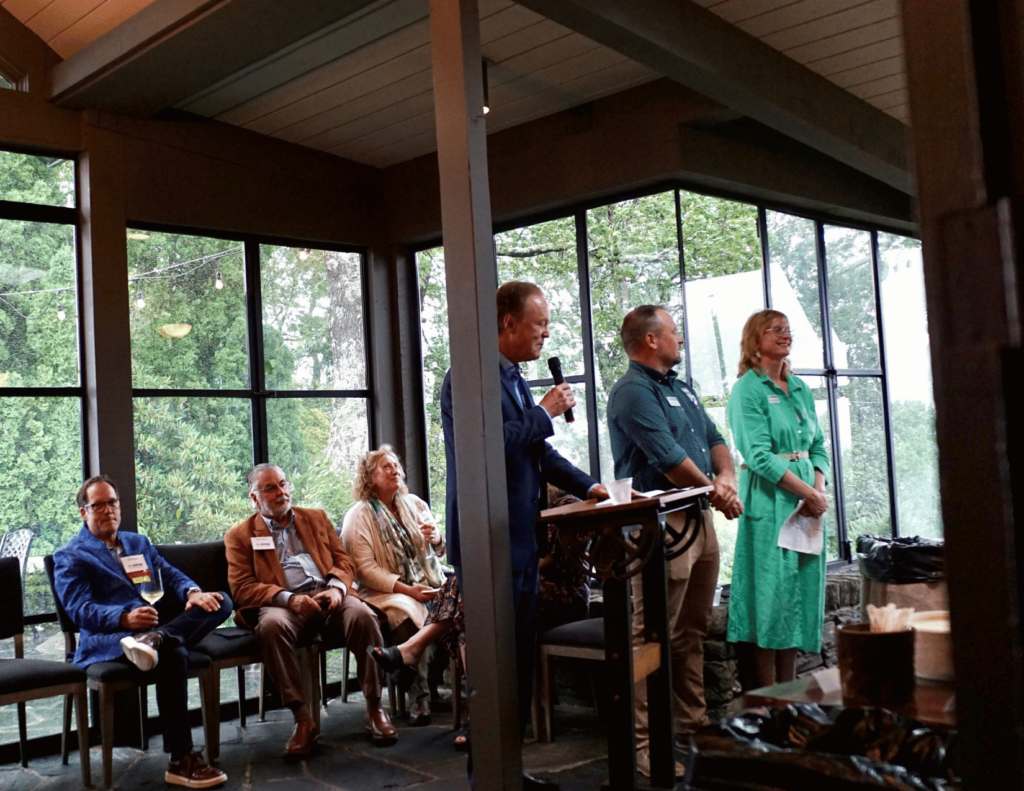
This year’s Conservation Celebration was incredibly fulfilling thanks to our remarkable supporters, board members, and staff. The event took place at the picturesque Gideon Ridge Inn in Blowing Rock, NC, bringing in more than $55k in donations that will support CTNC’s mission and ongoing projects to protect North Carolina’s natural lands for future generations. With forty-five event sponsorships representing nearly ninety supporters, we are immensely grateful for their generosity that ensures our work can continue.
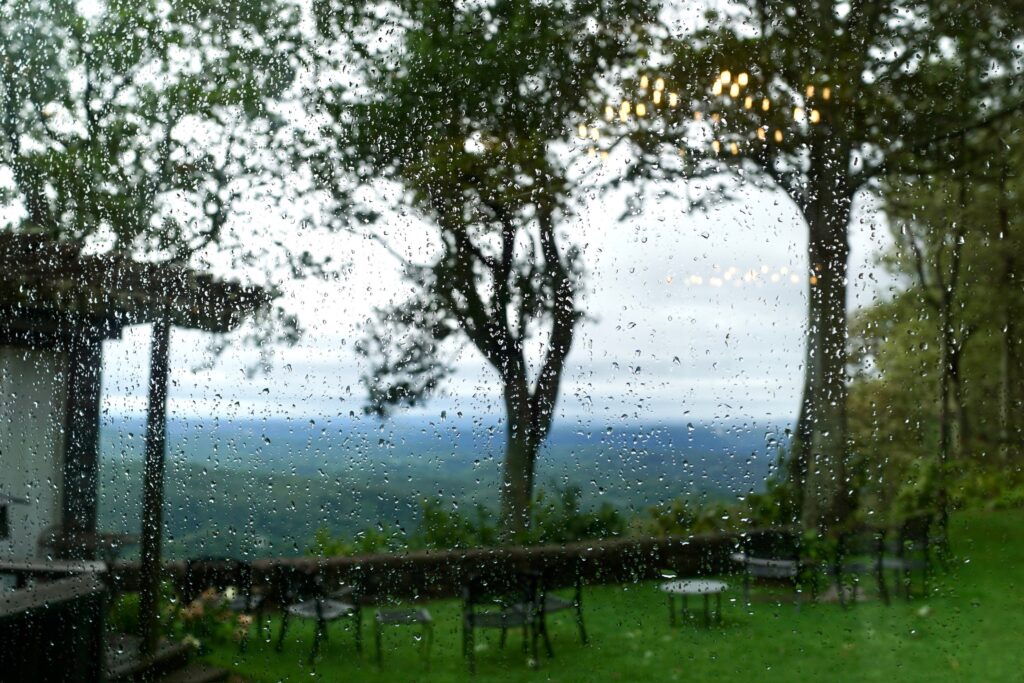
The turnout was especially gratifying due to extreme weather conditions caused by tropical storm Debby. Even with the heavy rain, the Blue Ridge Mountains still created a perfect backdrop for the event.
Special thanks to our hosts
Cobb and Cindy Milner, owners of Gideon Ridge Inn, generously donated delicious hors d’oeuvres and beverages, staff time, and the use of their inn for this year’s fundraiser. As always, they were incredible hosts, and we appreciate their time and effort to make this event memorable.
CTNC’s Board President, Bill Leslie, Executive Director, Cynthia Satterfield, and Western Conservation Manager, Aaron Flannery, each shared an update on CTNC’s current projects, recent successes, and how the funds raised during the event and throughout the year will continue to advance conservation across our state. Together with our entire community of supporters, we are building a more resilient North Carolina.
Thank you for your support to everyone who joined us, and we hope to see even more of our supporters next year! To our generous sponsors, thank you, we couldn’t do this work without your support.
2024 Conservation Celebration Sponsors
Lead Sponsors
Chip Anderson
Faye & John Cooper
Carole & Rick Marcotte
Cobb & Cindy Milner
Susan & Tom Ross
Thomas R. Statnick
John & Ashley Wilson
Patron Sponsors
Anna Neal Blanchard
Jo Scott Dorsett & Stuart Dorsett
Kelley Russell
Kathy Hamilton Stamper & Lucian Stamper
Julia Truelove
Joe & Tina Vrabel
Host Sponsors
Lee Carter & Greg Bradley
Alex & Anne Bernhardt
George & Johanna Edens
Dodd Haynes & Clara Martinez Haynes
Bill & Cindy Leslie
Ray Owens & Sally Higgins
Alton Perry
Megg & Robert Rader
Charlie & Deatra Sellers
Craig Weaver & Judy Baker
Jean & Walter Wilkinson
Supporter Sponsors
Glenn Astolfi
Judi & Kevin Beck
Marc Chabot & Cynthia Dillon
Dan Fitz & Mario Cescutti
Judy & Gary Gloster
Juliana Henderson
Drs. Elizabeth & Robert Iwaoka
Duane & Betti Kirkman
Mark Kirkpatrick & Debbie Arnold
Mozine Lowe
Sarah Manning
Margaret Newbold & Liz Watson
Cynthia “Suki” Payne
Ebony L. Perkins
Marc Rudow & Deborah Miles
John & Katherine Singleton
Mary & Donald Tucker
Aidan & Lisa Waite
Judy & Bill Watson
State Designated Natural Area Protected Along the Blue Ridge Parkway
Conservation Trust for North Carolina purchases 68-acre “Grassy Creek Springs” property for permanent protection.
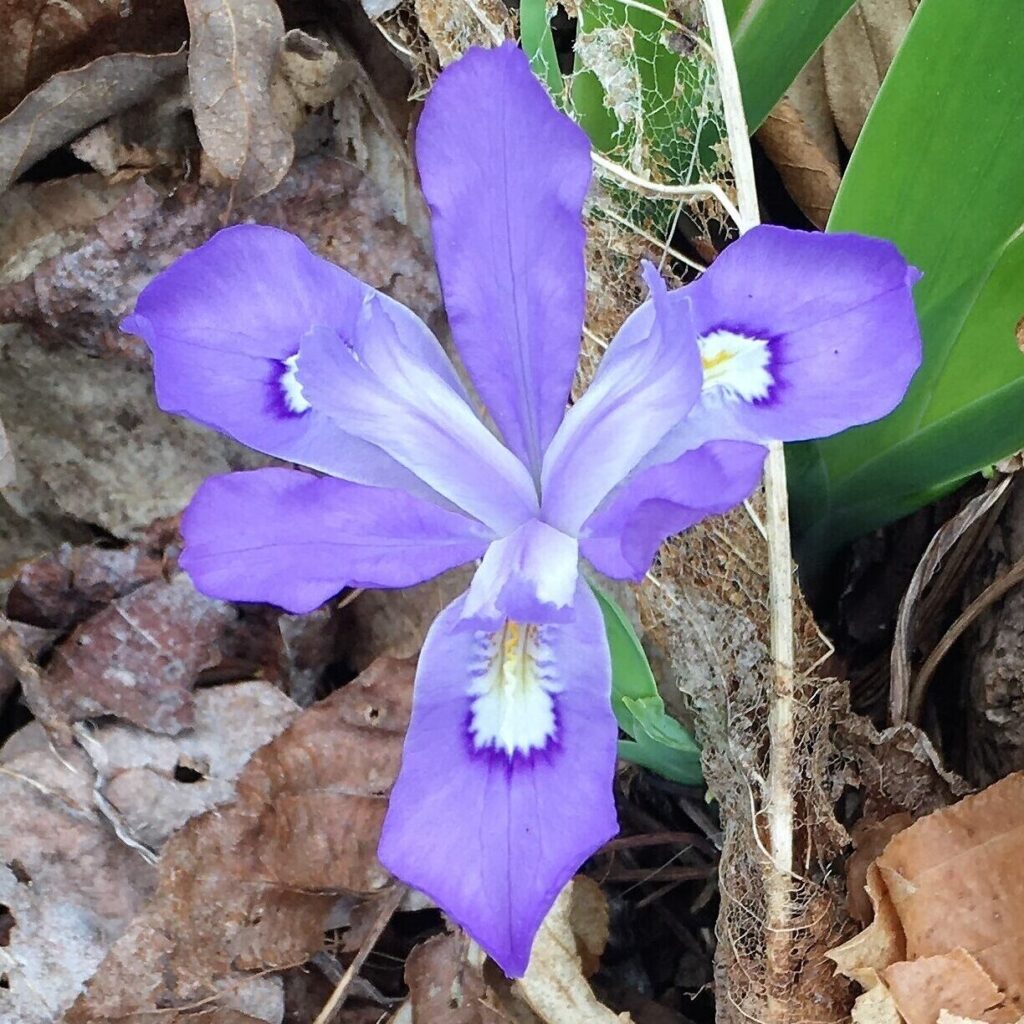
In June, Conservation Trust for North Carolina purchased a unique 68-acre property including the majority of the “Grassy Creek Springs Natural Area,” recognized by the NC Natural Heritage Program for its ecological significance. The land adjoins the Blue Ridge Parkway at milepost 332 in southern Mitchell County and features natural springs and seeps, an abundance of spring wildflowers, and native forests that have been undisturbed for nearly a century. Positioned between Little Switzerland and the Museum of NC Minerals, the property protects views of mature forestland along a heavily traveled section of the Parkway.
“We are grateful to the landowners, our state funders, the Stanbacks, and to all of our donors and allies for helping us to secure this one-of-a-kind property,” stated Cynthia Satterfield, Executive Director of Conservation Trust for North Carolina. “We are also grateful for our long-standing partnership with the National Park Service and look forward to working with them to incorporate the Grassy Creek Springs property into the boundaries of the Blue Ridge Parkway in the near future.”
CTNC was fortunate to work with sellers who were committed to ensuring the property’s protection in an area popular for second-home development and destructive mining and timber operations. The landowners generously agreed to sell the property at below market price in a transaction referred to as a ‘bargain sale,’ reducing the funds CTNC needed to raise for the purchase. Public funding was secured from the NC Land and Water Fund and the NC Environmental Enhancement Grants Program. Private donations from Fred and Alice Stanback of Salisbury, NC, and many other individuals from across the state also helped make the purchase possible.
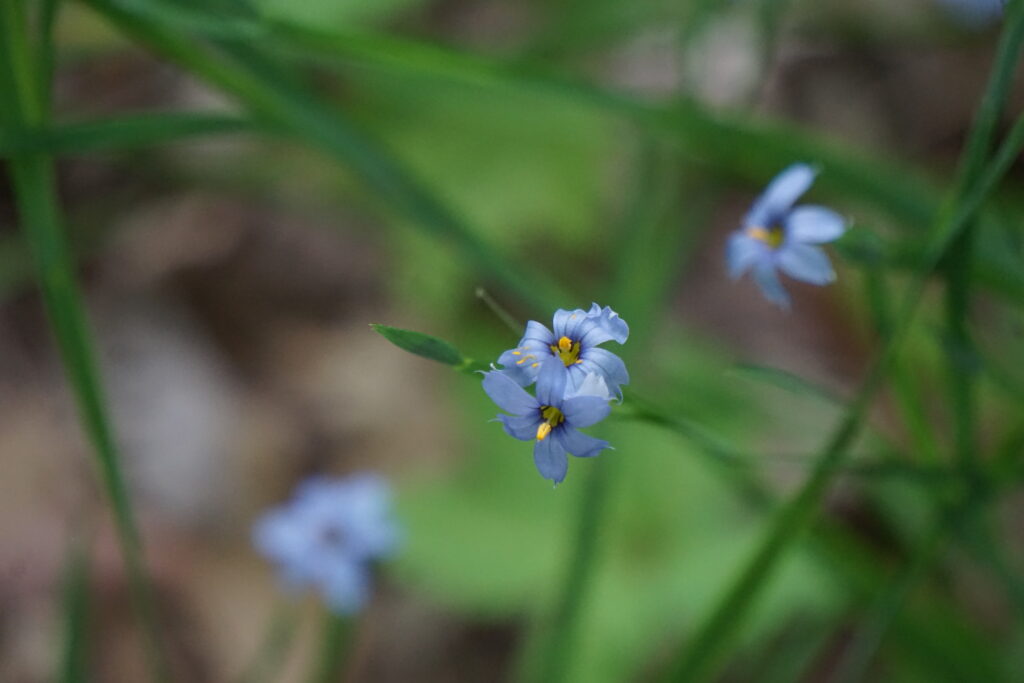
Wildflowers on property.
The purchase forever protects scenic views from the Parkway and nearby Mountains-to-Sea Trail, safeguards clean water, reduces the risk of flooding, provides a haven for plants and wildlife, and enables the forest to continue sequestering carbon from the atmosphere.
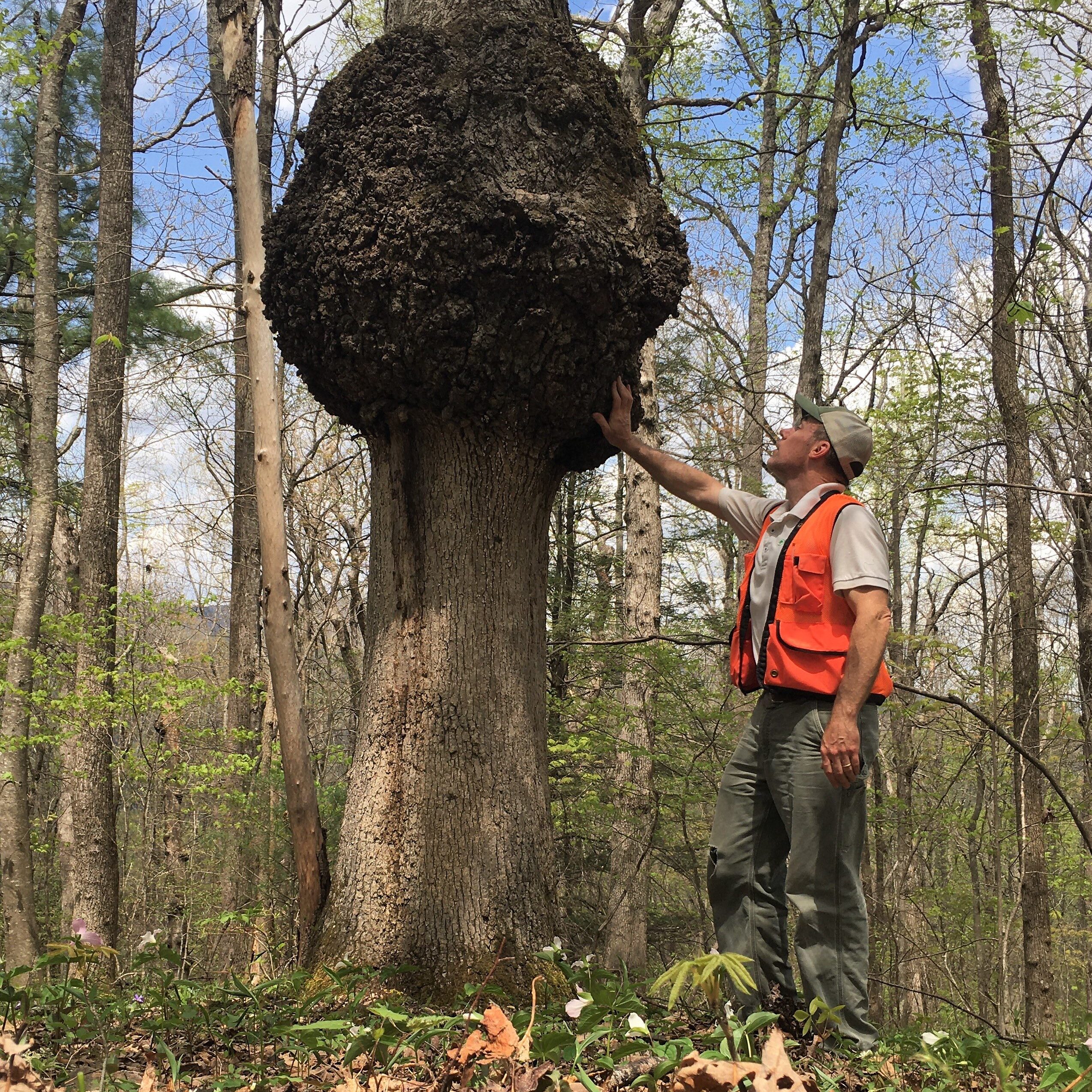
Aaron Flanney, Western Conservation Manager, noted a large gall on an oak tree while monitoring the Grassy Creek Springs property in 2023.
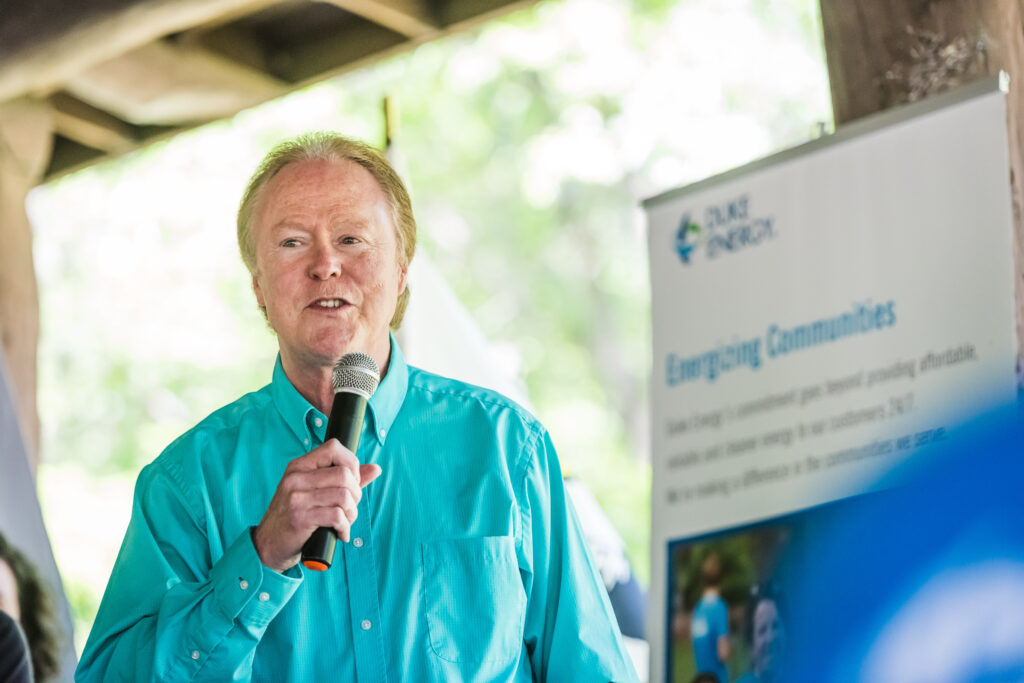
CTNC’s Board President, Bill Leslie, accepted the grant.
“On behalf of Conservation Trust for North Carolina, our board and staff, and community partners throughout the state, I want to express heartfelt appreciation for the Duke Energy Foundation’s investment in our vision to inspire and enable North Carolina communities to build resilience to flooding and other climate change hazards.”
He added, “Conserved land provides access to trails and green space, protects farms that generate our food, and can absorb stormwater during extreme flood events that are becoming more common every year. We look forward to making a deeper investment in communities, from the Blue Ridge Parkway to Princeville in Eastern N.C., and right here in Southeast Raleigh, all in collaboration with local leaders who value and understand how land conservation can help address our current climate crisis.”
“Communities across North Carolina have seen firsthand the lasting impacts from storms and excessive rainfall,” said Cynthia Satterfield, executive director of Conservation Trust for North Carolina. “We are grateful that Duke Energy recognizes the importance of building resilient communities equipped to reduce and manage flood risk and that they are helping fund this critical mission.”
At Craggy Gardens, a popular stop on the Blue Ridge Parkway, CTNC’s Land Protection Director, Rusty Painter, and Western Conservation Manager, Aaron Flannery, attended an Earth Day event focused on conserving Western North Carolina public lands.
“We are grateful for our lasting partnership with the Blue Ridge Parkway, our fellow land trusts, the multitude of other partners, and landowners who enable us to continue protecting ‘America’s Favorite Drive'” states Rusty Painter. “As one of the most-visited units of America’s national park system, preserving the land along the Parkway is crucial for current and future generations to enjoy all that the Blue Ridge Mountains have to offer.”
Rusty Painter and Tracy Swartout, Blue Ridge Parkway Superintendent
As we celebrate and reflect on this year’s Earth Day, we are immensely grateful for the statewide network of partnerships we hold to amplify conservation efforts. By standing together and working collaboratively, we can face the challenges posed by climate change head-on and build a brighter future for North Carolina.
Rivers have molded the landscape of the entire state, with each river basin different from the other.
As an ecologically diverse state, with landscapes varying from the higher elevation of the western Blue Ridge mountains to the low-lying coastline in the east, within each region, one will experience differing average temperatures, manage different growing seasons for plants and agriculture, and enjoy a wide range of water bodies from lakes to streams, and small to large river networks.
North Carolina is home to roughly 37,853 miles of rivers, plus thousands of tributaries or streams that flow into and feed one of its larger river systems. In total, there are 17 river basins in North Carolina. Because every community falls within one of these basins, every community in North Carolina is impacted by the vast destruction to livelihoods caused by flooding.
We must address flood resiliency from the perspective of a basin-wide approach when recommending conservation solutions to mitigate its effects.
Since each river basin is contrastingly unique, a one-size-fits-all approach is not applicable when designing strategies to mitigate flooding. The impacts look different by region, demonstrating why a basin-wide level approach is necessary to create manageable, coordinated intervention strategies to improve the flood risk for all communities in North Carolina.
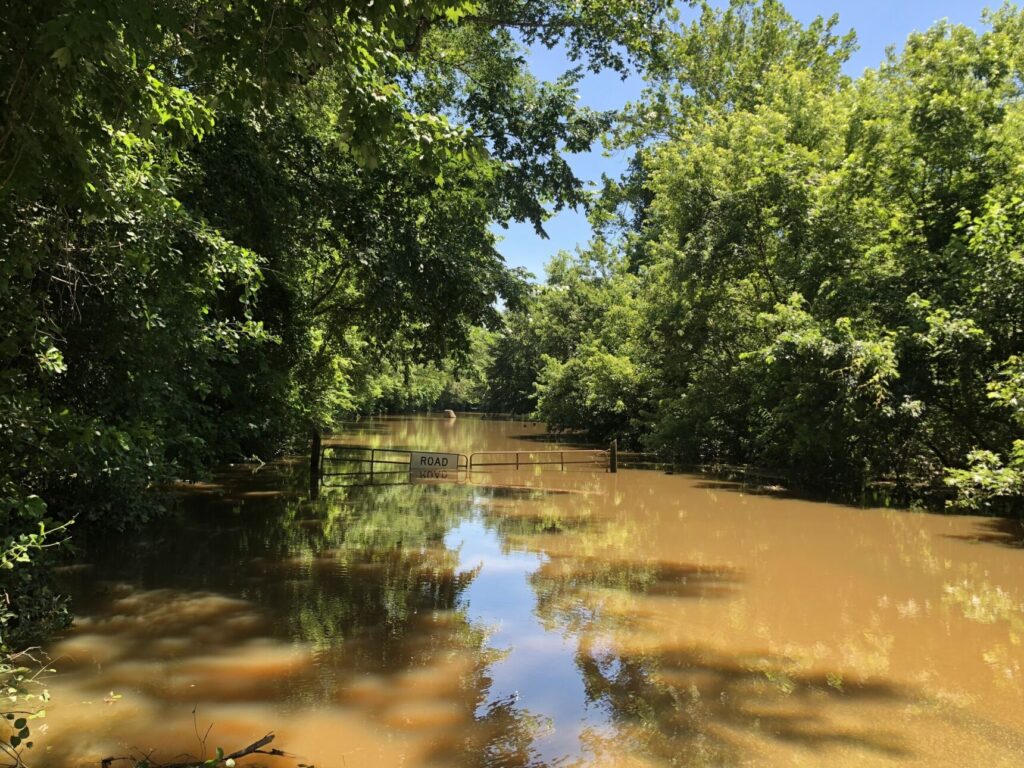
Flooding impacts from the Tar River in Princeville, NC
Understanding River Basins
A river basin encompasses the area of land drained by a river and its tributaries. Each basin serves as a natural watershed, starting with the rainwater and flow of a central river system that shapes the landscape and ecosystems as the water moves through. River basins influence many concepts of the surrounding area, including local agriculture, urban planning and infrastructure, drinking water, wildlife habitat and diversity and the local economy. Each river basin in North Carolina has its own movement of water from the headwaters to an outfall into the ocean, an estuary, or another river.
With the 17 river basins in North Carolina, each holds a unique ecological and topographical footprint in response to rainfall events that occurred upstream. Starting with rainfall, water accumulates into a basin that flows into subsequent bodies of water through a stream, river, tributary, groundwater, etc. As water accumulates and moves downstream, the river basin acts as a bathtub, collecting all contents and diverting where necessary.
With more severe climate-change caused weather events, an influx of water to a river basin will cascade into surrounding areas, causing floods.
The North Carolina Flood Resiliency Blueprint will serve as an online decision-support tool for policymakers, stakeholders and all North Carolinians with the knowledge required to make flood management decisions. The initiative was launched by the NC General Assembly and NC Department of Environmental Quality in collaboration with local and state agencies from across the state. In this process, having stakeholders present from various river basins is crucial to creating a tool that serves all communities and residents of the state.
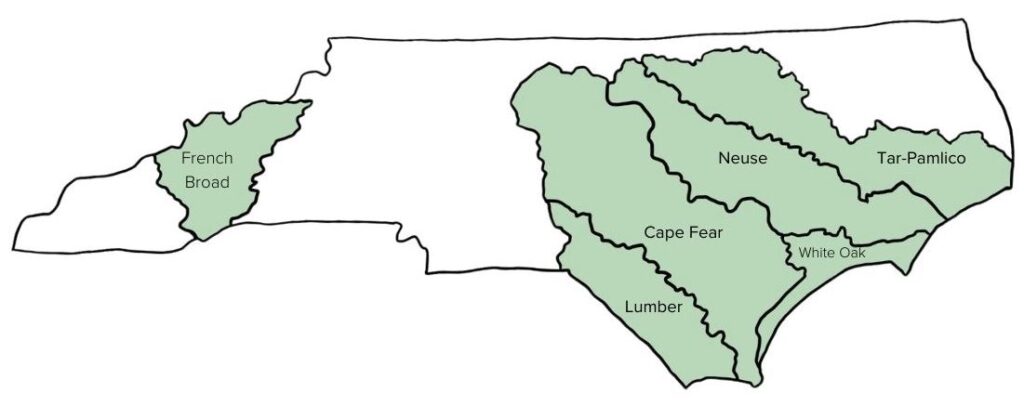
As a starting point for proposed flood mitigation action, the Blueprint process will develop basin-wide action strategies for six target river basins: French Broad, Tar-Pamlico, Cape Fear, Neuse, Lumber and White Oak River Basins.
CTNC’s Western Conservation Manager, Aaron Flannery, highlights the importance of preserving land to enhance community resilience. “Protecting land in western North Carolina is crucial to the health of NC’s river basins that are fed from waters along the Parkway. Ensuring that the land along the Blue Ridge Parkway is preserved impacts everything that occurs downstream, including water quality, economic development, local and state parks, community resilience and the wildlife that calls the ecosystems of NC home.”
Serving as the third largest river basin in North Carolina, protecting the land along the Neuse River Basin is critically important to the cities within the basin by providing drinking water in nine dedicated reservoirs – Falls Lake, Lake Michie, Little River Reservoir, Lake Holt, Lake Orange, New Hillsborough Lake, Corporation Lake, Lake Ben Johnson and Lake Rogers. The basin also holds wetland forests that divert water from flooding nearby communities and captures runoff and rainfall to prevent impacts to downstream communities. For 12 years, CTNC partnered with the City of Raleigh to administer a watershed protection program, The Upper Neuse Clean Water Initiative, designed to raise funds to help land trusts protect land upstream of a rapidly growing region and critically important source of drinking water for the Triangle region.
Protecting these bodies of water is crucial to the flow of water from the mountains to the sea. With the tool created in the Flood Resiliency Blueprint, members of each river basin’s communities can expect to gain a deeper understanding of their floodplain, the history of flooding in that region and the best strategies to combat the impacts of flooding specific to that area.
Collaboration from all regions of the state is important to ensure that all communities are represented and heard when creating tools like the Flood Resiliency Blueprint. The decisions made upstream in the Western part of the state will impact communities downstream throughout NC. To address the increasing threat of climate-change caused events, like flooding, community and county boundaries will be crossed to foster collaboration in creating effective solutions. CTNC’s relationships with local government organizations, statewide conservation partners and landowners will be prioritized to ensure a holistic approach to flood mitigation strategies occurs in communities across every river basin in North Carolina.
Through the Mountain Revolving Loan Fund, CTNC allocates small grants to preserve critical areas of land protected and stewarded by our land trust partners.
Through the Mountain Revolving Loan Fund (MRLF), CTNC works with land trusts to conserve land in Western North Carolina. In addition to providing critical bridge loans to eligible land trusts, CTNC’s MRLF provides small grants to fill funding gaps that enable completion of projects that preserve the ecosystems and cultural sites along the Blue Ridge Mountains.
The CTNC Mountain Revolving Loan Fund has two significant benefits for our partners:
It provides crucial bridge financing with minimal interest to land trusts in Western North Carolina to purchase conservation land and easements. As loans are repaid, the money becomes available to re-lend.
A percentage of the balance of the loan fund is given out each year in grant awards. Grants of up to $25,000 are not required to be paid back. CTNC’s grants help cover transaction-related costs, land management, project administration, and long-term stewardship; often the most difficult project funding to raise.
This year, CTNC awarded grants to four land trusts totaling over $90,500. We’re proud to support the costs associated with ensuring that 516 acres of land will be protected in perpetuity. We look forward to more opportunities to work in partnership with key stakeholders to protect and steward this living legacy.
The land trusts that were awarded grant funds by CTNC during the current cycle include:
Blue Ridge Land Conservancy
Conserving Carolina
Highlands-Cashier Land Trust
Mainspring Conservation Trust
The eight properties that will be protected by our partner land trusts offer ecological, agricultural, recreational, and cultural-historic benefits to communities of Western NC.
Along with the conservation values of these properties, each contains crucial ecological and agriculture benefits to the local landscape and communities of Western NC.
CTNC’s support of statewide conservation initiatives is made possible through generous donations from CTNC supporters. Your generous support enables us to carry out our mission to foster community resilience in Western NC and throughout our amazing state.
State Legislators come through with a conservation win
Help us send a big thank you to North Carolina’s legislators and governor for allocating over $100 million to the conservation trust funds and other conservation projects in the 2023 State Budget. This funding will benefit people and our land for generations to come.
Land for Tomorrow is a statewide coalition of community leaders, conservation, and wildlife organizations, and parks and recreation advocates with a common goal: increasing land and water conservation in North Carolina. The state’s three conservation trust funds, the North Carolina Land and Water Trust Fund (NCLWF), the Parks and Recreation Trust Fund (PARTF), and the Agricultural Development and Farmland Preservation Trust Fund (ADFPTF) are essential tools that allow state agencies and nonprofit partners to protect North Carolina’s valuable natural resources.
The Coalition recognizes these conservation heroes who went the extra mile to protect our state’s most loved places. The Land for Tomorrow Coalition applauds the following legislators:
If you have time, please send a thank you note to your local legislators for protecting our state’s natural resources through the budget this year. Their perseverance in protecting this funding should be commended.
CTNC is dedicated to stewarding smart conservation policies for the benefit of North Carolina’s resilient communities. Join us in supporting this important mission.
This website uses cookies to improve your experience. We'll assume you're ok with this, but you can opt-out if you wish. Cookie settingsACCEPT
Privacy & Cookies Policy
Privacy Overview
This website uses cookies to improve your experience while you navigate through the website. Out of these cookies, the cookies that are categorized as necessary are stored on your browser as they are as essential for the working of basic functionalities of the website. We also use third-party cookies that help us analyze and understand how you use this website. These cookies will be stored in your browser only with your consent. You also have the option to opt-out of these cookies. But opting out of some of these cookies may have an effect on your browsing experience.
Necessary cookies are absolutely essential for the website to function properly. This category only includes cookies that ensures basic functionalities and security features of the website. These cookies do not store any personal information.